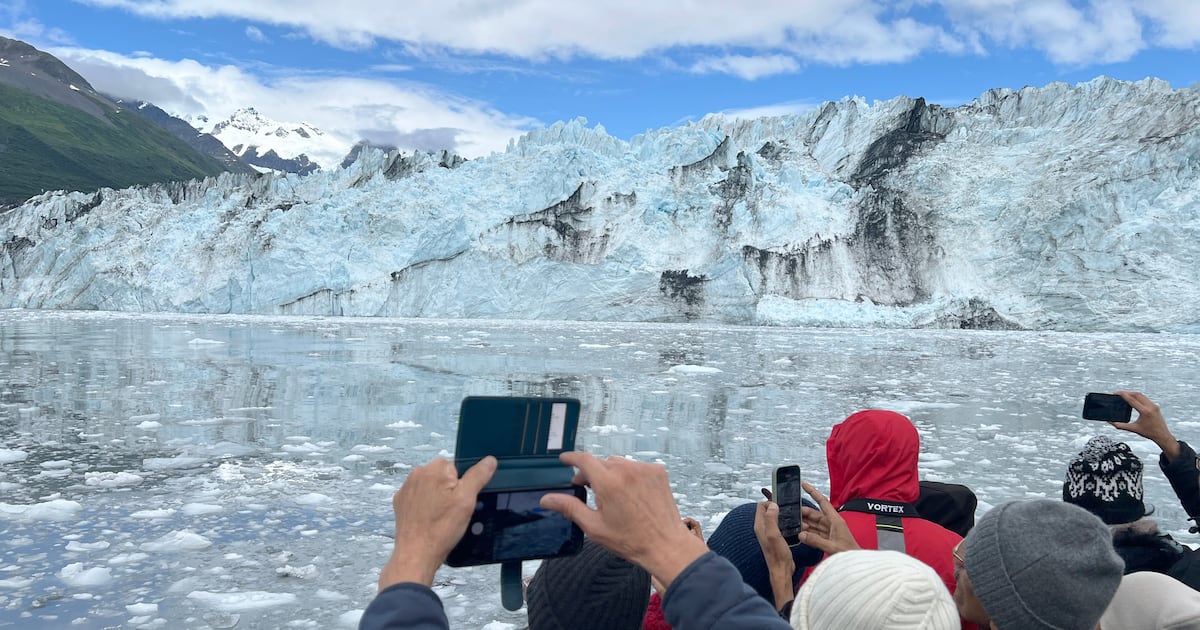
It was crowded on the bow of the M/V Bravest close to the face of Harvard Glacier. The winds were calm and the water was smooth as glass, so everyone got a good shot. (Photo by Scott McMurren)
Our captain on the Bravest nosed gently through big chunks of ice to get closer to the face of the massive Harvard Glacier in College Fjord.
Most of the little chunks hit the hull with a “tink,” while the larger ones made a lot more noise. Ice conditions change each day, and that determines how close the ship can get.
Missing was the usual cold wind that comes off the glacier. I had my gloves ready just in case.
The relatively warm weather and calm seas meant everyone was out on the bow taking group photos and selfies. Several serious photographers had their big lenses tuned in on the glacier’s face, patiently waiting to capture a calving moment, when the ice falls into the water.
The water was as smooth as glass, which makes for nice photos of the glaciers — and the clear reflection. An added bonus for those serious photographers was the harbor seals hauled out on larger chunks of ice.
As the captain stopped the boat, the crew prepared to do a little “ice fishing” to harvest a few big chunks of ice. They took it back to the bar to make glacier margaritas.
The Bravest, one of four tour boats operated by Phillips Cruises, can hold 286 guests, plus the crew. It’s the little brother to the company’s flagship, the Klondike Express, which holds 332.
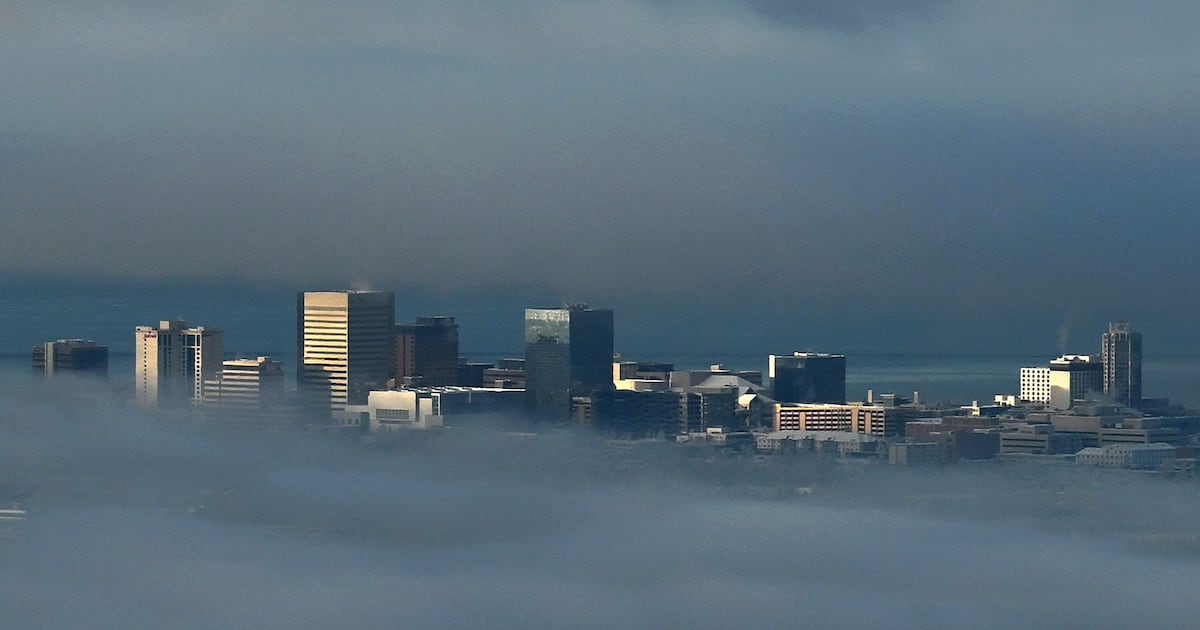
The pleasant weather at the glacier’s face was very different than at the tunnel when we arrived in Whittier. It was more typical: A steady drizzle and low-lying fog meant you could barely see the waterfalls on the other side of Passage Canal.
Visitors aboard the Klondike Express saw sunlight striping a glacier in College Fjord in June 2019. (Anne Raup / ADN archive)
Just after pulling out of the Whittier harbor, the fog lifted. The weather steadily improved as the Bravest zipped along on the journey to the northern edge of College Fjord. Along the way, there are several other glaciers, each named for prestigious colleges on the East Coast: Yale, Bryn Mawr, Wellesley and Vassar, among others.
The daylong journey underscores the power of nature to hold you transfixed. And “Big Ice” is one of Alaska’s superpowers. It’s not the only one, but don’t let summer slip by without an up-close look at some of our state’s natural wonders.
There are many ways to get close to glaciers. Even before you get to Whittier, Portage Glacier Cruises offers a one-hour cruise up to the face of Portage Glacier.
Or, take a helicopter ride from Girdwood with Alpine Air up to nearby 20 Mile Glacier.
There’s not a “real” glacier at the top of the Alyeska Tram anymore — but there’s still snow. There’s no skiing this time of year, but there’s enough of the white stuff for a snowball fight and a snow angel!
From the Portage train station, catch the Alaska Railroad with Chugach Adventures to the Spencer Glacier stop. From there, walk with your guide up to the lake facing Spencer Glacier. After your safety briefing, get into your raft. Your guide will paddle out to the icebergs in the lake, and you might even be able to put your hands on the ice. Don’t fall out of the boat, though. From there, it’s a fun float on a lazy river back to the pullout. The train then stops to pick you up on the way back to Portage.
Kids explore the waterline at Spencer Lake with a good view of Spencer Glacier and some of its icebergs on June 11, 2016. Hikers can access the area, south of Portage in Chugach National Forest, by way of Alaska Railroad’s whistle stop service, which drops passengers about a 1.3-mile walk from the lake. (Marc Lester / ADN archive)
You can’t miss the giant Matanuska Glacier as you’re driving up the Glenn Highway from Palmer to Glennallen. About two hours north of Anchorage, you’ll see the signs to reach the glacier. You need a guide to walk on the glacier. The tours are about two to three hours long, depending on conditions.
If you take a right turn before crossing the Knik River, you can see several glaciers at the top of the river, including the Knik Glacier and the Colony Glacier. Two companies, Alaska Helicopter Tours and Outbound Heli Adventures, offer helicopter trips to see the glacier. There are plenty of add-ons, including mushing with the sled dogs on the glacier, taking a plunge in a glacier pool, paddleboarding or ice climbing.
Heading up the Parks Highway to Talkeetna, that’s Denali filling up the view in your windshield. From the Talkeetna Airport, there are three outfitters that can land on one of Denali’s giant glaciers: K2 Aviation, Talkeetna Air Taxi and Sheldon Air Service. Although you should wear layers to stay warm on the glacier during your stop, the air service has overboots for extra traction on the snow.
See more glaciers in Valdez. Pangaea Adventures offers kayak trips around Shoup Glacier, which is just a short water taxi ride from the harbor.
Stan Stephens Cruises offers a couple of tours each day to see the region’s biggest glaciers. The signature cruise is to Columbia Glacier on a six-hour tour. An extended tour (7.5-hour) goes farther to Meares Glacier.
A bull moose browses near the Rabbit Lake Trail in Chugach State Park on July 28, 2026. (Marc Lester / ADN)
Another course of secret sauce in Alaska is access to some of the world’s biggest animals. Being around bears, whales, moose and caribou in the wild is a big deal. Like being around giant ice castles, seeing these big animals in the wild offers us natural therapy to reflect on our own place in the world.
Here in Anchorage, I’ve been chased off the trails by both moose and bears. But I don’t take visitors there to see the critters.
Head to Seward, where a cruise into Kenai Fjords National Park may yield both big ice and big critters. There’s not just one kind of whale to see, either. Keep an eye out for humpback whales, killer whales (orcas) and gray whales. Other popular sea creatures include porpoises, otters, seals, sea lions, puffins, eagles and an occasional mountain goat on the shore. Both Kenai Fjords Tours and Major Marine Tours offer cruises in the park.
If you really want to see bears, consider a one-day fly-in trip to the far side of Cook Inlet. Rust’s Flying Service is one of several operators that offer bear-viewing trips to several locations in August: Chinitna Bay in Lake Clark National Park and Redoubt Bay.
Peak season for bear viewing at Brooks Falls in Katmai National Park is over.
Don’t let this summer slip away without getting an extra-large portion of Alaska’s big nature. There’s also big water, but I try to avoid that unless it’s floating down a river.