In a first for Massachusetts, two colleges will offer three-year bachelor’s degrees in the fall of 2027.
The Board of Higher Education on Friday approved pilot programs at Merrimack College and Suffolk University despite concerns raised by educators who say the accelerated degrees could hollow out the college experience.
The two schools aren’t simply compressing four years of coursework into a shorter timeline. Instead, the new bachelor’s degrees require fewer credits to graduate — closer to 90 instead of the typical 120.
At a time when more young adults are questioning the value of a college degree the new programs in Massachusetts are part of a national movement to make higher education more attractive and affordable. A number of colleges around the country and in New England already offer three-year degrees.
“Many students need to launch their careers sooner to support themselves and their families,” said Commissioner of Higher Education Noe Ortega in a statement. “These pilots explore how we can grow options for being career-ready in a way that reduces costs and time.”
Merrimack College will roll out a 96-credit “applied bachelor’s degree” in four existing majors: psychology, communication, criminal justice and business administration. Students will still have the option of completing a traditional bachelor’s degree in these fields at the North Andover school.
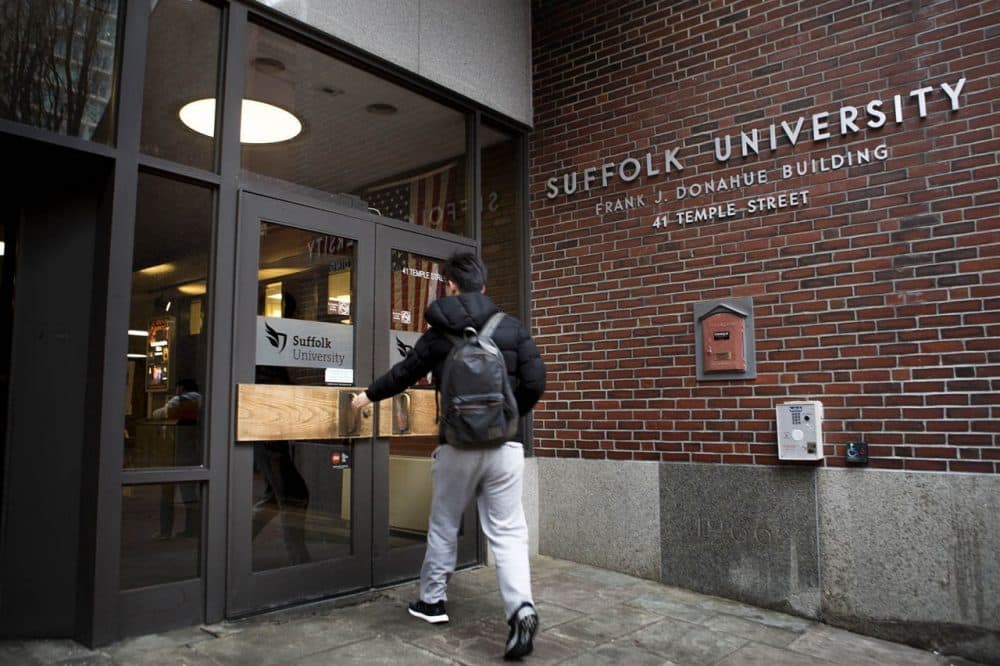
That same fall Suffolk University will launch a 94-credit degree in health administration, a first of its kind major at the Boston school.
Leaders at both colleges say the fields of study were chosen to address regional workforce needs and the students who opt into the compressed pathway will maintain the same quality of education. The tradeoff will be less flexibility to take electives, to double major and to study abroad.
Suffolk University President Marisa Kelly (Courtesy Suffolk)
“The students for whom this is the right choice are students who absolutely are very clear on what they want to do,” said Suffolk University President Marisa Kelly. “They have a clear professional goal and, for whatever reason, want to get to that goal more quickly.”
Some educators have raised concerns that a truncated degree could amount to a “watered-down” college experience.
“Of course a three-year rather than a four-year degree is cheaper, so is buying three sticks of butter rather than four,” said Heike Schotten, a professor of political science at the University of Massachusetts Boston. “A three-year undergraduate degree is missing an entire year of education.”
Professors at state universities and community colleges have argued that adding a three-year option could create a two-tier system; students who can afford to attend college for four years will continue to do so, while those who can’t will opt to take the shorter route.
“While this is seen by some to solve the affordability crisis, it really is depriving students of high quality learning opportunities and will result in graduates who are less prepared for the workforce and civic life,” said Jessica Tang, president of the American Federation of Teachers Massachusetts in a statement.
But school leaders emphasize that the program will be monitored. Merrimack and Suffolk must submit an annual report to the state board of education for the first five years. The New England Commission of Higher Education will also visit the colleges.
Critics also worry that signing up for a three-year degree is a risky experiment when it’s not clear how graduate schools or employers will view them.
Students must, however, sign a consent form that acknowledges that some employers may not view the degrees as equivalent to a four-year bachelor’s and if they choose to pursue a traditional undergraduate program after completing a three-year degree they may not qualify for federal financial aid.