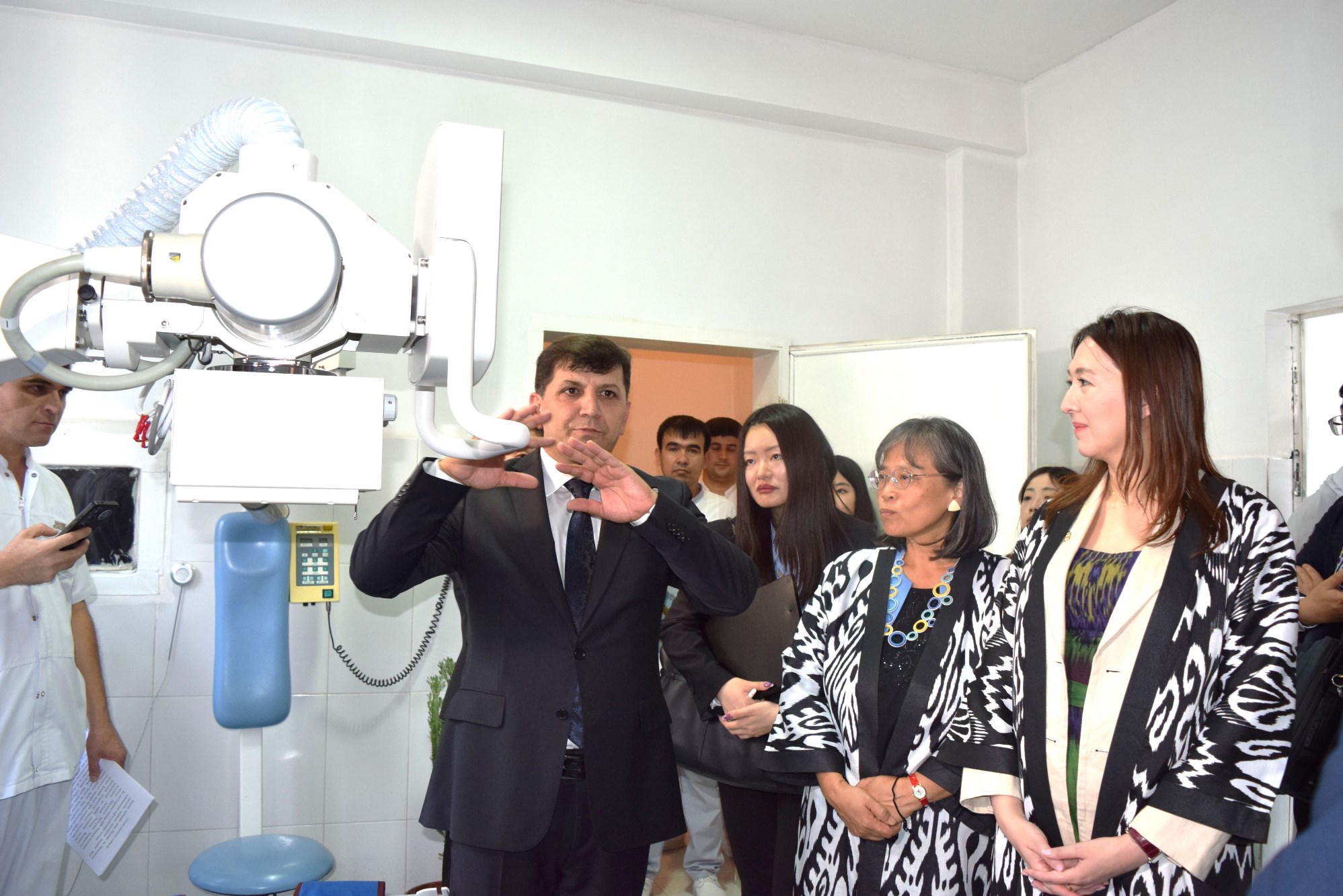
Japan has donated three modern digital fluorography units worth $352,500 to Health Center No. 14 in Dushanbe as part of a project aimed at improving medical equipment and expanding diagnostic services.
A ceremony marking the completion of the project, “Improvement of Medical Equipment at Health Center No. 14 in Dushanbe,” was held in the Tajik capital.
The event was attended by Ms. Arfiya Eri, Parliamentary Vice-Minister for Foreign Affairs of Japan; Keiko Furuta, Japan’s Ambassador to Tajikistan; Atoboy Sobirzoda, Deputy Head of the Dushanbe Health Department; and Homidjon Hamidzoda, Director of Health Center No. 14, as well as doctors and nurses from the facility.
The Tajik side expressed gratitude to the government and people of Japan for their support.
Speaking at the ceremony, Eri thanked the Tajik side for its warm welcome and highlighted the long-standing cooperation between the two countries. She noted that Japan has worked with Tajikistan as a reliable partner for more than 30 years, since the country gained independence.
Health Center No. 14 is located in Dushanbe’s Sino district, one of the capital’s most densely populated areas. The new equipment is expected to significantly improve the center’s diagnostic capacity and enable earlier detection of diseases, particularly infectious illnesses.
The simultaneous use of three fluorography units will also allow the center to handle a growing number of patients more efficiently. The equipment will be available not only to Dushanbe residents but also to people from neighboring Roudaki district.
The new units are also expected to strengthen preventive healthcare for children. With greater diagnostic capacity, the center will be able to conduct annual medical examinations of schoolchildren in Sino district more efficiently.
Japan’s healthcare support in Tajikistan
The project was implemented under Japan’s Grant Assistance for Grassroots Human Security Projects (GGP) program.
The program provides support primarily to local authorities, schools, healthcare institutions and international non-governmental organizations in developing countries.
Japan’s GGP program has operated in Tajikistan since 1996. During that period, the Japanese government has supported 474 humanitarian projects worth a total of approximately $40 million.
Of these, 121 projects have been implemented in the healthcare sector.
The latest donation to Health Center No. 14 continues Japan’s support for Tajikistan’s medical system and is intended to improve access to diagnostic services for residents of one of Dushanbe’s most populated districts.