The Assad regime’s widespread detentions, killings, mass displacement and systematic looting are familiar to many families in Talkalakh. It is not a unique experience in Syria, but it was particularly personal here. Talkalakh is the largest town in western Homs province and has a mix of Sunni, Alawi, and Christian residents. Many of the crimes here were committed by men who had joined regime militias early in the war—and their targets were their neighbors. The scale of violations and the role of local people, heightened by the close proximity of sects that largely fell on opposite sides of the Syrian revolution, left many fearing the worst when the Assad regime fell on December 8, 2024.
Yet, despite its past, there has been little violence in Talkalakh over the past two years. Amid a dominant narrative of sectarian violence in postwar Syria, especially in Homs province, Talkalakh stands as an important counterexample. Many residents here have worked tirelessly since the fall of the Assad regime to rebuild their historic relations with each other and return to normal life in this restive border town. The progress made here in social cohesion and civil peace has largely been fueled by a combination of local initiatives, civil society-supported dialogues, and governance and security reforms. Talkalakh serves as an example of how locally rooted reconciliation—or at least coexistence—is possible in post-Assad Syria. Still, its future depends on whether the new authorities and civil society can continue to build on the foundations they have so far established.
Systematic regime abuses
Talkalakh did not escape the Assad regime’s string of massacres across Homs province in 2011. In late 2010, the regime launched a large detention campaign against Sunnis in the town, prompting a rapid mobilization of protesters in early 2011. For seven weeks, thousands of people demonstrated in Talkalakh. Then, on May 14, 2011, dozens of tanks and armored vehicles stormed the town. According to Human Rights Watch, more than 3,500 residents were displaced to Lebanon in just a few days. Fleeing civilians were shot at by pro-regime militiamen from checkpoints around nearby villages. After crushing the armed opposition, regime forces arrested up to 1,500 people, according to Human Rights Watch, including children and the elderly. Many were held in the town’s hospital-turned-prison, where soldiers routinely beat and electrocuted them.
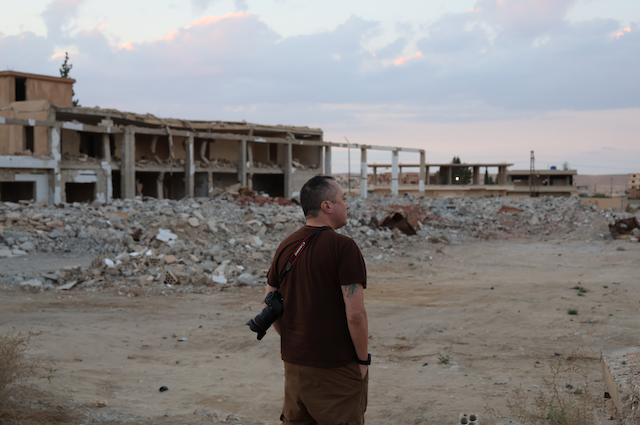
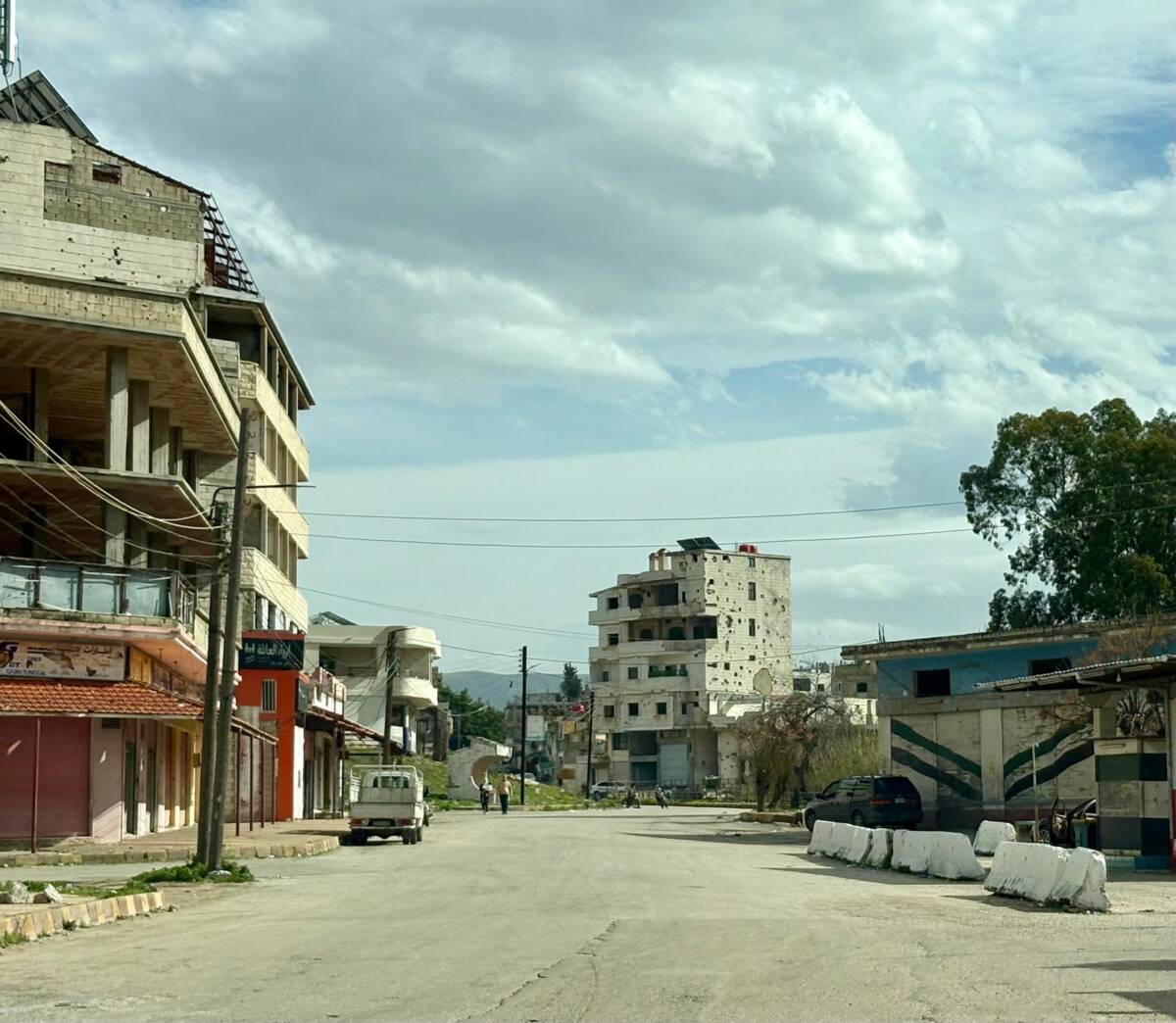
The crimes did not end that spring. Fighting resumed in the summer of 2012, and the regime launched a final campaign in 2013 to take complete control of the area. The streets separating the mostly Sunni northern neighborhoods from the mostly Alawi southern neighborhood of Ain al-Khadra were particularly damaged, with most buildings remaining vacant to this day. In the end, most of the Sunni population was displaced and the entire town was firmly placed under regime control.
Read more: What Syria’s revolution can teach the world about democracy
When displaced residents returned home in December 2024, they found the empty Sunni homes completely looted. Every displaced Sunni resident I spoke with told the same story: their home stripped down to the concrete, even the wiring ripped out of the wall. Regime militias from the area had systematically looted the empty homes following the security campaigns in 2012 and 2013. One Alawi resident who built a house during this time recalled how the area was flooded with building materials from Sunni homes, all sold at below-market prices.
Containing crises after the fall of Assad
The first weeks in Talkalakh after the fall of the Assad regime were chaotic. Residents of the town I spoke with at the time, as well as social media posts, described how many Alawi residents had either fled the city or remained in their homes out of fear. In a scene replicated across other areas of Homs and Hama provinces, some returning Sunni residents seized the now-abandoned homes of their Alawi neighbors. Alawi property was also frequently targeted for theft. In the immediate vacuum of the regime’s collapse, security in the area was run by a mix of factions, including local groups that had joined the Turkish-backed Syrian National Army and core Hayat Tahrir al-Sham (HTS) battalions.
According to multiple local activists I spoke with, senior security and military leaders in Talkalakh responded more quickly to these illegal property seizures than their counterparts elsewhere in Homs province. Stolen vehicles were found and returned and Alawi community leaders were quickly engaged with and encouraged to file complaints about any violations being committed. On December 26, 2024, the HTS military and security leadership in the area raided the warehouse of a local armed opposition faction, the Martyrs of Talkalakh Battalion, and a joint statement was released with the group agreeing to disband and submit to the authority of the HTS-led security leadership.
Continual security reforms in these first weeks helped reduce the initial impact of retributive violence. According to multiple locals I interviewed throughout 2026, security personnel helped return many of the homes initially seized by displaced Sunnis. Other Sunni families protected the homes of their Alawi neighbors who had fled, ensuring they remained vacant until their return. General Security personnel later established checkpoints and barricades between the majority-Sunni and majority-Alawi neighborhoods to prevent crime and violence.
A tense but gradually growing calm settled over the area that spring and early summer. As in many Alawi areas during this period, there were a small number of killings and disappearances in the city and its countryside. However, according to one Alawi community leader I met in the city, these crimes were limited.
The first serious incidents came on June 10, 2025. That afternoon, a government security member was killed in a mixed-sect village just north of Talkalakh. The attack, which came two days after an Alawi man was killed in the town, triggered a wave of online incitement and hate speech; Sunni pages accused Alawi “regime remnants” while Alawi pages blamed the attack on a bout of security infighting. At around 9:30 p.m., a large mob gathered on the edge of Ain al-Khadra. The mob stormed through the first street, vandalizing and burning 16 homes and shops and destroying several cars. According to one resident, local General Security forces responded quickly and set up barricades along the next street, preventing the mob from moving any deeper into the neighborhood. By 1:30 a.m., additional reinforcements from Homs city had arrived and restored calm to Talkalakh. Nonetheless, the attack reinforced many of the fears Alawi residents had over the looming threat of indiscriminate sectarian violence.
The later months of 2025 were marked by calm. Then, on February 4, 2026, four gunmen fired on a gaming arcade in Ain al-Khadra, injuring nine people, mostly teenagers. According to multiple residents I met with this spring and summer, the attack triggered a large arrest campaign in the city. Police detained as many as 30 people, among them local General Security members. “After the attack, there were corrupt or bad members of the Interior Ministry who were arrested,” one Sunni influencer told me. “The police here have been cleaned up and are now enforcing laws on the ground, and the judicial system has been made effective and is holding people accountable.” Several civilians known for inciting sectarian hatred in the area were also arrested.
Today, the Ministry of Interior—and many Sunni residents—aggressively react to any sectarian harassment in the city. According to several Alawi residents, security officials are quick to respond to complaints about threats or attacks, as well as any incidents of violations by their own personnel, although these are rare. Earlier this summer, cameras were installed in the city’s main areas, greatly reducing criminal activity. However, nighttime theft in the outlying neighborhoods remains common.
Old front lines take shape again
The social dynamics within Talkalakh remain complex. Both Sunni and Alawi communities are divided, with components of each advocating strongly for social cohesion and regularly engaging in intercommunal events. Yet there are others who have been radicalized by the crimes that took place throughout the war. The widespread destruction in Sunni streets on the edge of Ain al-Khadra has fueled much of this persistent anger.
“There is this divide between those who lost a large number of their relatives and others.”
“There is this divide between those who lost a large number of their relatives and others,” one young Sunni activist explained to me this spring. “They first want rapid justice for those they lost, and every delay increases their anger and their rejection of civil peace until after justice is done.” The resultant house seizures, thefts, and the June 2025 attack have all fueled the city’s segregation along sectarian lines. Alawi families living in the Sunni-majority northern neighborhood have sold their homes and moved to Ain al-Khadra. Sunnis living in Ain al-Khadra, still fearful of Alawis, likewise sold their homes and moved north. An empty belt of destroyed homes now stands between the Sunni north and Alawi south. Old barricades set up last year block off most of the smaller side streets between the two.
Despite this, many Sunnis and Alawis have worked tirelessly to maintain and rebuild the ties between their communities. Security officials have maintained consistent outreach with Alawi mukhtars and sheikhs, ensuring that those residents too fearful to approach new government officials can still voice any concerns through their community leaders. For their part, Sunni sheikhs, community leaders, and revolutionary activists have taken on a significant role in hosting dialogues, training sessions, community gatherings, and daily interfaith engagement. Many of these men come from the town’s prominent revolutionary families, thus carrying strong local legitimacy, and have been appointed to positions throughout the local government.
While some Alawis remain too afraid to leave Ain al-Khadra, others have continued living their lives undisturbed since December 2024. Several Alawi doctors and lawyers I met this spring insisted that the security situation had always been acceptable in the area. “People were afraid at first after the regime fell, this is natural, but they have calmed as time has passed and there were no serious problems,” explained one man. All of them work in Homs city and returned to work three days after the regime fell, never once facing harassment at the checkpoints between Talkalakh and Homs. “Of course, we have small problems between neighbors,” said one man, “but these are now resolved through the Ministry of Interior and the government.”
Unlike in some Alawi regions, Talkalakh’s Alawi population was not heavily employed in the army. In fact, according to the regime’s 2004 census, most Alawi communities in and around Talkalakh had a government employment rate of less than 50 percent, with only three towns reaching more than 70 percent. Instead, sectarian and revenge-driven divisions are centered on the shabiha and regime militiamen during the war, most of whom fled to Lebanon when the regime fell. Similarly, according to some Sunni residents, known Sunni informants and shabiha have also fled. Given the generations-long intermingling of Sunnis and Alawis in the town, most people know who worked with the regime and who did not. Some residents believe this has helped limit indiscriminate attacks against Alawis, compared with other parts of Homs province.
One group of Alawis I spoke with claimed most of the problems stem from two Alawi villages in the area. “Before the war they had normal relations with everyone,” explained one man. “But during the war they separated from the area and the National Defense Forces grew very strong here and caused many problems.” According to the men, demands for justice and personal grievances have driven much of the violence and harassment against those two villages. Several Sunni activists supported this account.
Economy rules all
Economic motivations have also played a central role in stabilizing Talkalakh and encouraging social cohesion. The area has always had deeply intertwined economic networks, including government work, the agricultural sector, and illicit smuggling networks. Many Sunnis and Alawis here maintain close daily contact. As these relations have rebuilt and grown post-Assad, they have helped erode the divisions between sects.
Talkalakh’s main market is now a key driver of inter-sect relations. One Alawi resident told me this summer, “Sunni merchants are always saying to us, ‘How can we make you comfortable enough to shop here.’” Neither sect can survive economically isolated from the other, and this has helped push each community to police its more radical members. An Alawi lawyer I met this spring echoed these sentiments, saying, “One reason it’s more peaceful now is that people started to believe they have to live together.”
“One reason it’s more peaceful now is that people started to believe they have to live together.”
Similarly, Alawis continued to work in Homs and other large cities, and this helped undermine the power of fake news in their community. The group of Alawi lawyers and doctors I met said their daily commutes to Homs had eased their fears of the new government. More broadly, the lack of violence in the area and continued interfaith interactions have significantly reduced the power of online incitement campaigns and fake news in both communities.
Nonetheless, the June 2025 attack on Ain al-Khadra has left some Alawi residents still too fearful to visit the market in the Sunni half of the city. With the city’s neighborhoods more divided along sectarian lines now, those who do not venture outside will find few chances to engage people from the other sect.
Many residents emphasize that Talkalakh has always had some element of crime and sectarian tension, but say it is important to differentiate between historic problems and those that emerged during the war. “There have always been some sectarian people here, then and now,” said one resident. Efforts now should build on the economic ties, an Alawi businessman told me this summer. “Talkalakh is a prime example of an area where dialogues, youth groups, and economic training will have a large impact.”
Strengthening the current calm
Calm has largely returned to Talkalakh since the February 2026 shooting. As one Alawi influencer described the situation this summer, “80% of rule of law has returned here, so people are opening up again.” Other Alawi residents said similar things this spring. “The reality here is very different from what you see on social media,” one man told me outside an interfaith gathering in a nearby village. “Everyone is living their lives and working as we have for many years.” Many residents cite the role of schools and jobs in maintaining daily contact between sects. This natural interaction has been bolstered by a series of youth-oriented civil peace training sessions organized by the World Council of Churches, by regular intercommunal gatherings hosted at Talkalakh’s Cultural Center, and by Sunni influencers.
“The reality here is very different from what you see on social media.”
Still, the work here is not done. Many Alawi residents still live in fear following the June 2025 attack, an event that underscored just how fragile civil peace can be in areas like Talkalakh where an individual incident can quickly spiral into intercommunal violence. While that attack was triggered by the killing of a security officer, it was fueled by a sudden surge in online hate speech, some of which was pushed by accounts based outside Syria. Hate speech continues to be a major problem today. While local officials are able to directly deal with known residents inciting violence online, they have no real ability to suppress campaigns organized by Syrians living abroad or by anonymous accounts. Still, continued and robust rejection of hate speech by local authorities is a basic requirement for maintaining civil peace in the area.
Ongoing uncertainty over the fate of Alawi detainees further fuels fears that today’s calm may only be temporary. While the government is gradually releasing Alawi soldiers detained during the final battles against the Assad regime, there remain a number of ex-soldiers and sheikhs from Talkalakh who have been detained since 2025. Alawi community leaders have been largely unable to learn the reasons for these detentions or the current status of investigations.
“In the end, we can turn a blind eye to the economic losses, but we cannot ignore the blood.”
For the Sunni community, much of the ongoing work is internal. Activists, community leaders, and local officials continue to emphasize the need to pursue justice through the state, and not to take matters into one’s own hands. All residents I spoke with said that security forces have arrested both Sunni and Alawi ex-regime fighters over the past 18 months. But the risk of violence remains as long as there are unresolved wartime grievances, sharpened by the ever-present reminder of the regime’s crimes etched into the destroyed streets. Any failures of local transitional justice risk sparking renewed violence. “In the end, we can turn a blind eye to the economic losses, but we cannot ignore the blood,” one Sunni activist told me this spring. “Transitional justice is the only way we can get our rights back.”