BIRN has previously reported on the Serbian interior ministry’s purchase of Swedish forensic software Griffeye, which offers facial recognition, internet face-search and metadata analysis functions. Serbia has also partnered with China’s Huawei to install thousands of high-definition street cameras equipped with facial recognition and vehicle licence plate tracking software. And cities across the country have procured DSS Pro platforms with facial recognition capability, according to Radio Free Europe.
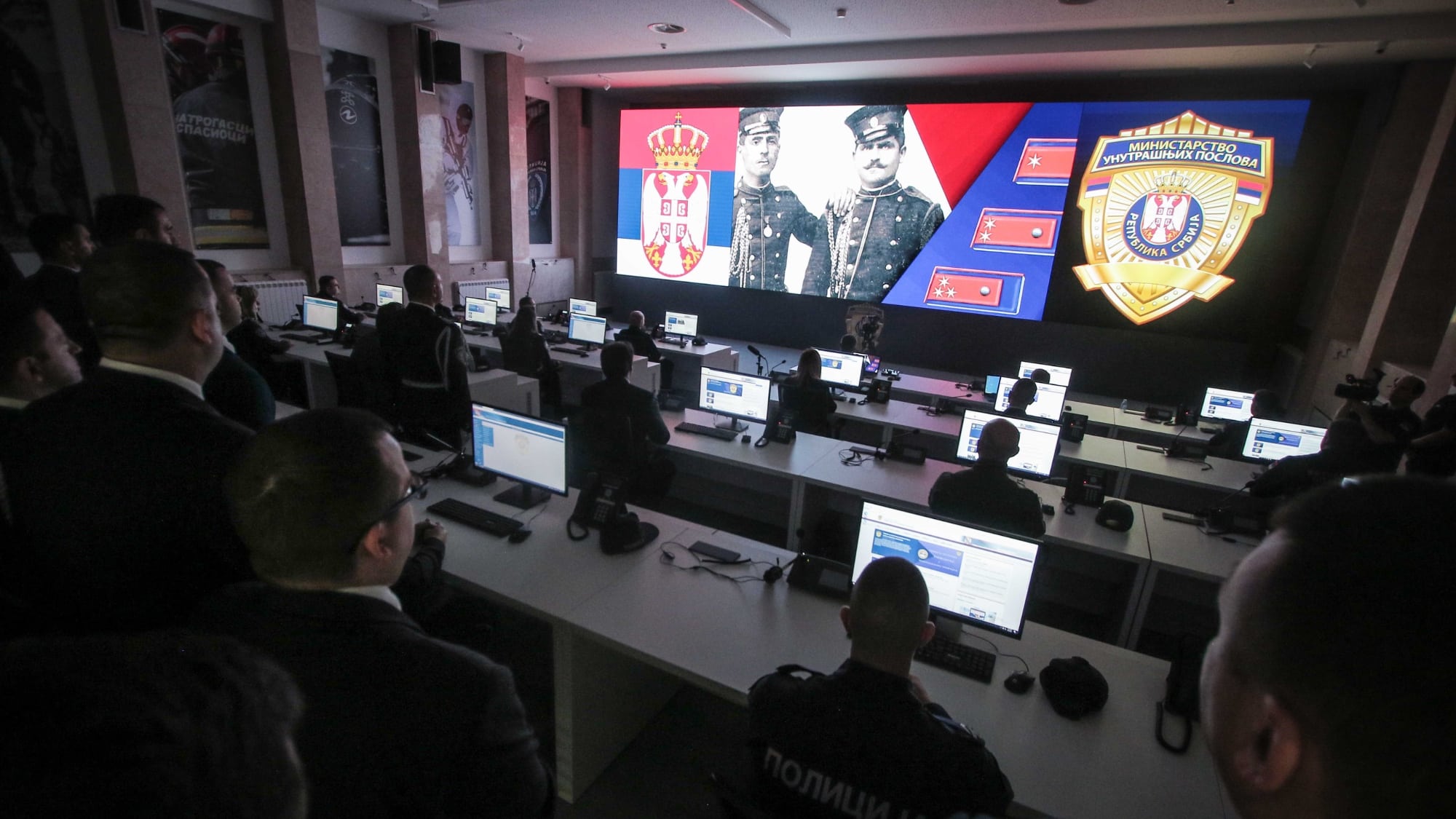
“Modern systems now typically include a live data ingestion component through which city cameras, traffic cameras, cameras mounted on drones, body-worn cameras used by police officers, and even cameras on private premises all transmit feeds into an analytical system that performs facial detection, tracking, comparison and alerting in real time,” said Milosevic.
“The system stores not only video footage but also facial proportions and templates, timestamps, movement paths, linked cameras, descriptions of clothing, vehicles and so on, allowing an analyst ultimately to search historical records, track an individual across multiple cameras, reconstruct movements and carry out retrospective identification.”
According to Japanese NEC, NeoFace Watch boasts the ability to carry out “more than three million searches per second” and recognise multiple faces simultaneously.
The facial recognition algorithms developed by NEC have also been licensed and acquired by a number of companies, one of which provides services to US immigration authorities, tech magazine Wired reported in January 2026.
FindFace takes a fraction of a second to compare faces against a database and issues notifications or alerts in real time.
It enables searches of video recordings based on facial characteristics and other specified parameters and can also generate analytical reports on individuals and their behaviour. According to its developers, FindFace can operate across hundreds of thousands of cameras simultaneously.
“Such software effectively makes every camera ‘smart’,” said Milosevic.
“In addition, it creates the possibility of centralising all footage in a single location – forwarding the signal from every camera to a command-and-control centre from which everything can be monitored and analysed in real time. Interoperability is another factor – the Huawei system in Belgrade was designed to operate on its own infrastructure and terminal equipment, whereas some analytical software solutions do not ‘care’ about the source of the footage and simply process everything stored within them.”