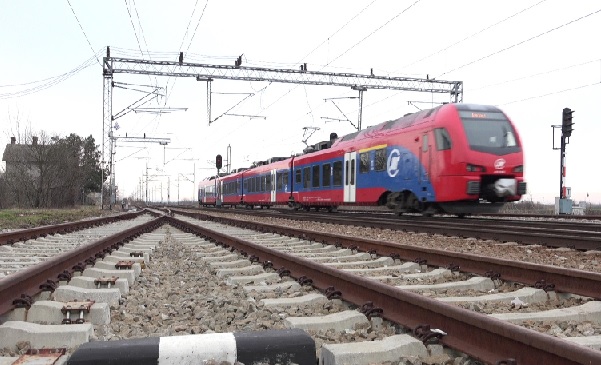
Serbia has received official notification of a major infrastructure project in North Macedonia concerning the modernisation and construction of a double-track high-speed railway on Corridor X, further accelerating the development of a rail link between Serbia and Greece.
The notification was submitted in accordance with the ESPOO Convention, which governs cross-border projects, as construction works will begin in the immediate vicinity of the border between the two countries, near the Tabanovce border crossing. The project envisages the complete transformation of the existing railway through North Macedonia into a modern, double-track and electrified route approximately 195 kilometres in length.
Planned operating speeds are up to 160 km/h for passenger trains and around 120 km/h for freight services, bringing this section of the railway closer to European rail standards. Particular emphasis has been placed on complex engineering works, with plans for the construction of 19 new tunnels with a combined length of around 19 kilometres. The existing six tunnels will be taken out of service due to unsuitable alignments and sharp curves.
On the route between Skopje and Gevgelija, the project also includes the construction of 59 additional structures, including bridges, flyovers and underpasses, as well as a new rail connection to Skopje Airport. The modernisation of the North Macedonian section of Corridor X is directly linked to infrastructure projects currently being developed in Serbia.
For the Belgrade–Niš section, documentation is being prepared for the construction of a double-track high-speed railway designed for speeds of up to 200 km/h, while works on the Niš–Brestovac section are already under way. Project and technical documentation is also being prepared for the continuation of the line towards Preševo.
The two countries have previously signed cooperation agreements to ensure a technically harmonised and fully functional connection at the border, a key prerequisite for uninterrupted international rail traffic. Experts consider the project to be of strategic importance, as it represents a crucial link in the creation of a high-speed rail corridor between Belgrade and Athens. This would significantly reduce journey times while also increasing the competitiveness of rail transport compared with road transport.
Additional economic benefits are expected through faster freight transport from the Greek ports of Thessaloniki and Piraeus to Serbia and onwards to Central Europe, potentially further strengthening the region’s logistical importance.
According to current estimates, the complete high-speed rail connection linking Serbia, North Macedonia and Greece could be operational by 2031, providing south-eastern Europe with one of its most important transport arteries for the decades ahead.
(Kamatica, 01.06.2026)
https://www.kamatica.com/analiza/od-beograda-do-soluna-za-pet-sati-brza-pruga-ka-grckoj-sve-bliza/79050