In 2025, birders and scientists found five “lost” bird species that had gone undocumented for a decade or more. As Mongabay’s Spoorthy Raman reports, these findings have helped reduce the total number on the global “Lost Birds List” from 163 in 2022 to 120 today.
To be classified as “lost,” a species must not have been recorded through photographs or audio or documented genetically in the wild for at least 10 years, as defined by a 2022 study. The list is maintained by the Search for Lost Birds project, a partnership between the NGOs American Bird Conservancy, Re:wild and BirdLife International. Project director John Mittermeier describes the list as an “early warning system” to identify at-risk species before they vanish forever.
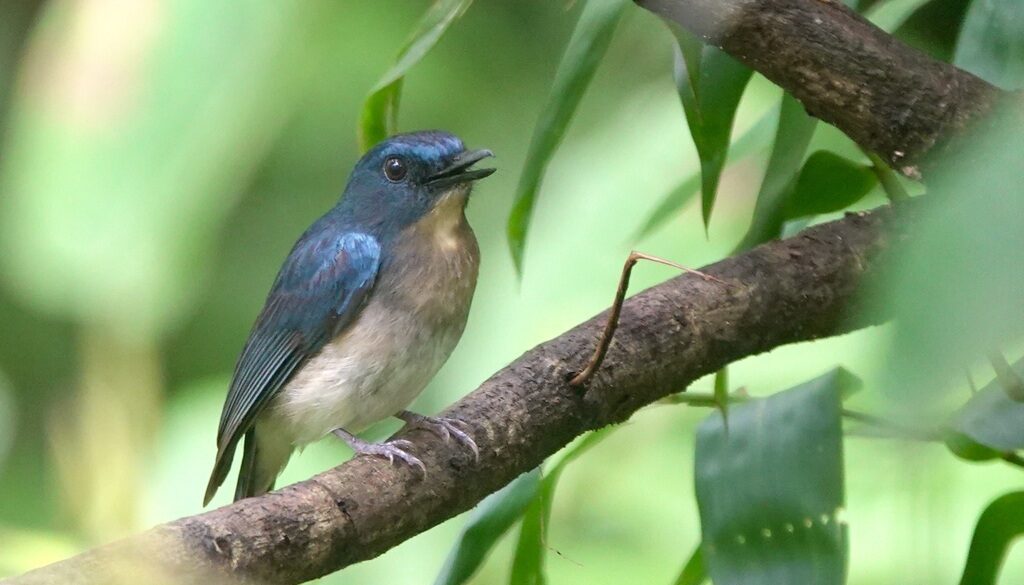
The five birds confirmed alive through photographs in 2025 are all endemic to islands in Southeast Asia and Oceania. These include the Bismarck kingfisher (Ceyx websteri) found in Papua New Guinea after 13 years, Biak myzomela (Myzomela rubrobrunnea) documented in Indonesian Papua for the first time in 20 years, Broad-billed fairywren (Chenorhamphus grayi) recorded in Indonesian Papua after 11 years, and the Sulu cuckooshrike (Coracina guillemardi) and rufous-breasted blue flycatcher (Cyornis camarinensis) found in the Philippines after 18 and 17 years, respectively.
While these “rediscoveries” spark hope, six new species will join the Lost Birds list in 2026, including the Mindoro bleeding-heart (Gallicolumba platenae) and Mindoro imperial pigeon (Ducula mindorensis). And some birds on the list are never seen or heard again, reflecting the extinction crisis. In 2025, the slender-billed curlew (Numenius tenuirostris) was officially declared extinct.
Mittermeier noted that the high concentration of lost birds on islands is concerning, as these species often have nowhere else to go when faced with habitat loss or invasive species. However, he remains optimistic about the role of the global birding community. By scouring platforms like eBird, iNaturalist and Xeno-Canto, citizen scientists have helped shorten the list by 25% in just five years.
“I’m really hopeful that we can get this list down to zero,” Mittermeier said. “I think that’s feasible … given the power and the interest of this global community.”
Read the full story by Spoorthy Raman here.
Banner image: The vulnerable Rufous-breasted blue flycatcher (Cyornis camarinensis) was photographed in the Philippines in March 2025. It was last documented in 2008. Image by kenny_well via iNaturalist (CC BY-NC 4.0).