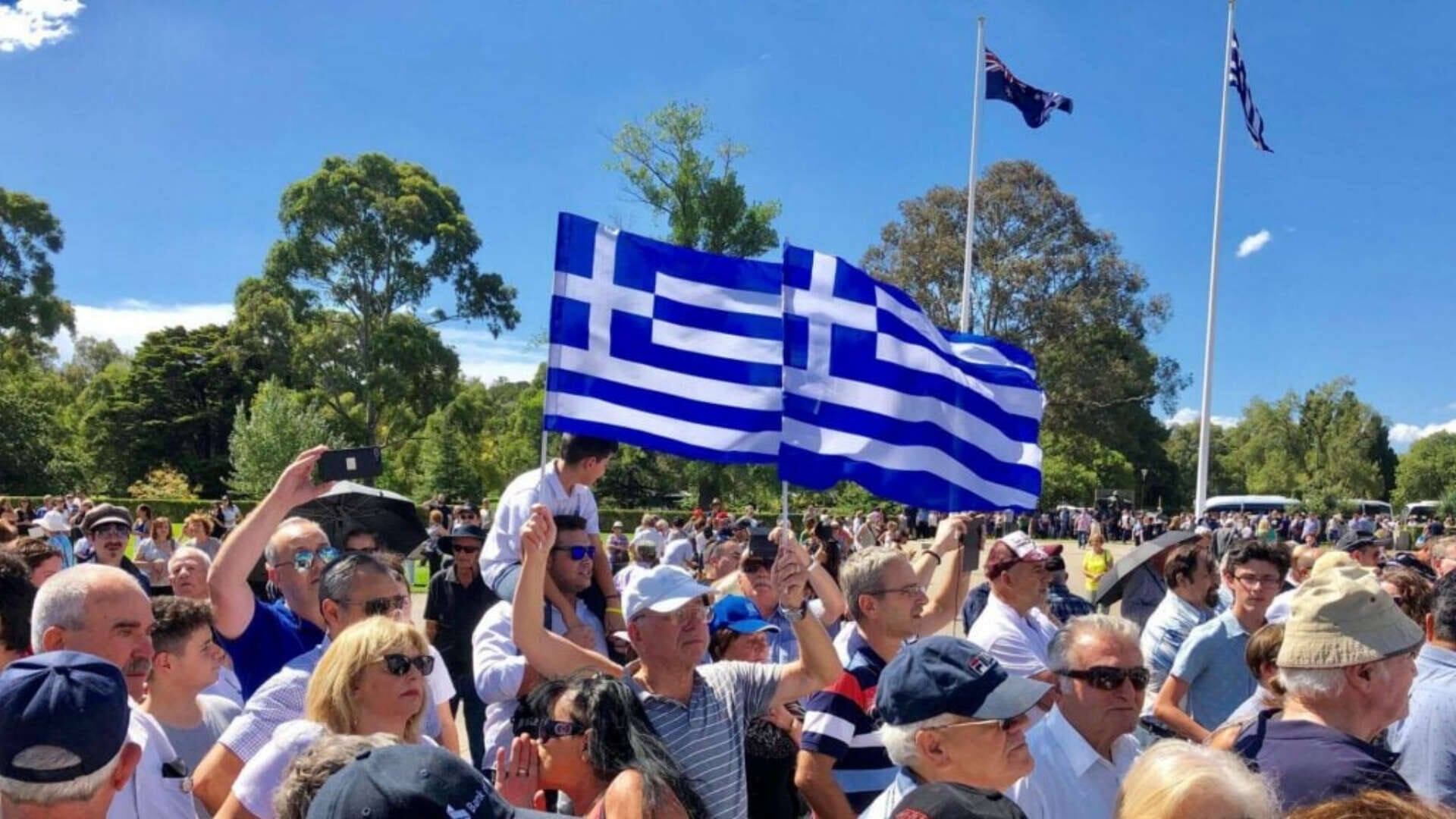
The Greek presence across Australia remains significant, with new figures from the Australian Bureau of Statistics (ABS) highlighting the suburbs in each state and territory with the highest proportion of residents claiming Greek ancestry.
The data, based on the 2021 Census, was shared by the ABS on social media to coincide with the Australian release of Christopher Nolan’s The Odyssey on 16 July.
“To celebrate, we’re looking at the suburbs in each state and territory with the highest percentage of Australians with Greek ancestry,” the ABS said.
The agency also reminded Australians that the 2026 Census will take place on 11 August, encouraging people to stay tuned to see how the figures change.
Suburbs with the highest percentage of Greek ancestry (2021 Census)
According to the ABS, the suburbs with the highest proportion of residents reporting Greek ancestry were:
New South Wales: Clemton Park – 23.7 per cent
Victoria: Oakleigh – 16.3 per cent
South Australia: Torrensville – 14.8 per cent
Northern Territory: Wagaman – 10.6 per cent
Queensland: Highgate Hill – 6.6 per cent
Western Australia: Coolbinia – 3.8 per cent
Australian Capital Territory: Forrest – 3.8 per cent
Tasmania: Tranmere – 2.2 per cent
The figures are based on residents’ usual place of residence and include only suburbs and localities with populations exceeding 1,000 people. Overseas visitors are not included.
Greek-born populations tell a different story
The ABS noted that when measuring the proportion of Greek-born residents, rather than people claiming Greek ancestry, the leading suburbs differ.
By percentage, the highest concentrations of Greek-born residents were:
Earlwood (NSW) – 7.4 per cent
Clarinda (Victoria) – 6.9 per cent
Wagaman (Northern Territory) – 4.6 per cent
Thebarton (South Australia) – 4.6 per cent
Highgate Hill (Queensland) – 2.7 per cent
Balcatta (Western Australia) – 1.3 per cent
McKellar (ACT)
Primrose Sands (Tasmania)
In absolute numbers, however, the largest Greek-born populations were found in different suburbs, including Earlwood (1,331), Reservoir (1,237), Prospect (242), Dianella (152) and Sandy Bay (79).
Greek Australians continue to grow
The 2021 Census recorded 424,744 Australians claiming Greek ancestry, making it the country’s 10th most commonly reported ancestry, while 40,091 people identified as having Cypriot ancestry.
Both figures represented increases from 2016, when 397,433 people reported Greek ancestry and 28,991 reported Cypriot ancestry.
Victoria remained home to Australia’s largest Greek community, with 181,184 residents identifying as having Greek ancestry, followed by New South Wales (141,627), South Australia (40,704), Queensland (32,702), Western Australia (16,117), the ACT (5,533), the Northern Territory (4,271) and Tasmania (2,602).
The Census also recorded 92,314 people born in Greece and 16,737 born in Cyprus.
Importance of the 2026 Census
With the next Census scheduled for 11 August 2026, Neos Kosmos has urged Greek Australians to ensure they accurately record their Greek ancestry and, where applicable, the Greek language spoken at home.
Census data helps governments plan education, language programs, interpreting services, aged care and community funding, making accurate participation important for the future of the Greek Australian community.