The lobbyist spoke out against decisions that mark a return to fossil fuels. “Yesterday’s answers will not help us with tomorrow’s questions,” she said.
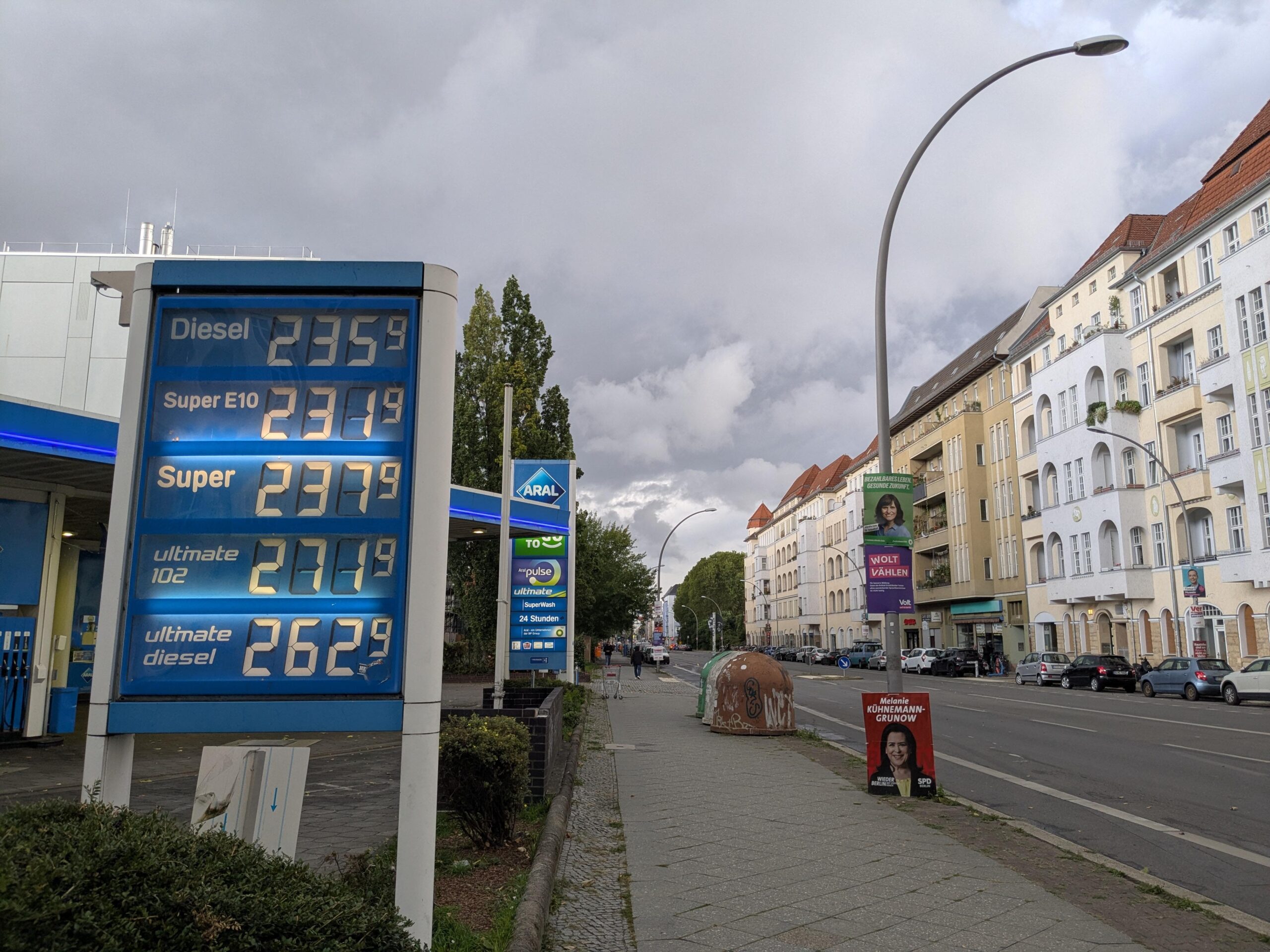
Her criticism comes only days after the government agreement for further fuel price relief. In a decision political commentators described as a last-minute attempt to calm voters and show resolute action two days ahead of the regional elections, the federal and state governments agreed to re-introduce tax breaks on petrol and diesel and as a second step set up a cap on fuel prices.
Economists and environmental groups slammed the decision as short-sighted, harmful to the climate, and said that it fails to protect lower-income households from record-high petrol prices.
Economist Veronika Grimm told newspaper Kölner Stadt-Anzeiger that the government is engaging in opportunistic politics in an attempt not to alienate voters. Focusing on short-term relief measures left the governing parties without energy to tackle “the truly important structural reforms,” Grimm added.
The question of how to support citizens and companies that struggle with rising petrol and diesel prices due to international crises – while ensuring the transition away from the climate-damaging fossil fuels – has occupied the government for years. High fuel prices can encourage lower consumption and falling carbon emissions, and make EVs more attractive to those who can afford them. But many people on lower incomes or small businesses who cannot afford to switch to an electric vehicle struggle to cope.
Mobility expert Marissa Reiserer of NGO Greenpeace said that “a fuel rebate is not targeted, is harmful to the climate, and a large chunk of it ends up as excess profit in the oil companies’ pockets.” Instead of “squandering billions in tax revenue through a blanket approach,” the government should tackle Germany’s dependence on oil, Reiserer added.
The federal and state governments agreed on a relief package worth 2.5 billion euros, introducing tax relief on petrol and diesel to lower fuel prices by 17 cents per litre until the end of the year. In addition, the government is exploring the introduction of a fuel price cap from January 2027, as well as laying the groundwork for direct payments to low-income households.
“For families, commuters, tradespeople and everyone else who needs a car every day, these fuel prices are no longer sustainable,” said finance minister Lars Klingbeil. “We are continuing to work towards ensuring that we can return the profits made by oil companies during the crisis to the public.” EU governments last week discussed imposing a bloc-wide windfall tax on energy companies, as countries are attempting to head off the potential fallout from what analysts have warned could be one of the continent’s biggest energy shocks in decades, The Guardian reported.
Earlier this year, the government already lowered fuel tax rates by 17 cents a litre for two months – a measure that cost the state around 1.6 billion euros. According to researchers, the measure disproportionately benefited high-income households, with the top ten percent expecting savings totalling 21 euros over the two months, while the bottom ten percent saved around six euros.
“Previous fuel discounts, which were implemented through tax cuts, have primarily resulted in high costs,” researcher Ralf Dewenter from the Helmut Schmidt University told the Science Media Centre.