The US federal administration under president Donald Trump has stifled efforts to clean California’s air and has challenged the state’s zero-emission vehicle rules, with California withdrawing its regulation for cleaner trucks. Federal money for electric buses is drying up and resources for safe cycling are disappearing from official federal websites.
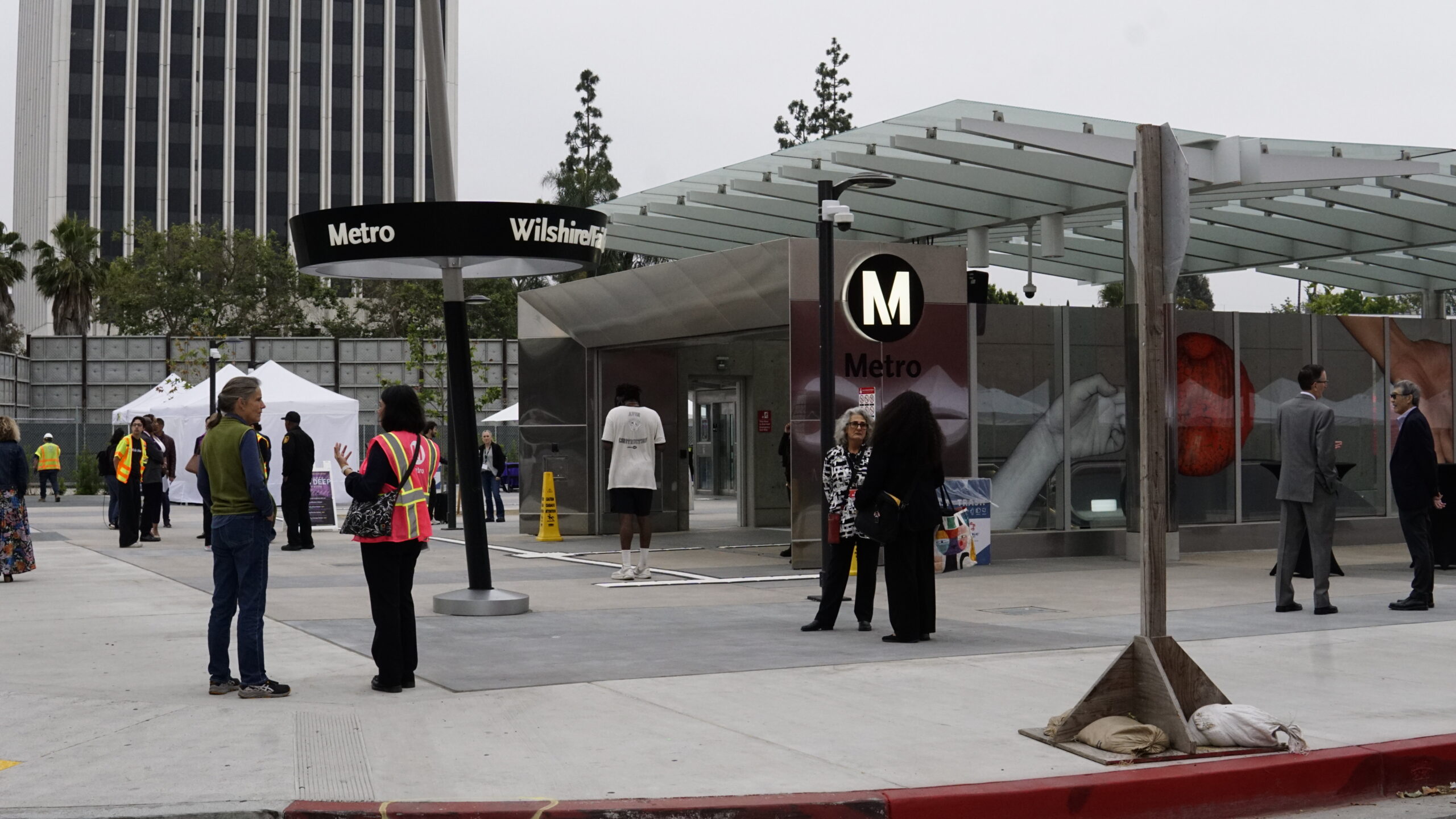
With Washington largely unresponsive to funding support requests, LA Metro has revised its list of 28 projects and gradually reduced the number of buses it plans to lease whenever critical funding milestones were not met, from an initial 3,000 to around 1,700. The agency, which already runs the second-largest public transport system in the US, needs federal money for buses, extra drivers and temporary depots. It had hoped its entire fleet, including the supplemental Olympic buses, would be zero-emission by 2028. Instead, its board will soon vote to procure 200 new electric buses.
“It’s a drop in the bucket, it is less than 10 percent of our entire fleet, but it is a move in the right direction,” board member Katy Yaroslavsky said at a summit marking the two-year countdown to the Games. “Many of us on the board hoped that it would be 100 percent electric by the Olympics, [a target] which we are not going to hit for a variety of reasons, but we are continuing to make meaningful progress,” she added. Electric buses are large, costly and slow to manufacture, and are in short supply in the US.
The supplemental fleet fares little better. LA28 said 100 percent of the fleet would be “zero or near-zero emissions”, without specifying a split. “There will be few electric buses brought in for the supplemental fleet,” says LACI’s Petersen, explaining the buses LA can borrow are likely to run on compressed fossil gas or be hybrid – better than diesel, but not zero-emissions. LA28 did not respond to requests for comment.
Who will fund improvements that outlast the Games, such as temporary bus lanes, is also unanswered. Previous US host cities received federal help covering transport costs but, given the administration’s hostility to climate projects, that seems unlikely. “If there is federal investment in transit in LA, both for the Olympics and beyond, that could really be a game changer,” says UCLA’s Wasserman. “LA has rail projects programmed 40 years from now, which could happen far sooner if the federal government puts money in.”