Matthew Buswell moves quickly between the beeping construction machines that surround the Los Angeles Memorial Coliseum. He is intercepted every time he enters a new space, answering a question here, giving an instruction there. As head of operations and sustainability at the iconic venue, he makes sure that everything happening inside runs smoothly and, as far as possible, more sustainably.
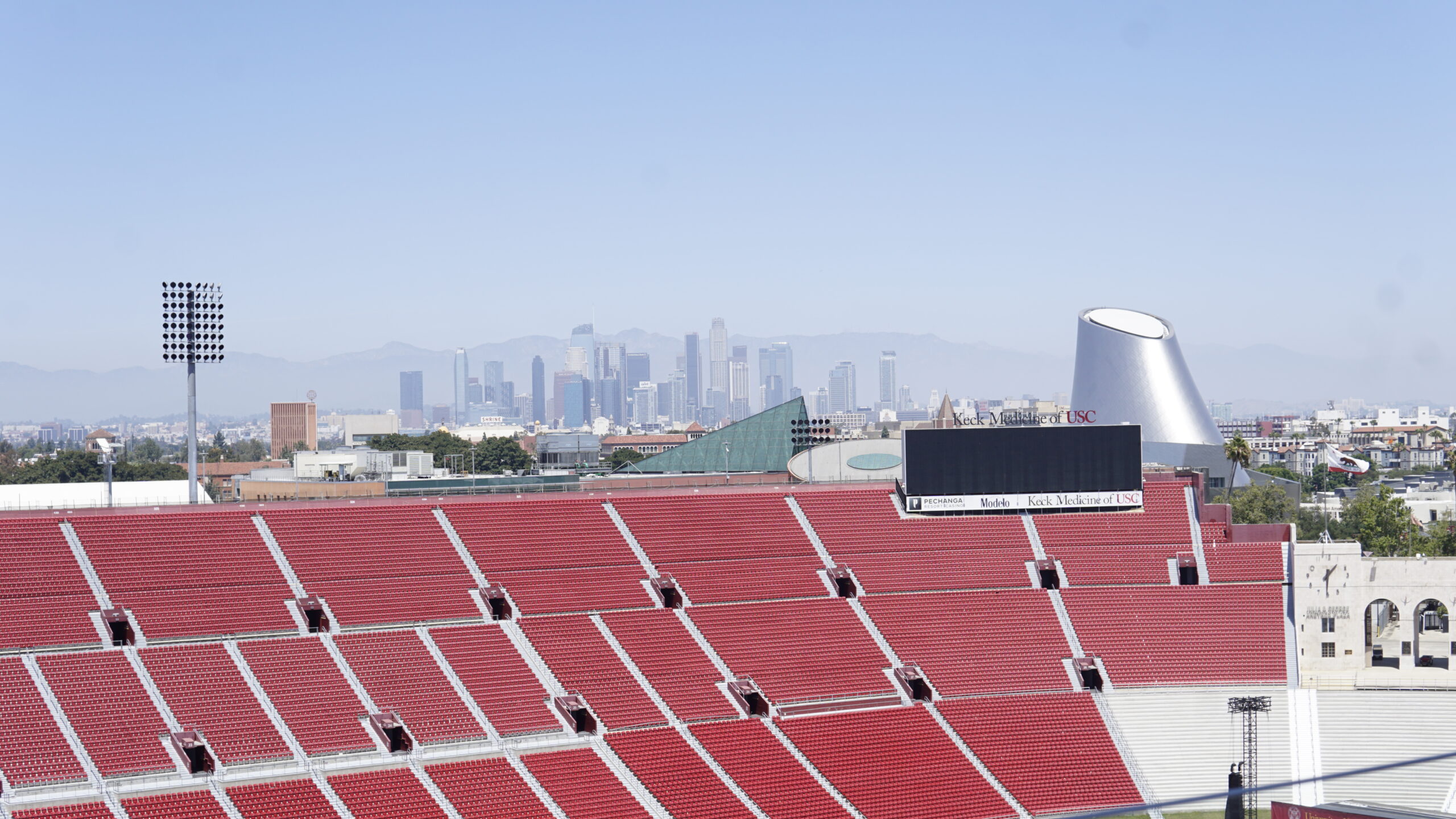
“I don’t want to be told what to do, I like to be at the forefront,” he says, walking through the sun-drenched seats that rise in a continuous arch from the pitch. “We do things here because we want to.”
Buswell has worked at the venue for over ten years, and his team has collected multiple awards for its “zero waste” operations. The Memorial Coliseum, an open-air bowl fronted by distinctive clean white arches, will become the first venue to host three Summer Olympic Games in 2028, having been their centrepiece in 1932 and 1984. The century-old stadium, practically devoid of shade, will have to cope with competitions running on consecutive days at the height of the Los Angeles summer.
As climate change rewrites the rules of sport, event organisers have to find ways to ensure staff, athletes and fans can continue to come together as temperatures get hotter and extreme weather risks rise – while reducing their own climate impact.