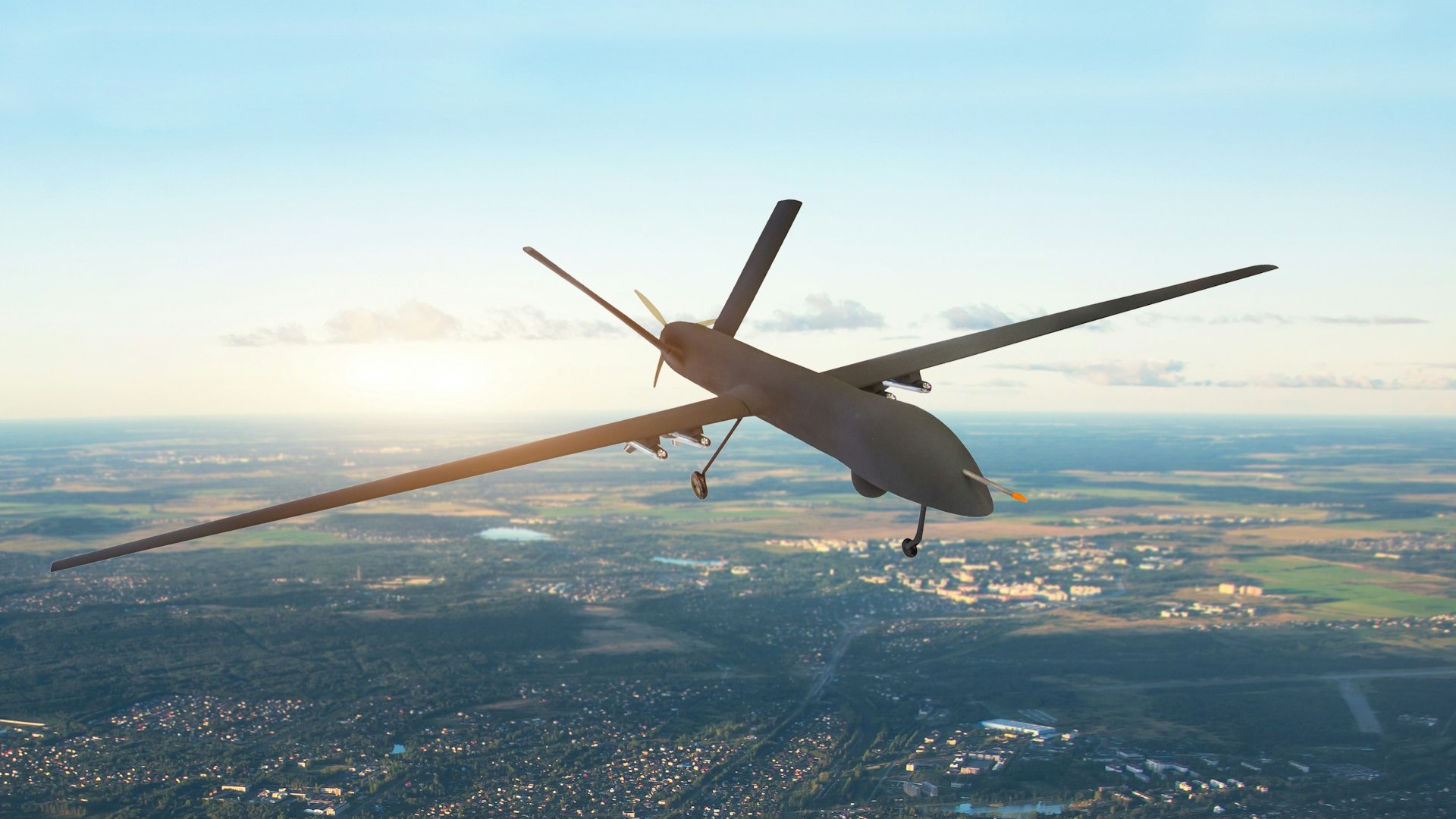
Estonia was placed on air alert overnight after several drones strayed into its airspace during a new wave of Ukrainian attacks on Russian military targets near the Baltic Sea, in the second such spillover incident in less than a week.
The Defence Forces said the danger had passed by 6am on Tuesday, but the episode will deepen concern in a country already rattled by last Wednesday’s incident, when a drone that entered from Russian airspace struck the chimney of the Auvere power plant in north-eastern Estonia.
Colonel Uku Arold, head of strategic communications for the Defence Forces, said the latest threat arose as Ukraine continued overnight strikes on Russian infrastructure in Leningrad Oblast, including the Ust-Luga port area. Russia, he said, had sought to repel the attacks and likely used measures that caused some drones to lose their bearings and veer towards Estonia.
Ust-Luga, near the Estonian border on Russia’s Gulf of Finland coast, is a major port and rail hub where the Luga River meets the sea – and the site Ukrainian drones were reportedly aiming at in strikes on Russia’s Baltic energy infrastructure.
Several drones were detected both outside and inside Estonian airspace, prompting a precautionary warning across large parts of the country. Arold said none were shot down over Estonian territory and that the immediate risk of a drone falling in Estonia was now low.
The warning was expanded in stages during the night, first covering Ida-Viru and Lääne-Viru counties, then parts of southern and central Estonia, and later Harju, Rapla and Pärnu counties. Authorities stressed that this was not an exercise.
For many residents, the night’s tension was made audible by NATO fighter jets taking off from Ämari air base. “What people heard was the whisper of freedom,” Arold said on the morning programme on Vikerraadio, Estonia’s public radio, adding that allied aircraft had been searching for the drones and protecting Estonian airspace.
NATO fighter jets taking off from Ämari air base made the night’s tension audible across parts of Estonia as allied aircraft searched for drones and protected Estonian airspace. Pictured: four Italian Air Force F-35s at Estonia’s Ämari Air Base on 17 September 2025. Photo by the Estonian Defence Forces.
The defence minister, Hanno Pevkur, said Estonia had operated at maximum readiness, supported by allies in Lithuania, Finland and Sweden, while Italy continued its Baltic air policing mission over the country. Portugal is due to take over that role on Tuesday.
Pevkur also commented on reports from Kastre rural municipality in Tartu County that a drone may have crashed and exploded there. He said the information was being checked together with the Police and Border Guard Board, although the Rescue Board said before 8am that it had found nothing suspicious.
The night’s events briefly disrupted civil aviation. A Finnair flight from Helsinki to Tartu turned back over central Estonia, while the morning Tartu-Helsinki service was cancelled. Tallinn Airport said one departing flight had also been affected after air traffic procedures were introduced because of an unidentified object in Estonian airspace.
The overnight air alert briefly disrupted civil aviation: a Finnair flight from Helsinki to Tartu turned back over central Estonia, the morning Tartu-Helsinki service was cancelled, and one departing flight from Tallinn was also affected. Source: Flightradar24.
The latest alert came only days after the Auvere incident, when a drone entering from Russian airspace struck the chimney of the Auvere power plant at 3.43am. No one was injured and the impact did not cause significant disruption to Estonia’s electricity system.
On Tuesday morning, officials said the immediate threat had passed and that people could continue with their normal activities, including going to school and work. At the same time, the overnight alert underlined Estonia’s growing exposure to the wider regional effects of the war.