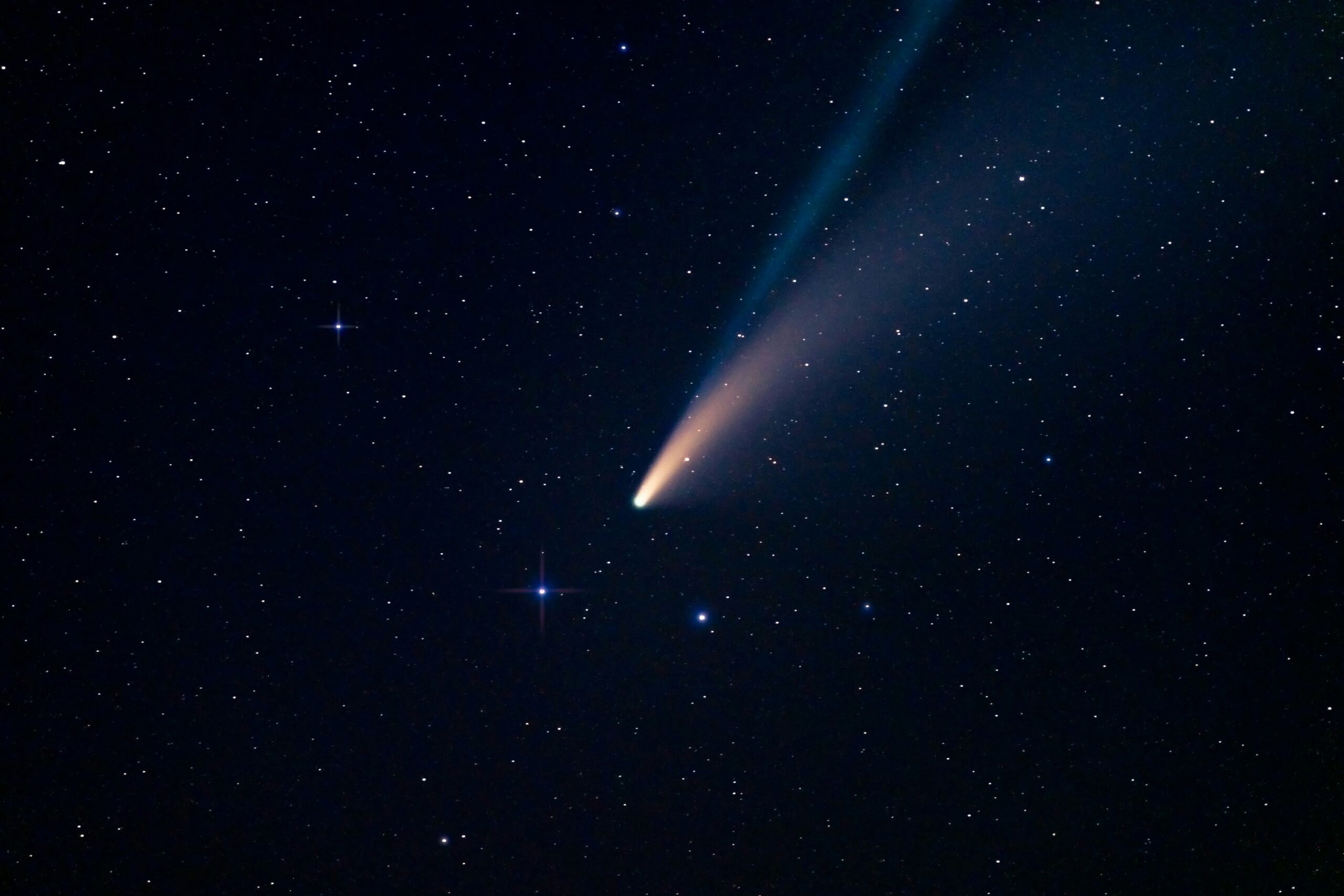
A camera built in southern Estonia will fly on the European Space Agency’s Comet Interceptor mission, which aims to photograph an ancient comet from the outer reaches of the Solar System.
Estonia has completed its first camera built for a deep-space mission, marking a milestone for the country’s growing space industry.
The optical periscopic imager for comets, known as OPIC, was developed over eight years at the University of Tartu’s Tartu Observatory. It will now be handed over to the European Space Agency and installed on one of the probes of ESA’s Comet Interceptor mission.
The mission is designed to study a pristine comet entering the inner Solar System from the distant Öpik-Oort Cloud – a region believed to contain icy bodies preserved since the formation of the Solar System 4.6 billion years ago.
“We hope to obtain unique information about the formation of the Solar System – including our planet – and the building blocks of life,” Mihkel Pajusalu, head of the Department of Space Technology at Tartu Observatory, said.
According to Pajusalu, this is the first time scientists from independent Estonia have taken part in an ESA science mission from its earliest concept to the construction of a flight-ready instrument.
Estonia’s first deep-space camera, OPIC, was developed at the University of Tartu’s Tartu Observatory over eight years. Photo by Sten Salumets.
The Estonian camera will be installed on one of two small probes travelling with the mission’s main spacecraft. After launch, Comet Interceptor will first be parked about 1.5 million kilometres from Earth – far beyond the Moon – where the gravity of the Sun and Earth helps spacecraft hold a steady position. There, it will wait until astronomers identify a suitable comet to intercept.
Once the target approaches, the probes will be released on a high-speed flyby. The Estonian-built camera is expected to pass within just 300 kilometres of the comet, photographing it as it races by at up to 80 kilometres per second.
“The camera must make decisions independently and extremely quickly in deep space – this is what makes OPIC technologically distinctive,” Pajusalu said.
Because real-time communication with Earth will not be possible during the encounter, OPIC must operate autonomously, selecting the most scientifically valuable images and sending them back to Earth.
Madis Võõras, head of the Estonian Space Office, said the project demonstrated the ability of Estonian researchers and companies to create space-qualified hardware.
The camera hardware was manufactured by the Estonian space company Crystalspace, with contributions from Protolab, ECCOM, Metrosert, Radius Machining, Insero, Metric, Difrotec, Artec Design and Krakul. Latvia’s Bitlake Technologies was also involved.
More than 20 people at Tartu Observatory worked on OPIC. The project has so far cost about €5 million and has been funded by the European Space Agency and the Estonian state.