By Veronica Vega
HAVANA TIMES – One day, my younger sister, who lives in Las Vegas, told me over the phone: “I bought you a sweater, the kind you like: black, with a turtleneck.”
She knew I’d had one when I was 17 and wore it until it was practically threadbare. Imagining myself wearing the new one filled me with anticipation every winter after that. But it never arrived.
Over there, everything moves at such a dizzying pace that promises are forgotten. They end up tucked away in some drawer full of clothes that are never worn enough to wear out. So if someone finally decides to put that sweater in a black bag and send it to Cuba in a box of miscellaneous goods (because everything is needed here), it still retains the scent of things untouched.
From the outside, people often fail to grasp the magnitude of the effect of such a small promise, born of a sincere desire and then lost in the whirlwind of events.
Decades later, when I visited Las Vegas, I didn’t see a single sweater like the one she had promised me in any of the stores we went to together. But I still remember it when these gray days arrive, announcing the first cold fronts of Cuba’s mild winter.
I imagine the moment she thought of me when she saw it, the flashes of the past, those outings together in the 1990s, standing by the side of a highway, sticking out our thumbs at passing cars, and seeing what fate had in store for us.
What a delirious feeling of freedom. You were certain someone would stop, that you wouldn’t be stranded by the roadside, because your youth and your wildness guaranteed it.
Fortunately, back then this was a safe country, despite the crisis of those years, which cannot compare to the one we are now mired in. It wasn’t common to hear about rapes and murders. Although we didn’t have the internet or social media either.
In any case, we never had any frightening experiences, and the ease with which we could move from one place to another encouraged our belief in a successful future.
Today, my sister and I have no contact whatsoever.
It’s even hard to believe that we shared the same mother and decades of living together.
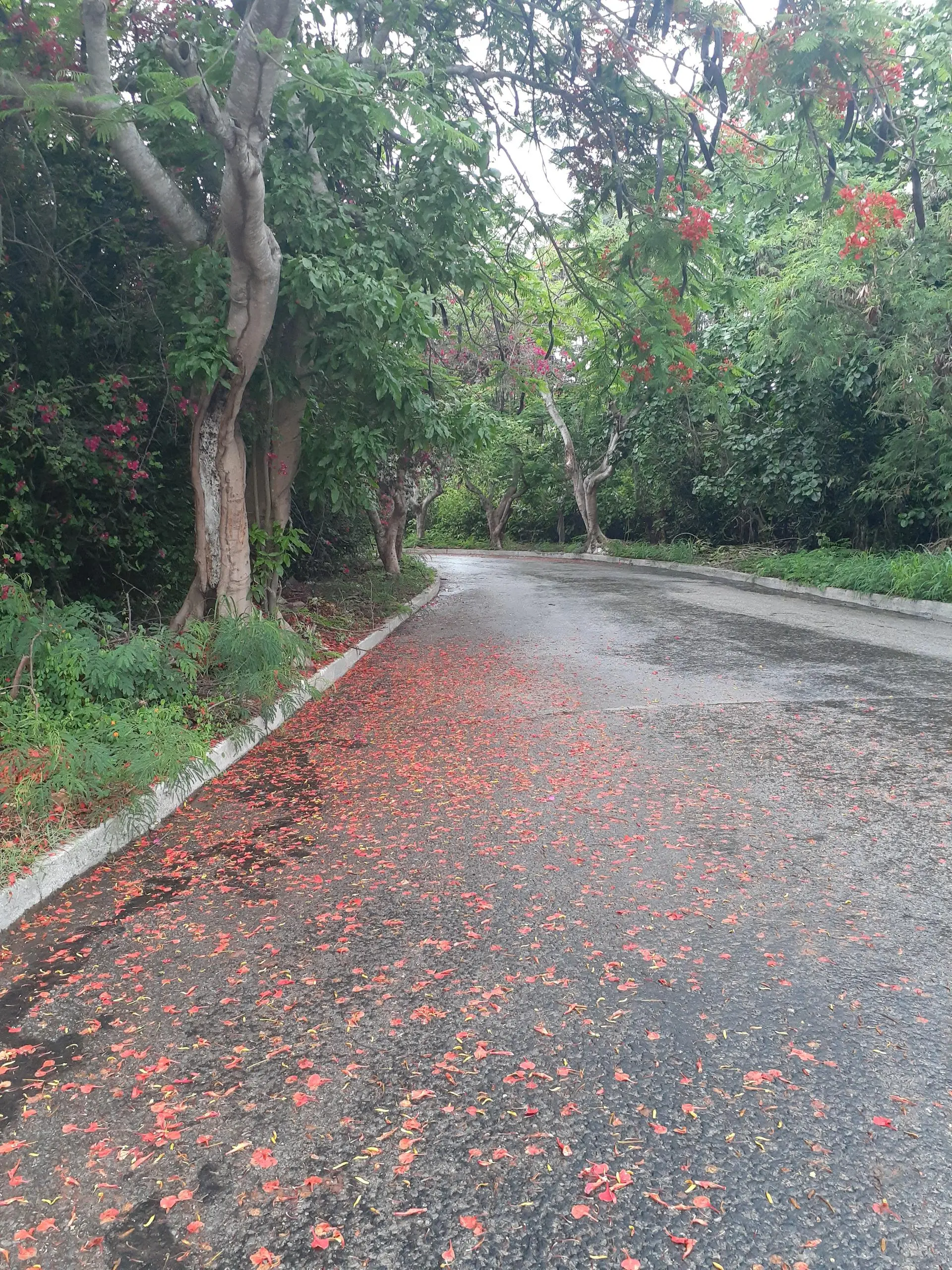
There’s a street near my building that I enjoy taking when I’m on my bicycle because it runs downhill, winding beneath a row of flamboyant trees that cast a perpetual shade over the few passersby.
Whenever I ride down it, I remember the day I traveled that same street in tears, on my other red bicycle, which was later stolen. I was coming from my mother’s house, where I had learned that my sister was leaving because she had won the lottery (the US visa lottery), the news arriving in a yellow envelope that made its recipients jump for joy.
That precise moment when you know there will be a rupture, like a tendon or ligament tearing apart despite its strength.
No one can convince you that nothing will change when you board that plane with a one-way ticket for permanent departure.
It is much more than a change of place, language, or culture. Much more than the pressing demands of time in a routine that suddenly becomes unstoppable.
Your perception of what is tangible, of what is possible, changes. The new reality rearranges emotions and priorities.
Whatever is not immediate gets postponed, pushed aside. All the more so if it requires the effort of bringing it back to mind, and memory carries with it this uncomfortable feeling: the helplessness imposed by life over the actual course of events. What was already written (though we didn’t know it) reveals itself with the brutality of a torrent, a gale.
It scatters us: you over there, me here, our mother lost along the way, trying to find a state of mind that doesn’t involve this unbearable tearing apart.
Accepting that existence presents us with such different challenges. Or perhaps the only difference is where we happen to be, because everyone eventually arrives at this station where everything can be seen from above, as though from a lookout point.
It doesn’t matter if we didn’t arrive together. This is the moment to unravel the source of that happiness we felt when we stuck out our thumbs by the side of the highway, when we ran down the street near the Russians’ little beach, defying the isolation of the place and the men who hid among the bushes to masturbate. When we climbed onto a motorcycle with a sidecar whose driver rescued us from a policeman’s interrogation, leaving the officer staring after us in bewilderment as we rode away laughing.
A happiness built on the absence of failures and losses. Of disagreements. Of the sinister aura of ingratitude.
But who can hit “delete” on memories, or at least classify them as incompatible with the present, inappropriate, or pointlessly painful?
They come with the naturalness of what once existed, with the innate power of things that truly happened, and they make no distinction between the distances that separate people, just as they make no distinction between the living and the dead.
They come, settle in, and deny everything except what once united us, in a kind of alternative present where nothing impure can enter, nothing damaged by prejudice or misunderstandings.
Nothing but love.
Read more from the diary of Verónica Vega here on Havana Times.