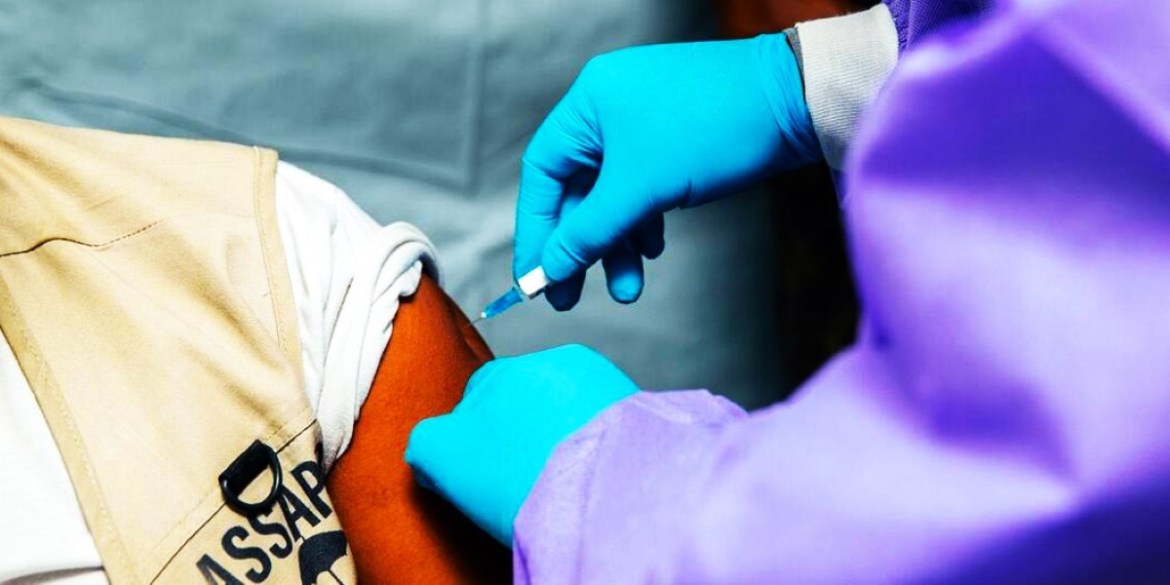
Two new Ebola vaccine candidates will be added to a clinical trial in the Democratic Republic of Congo, as Kinshasa continues to battle a deadly outbreak caused by the Bundibugyo species of the virus
The announcement by the United Nations’ World Health Organization follows the recommendation of its independent Technical Advisory Group on Candidate Vaccines Prioritization.
This, according to health experts, will mark the first time that vaccines specifically designed for Bundibugyo virus will be evaluated during an outbreak of the disease.
“The fact that these vaccines are ready to enter clinical trials is a testament to the power of science and partnership,” the World Health Organization’s Director-General Tedros Adhanom Ghebreyesus stated.
Tedros stressed that while vaccines alone will not end the outbreak, “they could become a powerful new tool for bringing it under control”.
‘Hope’ as cases continue to pile up
The two vaccine candidates are ChAdOx1, developed by the University of Oxford with the Serum Institute of India, and mRNA-1469, developed by the American pharmaceutical and biotech company Moderna.
WHO convened the expert group which this week recommended them for further clinical evaluation, based on available evidence.
The DR Congo has been battling a deadly outbreak of the Ebola disease caused by the rare Bundibugyo virus species for nearly six months and it has become the largest in the country’s history.
As of the first day of November 2026, there were more than 10,500 confirmed cases and 5,126 deaths.
The World Health Organization is supporting the Tumaini multi-vaccine trial, named after the Swahili word for “hope”. It was launched on 23 October in the eastern city of Bunia, capital of Ituri province, which remains the epicenter of the outbreak.
The Ervebo vaccine, used to treat the Zaire species of the Ebola virus, is already being tested to determine if it is effective against Bundibugyo species. The two new vaccine candidates will enter the trial following national approvals.
Tumaini is designed to test multiple vaccine candidates within a single trial, using a ring-vaccination approach that focuses on contacts of people with confirmed Ebola Bundibugyo.
The World Health Organization and partners pioneered the strategy during the West Africa Ebola outbreak a decade ago, where a trial in Guinea established the efficacy of the Ervebo vaccine.
Four vaccination rings have been set up and several more are being prepared, while research into other potential treatments is also moving forward.