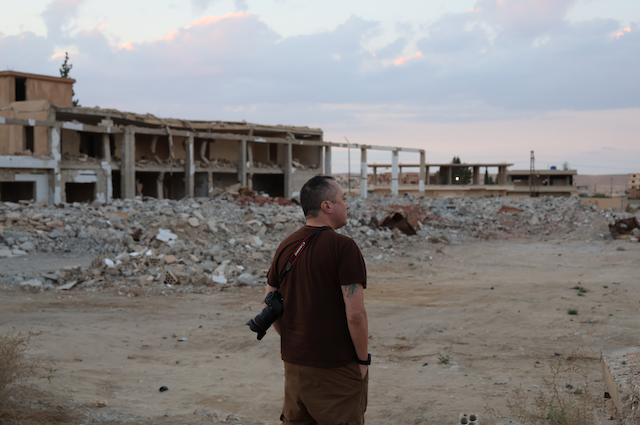
U.S. Special Presidential Envoy to Syria and Iraq Tom Barrack has reignited debate over the viability of investing in Syria, offering a stark assessment of the country’s economic landscape after years of conflict and sanctions. Speaking in Doha, Barrack described the search for investors willing to enter the Syrian market as “nearly impossible” under current conditions—citing a fragile banking sector, currency instability, security risks, and long investment payback periods. Yet developments on the ground suggest a more layered reality, where structural obstacles coexist with active efforts to draw international companies into strategic sectors.
Barrack delivered his remarks at CNN’s “Global Perspectives: In Doha” forum on Thursday, alongside senior officials including Qatar’s prime minister. While outlining the barriers facing investors, he also revealed that he has held discussions with major global energy firms—ExxonMobil, Chevron, ConocoPhillips, and TotalEnergies—encouraging them to explore opportunities in Syria. His comments indicate that Washington does not view the Syrian market as entirely closed, but rather seeks to shape conditions that could eventually allow corporate entry.
The envoy noted that investments required in Syria’s oil and energy sectors run into the billions and may take 10 to 15 years to generate returns. Such timelines reflect the high risks associated with strategic projects in a country whose infrastructure remains deeply damaged and whose financial institutions struggle with trade financing, transfers, and international payment settlements. These concerns are inseparable from the state of Syria’s banking system, which requires modernized platforms, stronger compliance frameworks, and improved capacity to interact with global financial institutions—particularly given historic sanctions and ongoing restrictions that influence foreign banks’ risk calculations. A fragile regulatory environment, unclear investment rules, and persistent political‑security risks further elevate costs and deter companies from committing to long‑term ventures.
Barrack’s warnings carry added weight because reconstruction is not measured by the number of agreements signed, but by the economy’s ability to convert them into funded, operational projects. The World Bank estimates Syria’s recovery and reconstruction needs at roughly $216 billion—a figure that underscores the scale of the challenge and the vast funding gap facing the country. Still, foreign investment is not entirely absent. The year 2026 has seen notable moves by international firms toward the energy sector, even if these steps range from initial memorandums of understanding to more advanced field‑development agreements.
In February, Chevron signed an MOU for offshore oil and gas exploration in Syrian territorial waters in partnership with a Qatari company. In May, TotalEnergies, ConocoPhillips, and QatarEnergy signed a separate agreement to explore offshore energy opportunities. Onshore, U.S. firm HKN advanced further by signing a long‑term contract to develop seven oil fields in the Rumeilan area, while ConocoPhillips and Novaterra reached cooperation agreements to develop gas fields. These developments signal tangible international interest, though they do not guarantee that every agreement will translate into actual capital inflows.
A review of the Oxford Business Group’s 2026 report on Syria suggests that the core challenge lies in converting MOUs and announcements into funded, active operations. Many agreements still require technical, financial, and regulatory completion. This explains part of Barrack’s caution, but also highlights that assessing Syria’s investment prospects requires examining project types, implementation stages, and the nature of participating entities—not merely the scale of current obstacles.
International financial institutions, meanwhile, offer a less pessimistic outlook. Following a mission to Damascus in February 2026, the International Monetary Fund reported that Syrian economic activity is experiencing accelerated recovery driven by improved consumer and investor confidence, returning refugees, increased electricity supply, deeper regional integration, and the lifting of several international sanctions. The IMF noted that new investment projects support growth prospects for 2026 and beyond, while emphasizing the need to strengthen governance and carefully evaluate financial commitments associated with mega‑projects.
Economic researcher Yahya al‑Sayyed Omar argues that Barrack’s description of investment as “nearly impossible” should not be interpreted as a definitive market assessment. Writing on Facebook, Omar framed the envoy’s remarks as a political‑economic message to the Syrian government regarding the requirements for major strategic projects. He stressed that while airports, ports, energy, oil, and gas demand massive capital and long payback periods, opportunities remain across other sectors—particularly small and medium‑sized enterprises (SMEs), which can stimulate markets, create jobs, and increase production and public revenues. Omar warned against allowing infrastructure and energy priorities to overshadow agriculture and manufacturing, which are essential for food security, reducing import dependence, and easing pressure on foreign exchange. He concluded that recovery requires activating local capital, expanding Arab‑Syrian partnerships, and fostering a stable regulatory environment.
This perspective aligns with a January 22, 2026 United Nations Development Programme report on the Syrian private sector, which emphasized that recovery cannot rely on mega‑projects alone. The report highlighted SMEs, agriculture, manufacturing, and local value chains as vital drivers of employment and market activity, and pointed to the potential of Syrian diaspora investments as a source of capital, expertise, and trade linkages.
Economist George Khouzam, writing separately, framed the protection of local production as central to addressing monetary and economic imbalances. He argued that expanding industrial and agricultural output provides the real economic backing for the Syrian pound. Opening markets to imports without safeguarding domestic factories and workshops, he warned, could depress local production, raise unemployment, and increase demand for foreign currency. Khouzam noted that the strength of the U.S. dollar rests not on gold backing but on trust in the U.S. economy, institutions, and global trade standing—a view consistent with fiat currency principles, where value is shaped by monetary policy, confidence, and productive capacity rather than gold convertibility.
These economic debates intersect with broader political messages embedded in Barrack’s Doha remarks. The envoy noted a readiness within Syria’s leadership to establish a different relationship with Israel and pursue understandings to end hostilities, framing diplomacy as the path to a long‑term settlement. While this overlap does not prove a direct link between investment criteria and normalization terms, it illustrates Washington’s view of Syria’s trajectory through interconnected security, political, economic, and regional tracks.
Ultimately, Barrack’s comments reflect an economic assessment grounded in documented structural hurdles, but delivered within a political context in which Washington seeks to shape Syria’s economic opening. Whether his remarks amount to political pressure will depend on whether they are followed by explicit conditional demands. For now, the central test for the Syrian government remains its ability to convert international interest into funded, productive projects while building a resilient domestic economic base.
This article was translated and edited by The Syrian Observer. The Syrian Observer has not verified the content of this story. Responsibility for the information and views set out in this article lies entirely with the author.