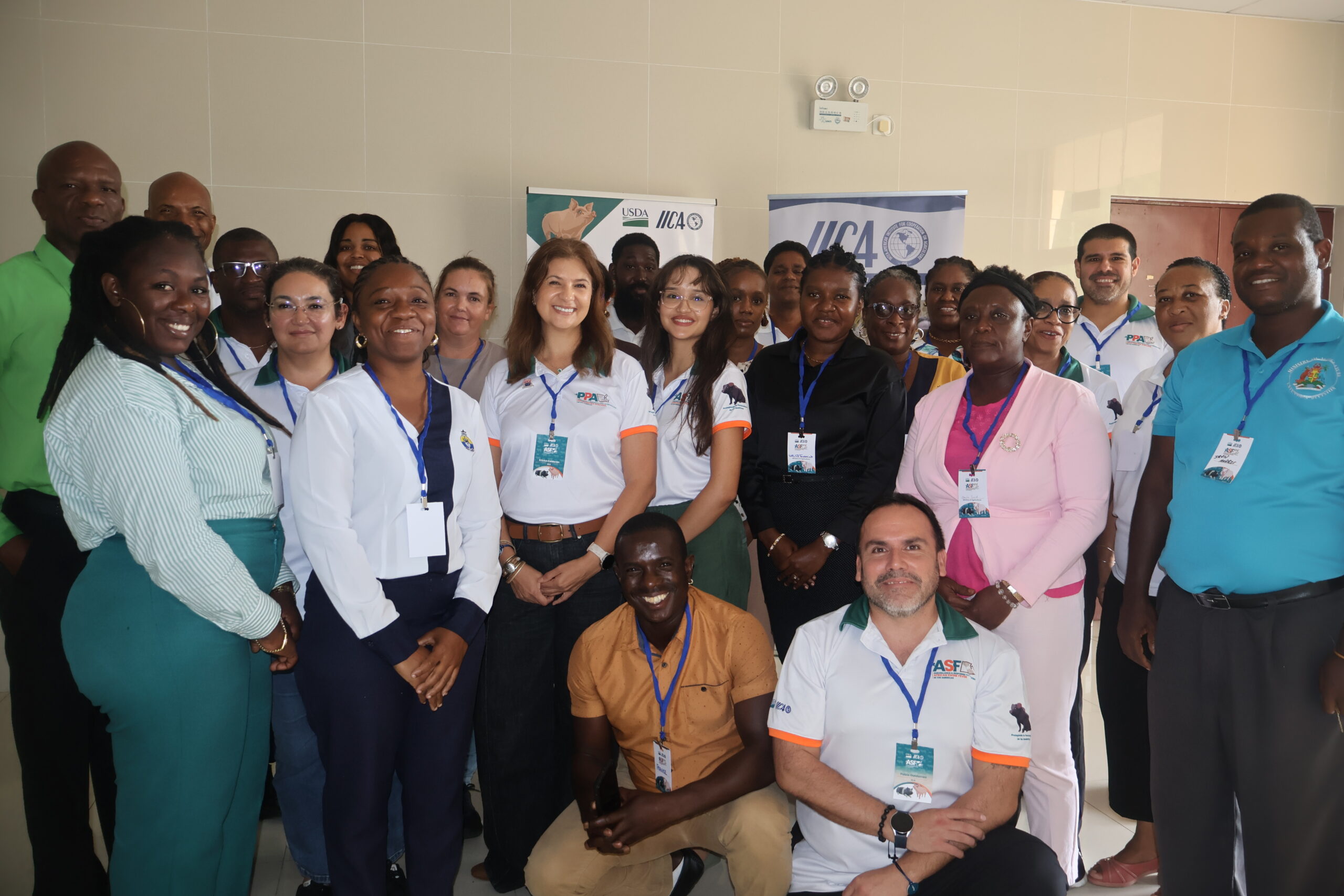
Grenada has strengthened its capacity to prevent, detect and respond to African Swine Fever (ASF) through a national sample collection and surveillance training exercise conducted from 13–14 October, 2026.
The activity, funded by the United States Department of Agriculture (USDA), and implemented by the Inter-American Institute for Cooperation on Agriculture (IICA) in collaboration with the Ministry of Agriculture’s Veterinary and Livestock Division, formed part of a wider Caribbean initiative to strengthen preparedness against ASF.
African Swine Fever (ASF) is a highly contagious viral disease affecting domestic and wild pigs. Although it poses no risk to human health, it can cause severe mortality in affected pig populations, threaten farmers’ livelihoods, disrupt agricultural trade and undermine food and nutrition security. Confirmed outbreaks in the Dominican Republic and Haiti highlight the need for Caribbean countries to strengthen preparedness, particularly given regional trade links, movement across borders and constraints in veterinary and diagnostic capacity.
The Grenada exercise brought together veterinary personnel, representatives of the Royal Grenada Police Force, Grenada Ports Authority and other stakeholders for technical instruction and practical field activities. Participants strengthened their skills in animal handling, field biosecurity, correct use of personal protective equipment, preparation of sampling areas, collection of ear blood swabs, and safe sample packaging, storage and preparation for shipment.
IICA Representative in the Eastern Caribbean States Gregg Rawlins emphasised the importance of strengthening preparedness, particularly for small island states such as Grenada. “The presence of ASF in the Dominican Republic and Haiti reminds us that this threat is not distant. For small island states such as Grenada, prevention, early detection and effective preparedness are essential,” Rawlins said. “This training is therefore more than a technical exercise; it is an investment in Grenada’s ability to protect its livestock industry and the livelihoods that depend on it.”
The initiative seeks to build a network of trained veterinary and laboratory personnel, improve national sample collection and reporting systems, and support coordinated surveillance in priority areas. The wider project also aims to strengthen regional information-sharing and develop practical response arrangements so that suspected outbreaks can be investigated promptly and appropriate containment measures can be implemented.
The training was supported by a 7-member IICA ASF contingent led by Dr Ericka Calderon, ASF Project Manager at IICA Headquarters, with representatives from Chile, Guyana and St Lucia. Zachary Tipton, International Programme Specialist with the United States Department of Agriculture (USDA), also contributed to the regional initiative. Participants received practical instruction in proper animal handling, the correct donning and doffing of personal protective equipment (PPE), the establishment of sampling areas, sample collection, packaging and storage, and preparation of samples for shipment.
Chief Veterinary and Livestock Officer in the Ministry of Agriculture Dr Kimond Cummings highlighted the seriousness of ASF for global pig production and the need for decisive action across the Western Hemisphere. “While harmless to human health, its impact on swine health is devastating,” Cummings said, noting that the disease requires vigilance and decisive action.
Dr Calderon described surveillance as the first line of defence against ASF. “Surveillance, our first line of defence, is not only about detecting diseases, it is about preventing it,” she said. Effective systems, she explained, help veterinary authorities identify risks, monitor animal and animal-product movements, and make timely, evidence-based decisions. She noted that the project focuses on strengthening national ASF surveillance programmes and developing a coordinated regional rapid response strategy.
Permanent Secretary in the Ministry of Agriculture Javan Williams called for the knowledge and practical skills gained to become part of routine veterinary operations, noting that it “will enhance our ability to detect disease early, respond effectively and protect our livestock resources, thus keeping our livelihood intact.”
Williams stressed that surveillance must continue beyond externally supported training activities, inclusive of “regular farm visits, timely reporting, proper record keeping, vigilant observation, close collaboration with farmers and other stakeholders.”
Beyond the immediate training, the regional project is intended to support targeted surveillance and sample collection, appropriate diagnostic testing through recognised laboratories, and the development of ASF surveillance and response plans. Progress is to be assessed through measures such as personnel trained, samples collected and tested, geographic coverage and the application of skills in the field. These activities are designed to strengthen readiness; the exercise itself should not be interpreted as evidence that ASF has been detected in Grenada.
The exercise forms part of the Surveillance and Response Project to Prevent African Swine Fever in the Americas, developed by USDA and technically coordinated by IICA with support from other partners. Grenada’s activity marked the conclusion of the series of ASF surveillance and preparedness exercises across the 6 IICA Eastern Caribbean States. Through continued training, stronger veterinary surveillance, collaboration with farmers and coordinated regional action, IICA and its partners are helping Caribbean countries safeguard animal health, agricultural livelihoods and food security.
IICA
NOW Grenada is not responsible for the opinions, statements or media content presented by contributors. In case of abuse, click here to report.