With Israel’s parliamentary elections scheduled for 27 October, the contest has intensified between the bloc led by Prime Minister Benjamin Netanyahu and the opposition alliance. A mid‑October opinion poll placed Gadi Eisenkot’s Yashar party ahead with a projected 26 seats, compared with 20 for Likud. Although the margins remain narrow, analysts note that voter turnout and the role of Arab parties could prove decisive. Damascus is watching these developments closely.
Many specialists in Israeli affairs argue that the election results are unlikely to produce a substantive shift in the trajectory of negotiations between Israel and the government of Syrian President Ahmad al‑Sharaa. Yet Syrian officials continue to hope for a political landscape in Israel that is less inclined toward escalation.
On 27 September, a Syrian diplomatic source expressed optimism that the elections might yield a government more receptive to Washington’s influence and more willing to engage in security understandings with Damascus. His remarks suggested that the future of negotiations could be shaped by the composition of Israel’s next government.
A Security Doctrine That Transcends Governments
Several experts believe that Israel’s security posture in Syria is anchored in long‑standing strategic principles rather than the identity of the next prime minister. Researcher Mohammed Ayyash argues that Israeli military advances are driven by an entrenched security doctrine rooted in territorial control and strategic depth, independent of political leadership.
Ayyash cites the fortified Sufa 53 Road in rural Quneitra as an example of a project whose significance extends beyond Netanyahu or any successor. He also points to Israel’s determination to retain control of the summits of Mount Hermon, which Israeli officials describe as positions of critical strategic value.
Another analyst, Mohammed Abu Sharifa, cautions against early assumptions regarding the direction of the next Israeli government. Whether Netanyahu or Eisenkot emerges stronger, he argues, the initial focus will be domestic: reorganizing ministries, stabilizing coalitions, and setting internal priorities. Regional policy, including the Syrian file, may not receive immediate attention.
Nevertheless, Abu Sharifa does not dismiss the possibility of a more assertive Israeli posture toward Syria and the wider region. He suggests that continued incursions into Syrian territory and repeated attacks on civilians reflect a desire to reinforce Israel’s established security doctrine, regardless of political shifts in Tel Aviv.
Syria as an Electoral Card
Netanyahu has repeatedly used Israeli military operations inside Syria as part of his electoral messaging. This was evident during his visit to Mount Hermon on 9 September, when he highlighted Israeli control over territory stretching from northern Quneitra to the Yarmouk Basin in western rural Daraa.
According to Ayyash, Netanyahu has framed Israeli strikes inside Syria as proof of military and security success. He has also portrayed the Syrian territory immediately north of Israel as a secure zone comparable to the “Gaza Envelope,” a term used in Israel to describe the fortified perimeter around the Gaza Strip.
Abu Sharifa notes that Netanyahu has also attempted to leverage the Suweida issue for electoral gain. After announcing that he had spoken by telephone with President al‑Sharaa, Netanyahu sought to present himself as the principal protector of Syria’s Druze community, a move widely interpreted as an appeal to Druze voters inside Israel.
This effort was reinforced by praise from Mowafaq Tarif, the spiritual leader of Israel’s Druze community, regarding Netanyahu’s positions on Suweida. Tarif later clarified that his remarks did not constitute an electoral endorsement.
Negotiations on a Separate Track
Although Damascus has publicly emphasized its close monitoring of the Israeli elections, experts remain sceptical that the results will fundamentally alter the negotiating process.
Abu Sharifa notes that Damascus has consistently demanded the withdrawal of Israeli forces to the positions they held before 8 December 2024, along with a complete halt to hostile actions on Syrian territory. Israel has rejected these demands and continued what he describes as an aggressive policy, including alleged financial and military support for separatist movements in Suweida.
These dynamics have further complicated an already difficult landscape. Israel continues to refuse withdrawal from its military installation on Mount Hermon and persists in using the Suweida file as leverage over Damascus, despite limited American efforts to restrain Israeli actions.
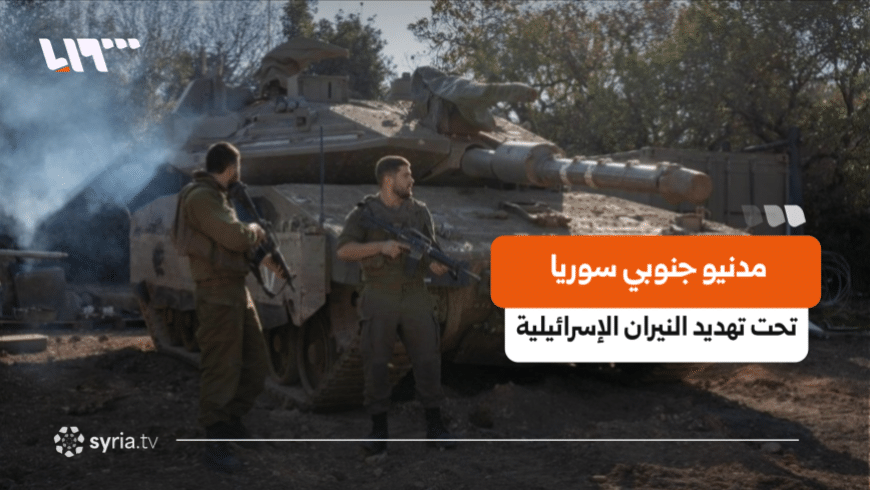
Ayyash highlights the presence of nine Israeli military bases across a stretch of territory running from the western countryside of Damascus through Quneitra to Daraa. He argues that these installations, along with the fortified Sufa 53 Road—protected by trenches and earthen embankments—constitute significant obstacles to progress in negotiations.
This article was translated and edited by The Syrian Observer. The Syrian Observer has not verified the content of this story. Responsibility for the information and views set out in this article lies entirely with the author.