A climate-funded water infrastructure project is delivering safer and more reliable drinking water to 21 households in Fualu, Tongatapu, with government leaders, development partners and the United Nations Development Programme (UNDP) visiting the community this week to mark its progress.
The Risk-Informed Water Tank Project aims to improve long-term water security for residents who have historically relied on neighbouring communities for access to safe drinking water.
Image: Department of Climate Change, MEIDECC
The initiative is led by Tonga’s Ministry of Meteorology, Energy, Information, Disaster Management, Environment, Climate Change and Communications (MEIDECC), the Ministry of Finance and UNDP through its Governance for Resilience (Gov4Res) Programme. It is supported by Australia, New Zealand, the Republic of Korea and the United Kingdom.
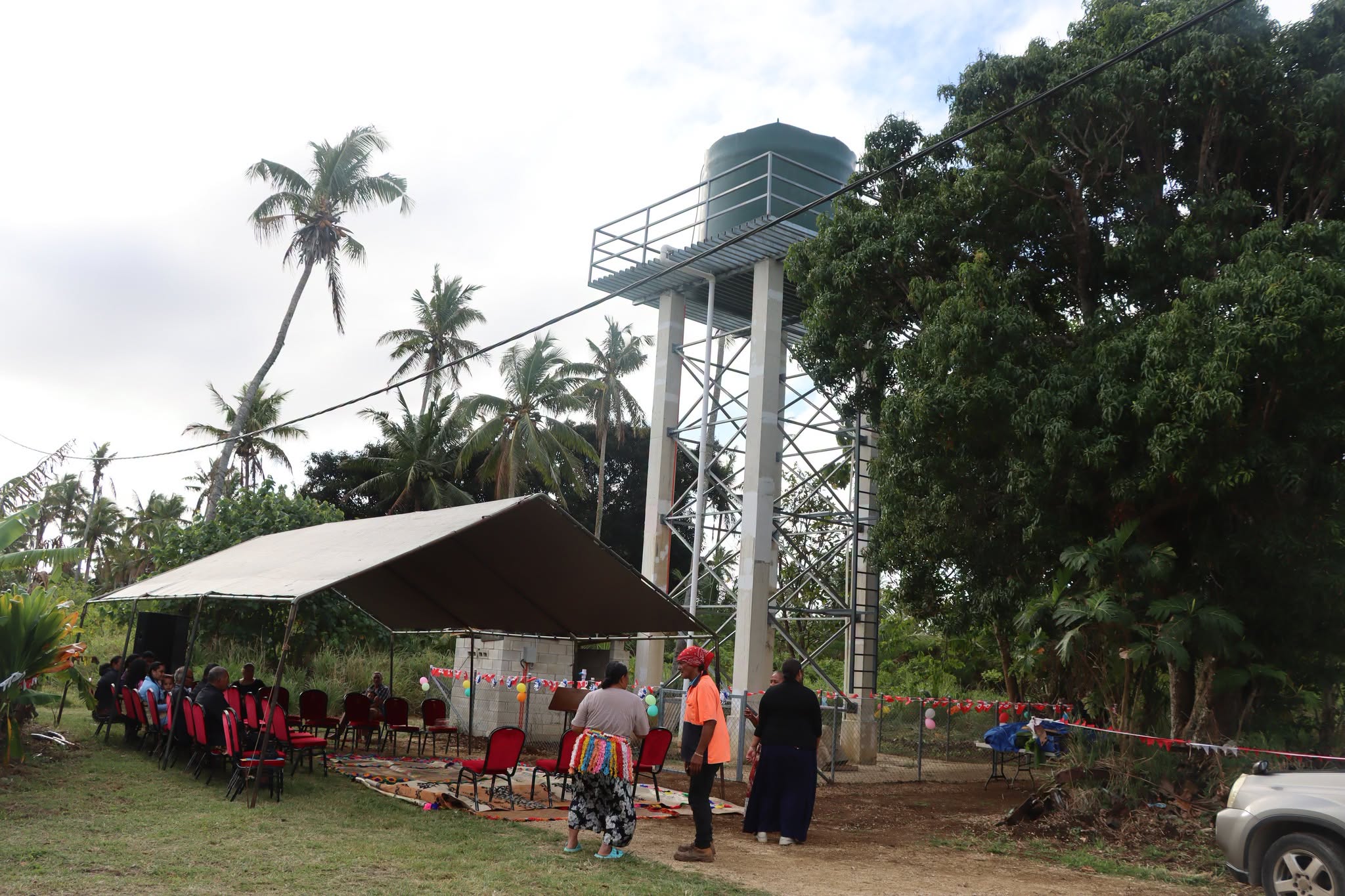
The project has delivered two elevated water tank stands, upgrades to the village water distribution network, a new borehole pump and supporting infrastructure.
Its risk-informed design also reuses existing foundations, reducing construction costs and environmental impacts while improving resilience to future climate risks.
UNDP said the Fualu community contributed land, supported borehole development and helped secure electricity connections, demonstrating strong local ownership of the project.
Project partners said this local ownership would help ensure the infrastructure remains sustainable for future generations.
The visit coincided with the first official trip to the Kingdom by United Nations Assistant Secretary-General and UNDP Regional Director for Asia and the Pacific, Kanni Wignaraja.
UNDP said the initiative demonstrates how climate finance can be channelled through national systems to deliver practical benefits for vulnerable communities.
Similar risk-informed water projects have been implemented elsewhere in Tonga to strengthen water security and disaster resilience, particularly following growing concerns over climate change and extreme weather.
Future plans for Fualu include household water metering, solar-powered water operations and enhanced monitoring systems to improve efficiency and safeguard the community’s water supply.