Diabetes, heart disease, cancer and lung illness kill more people in Tonga than anything else. Everyone agrees on that. The question is who can actually fix it.
An independent review has just told us that TongaHealth, the government-backed foundation running most of the country’s disease prevention work, is making progress but still has gaps to close. The review was commissioned by TongaHealth back in 2024 with Australian Government support, but its findings were only made public in June this year, so this is very much a live issue, not old news. TongaHealth’s Chief Executive, Ofeina Filimoehala, says the organisation has acted on the review’s findings, building a new data dashboard, tightening its grant monitoring, and meeting more often with the National Non-Communicable Disease Committee.
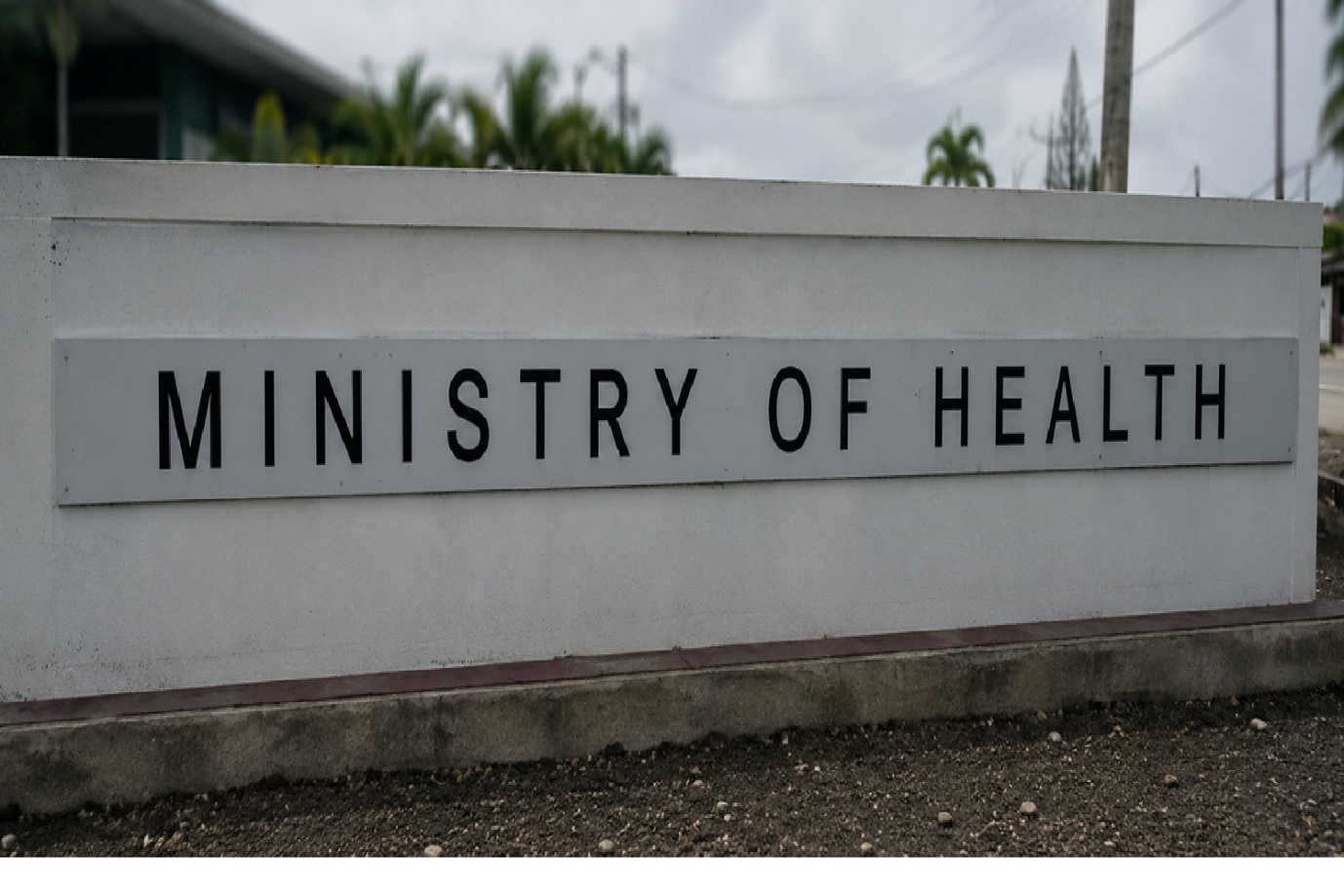
Fair enough. But TongaHealth was never the whole story. The review also flagged the need for tougher laws on tobacco, alcohol, unhealthy food and sugary drinks. That job doesn’t belong to TongaHealth. It belongs to the Ministry of Health, specifically its Public Health Unit, led by Dr Pateli Patelisio.
This editorial puts that Ministry under scrutiny, and it’s worth being upfront that the Ministry itself has not put its own case on the record. Tonga Independent News wrote to Dr Patelisio asking how far this legislative work has progressed. He replied to say he would respond. He never did.
That silence would be easier to overlook if it were an isolated case. It isn’t.
A Ministry that can’t manage its own overtime
While the Ministry of Health is being asked to lead law reform to prevent disease, its own internal management remains under serious question, and not for the first time.
Government is on track to spend roughly TOP $15 million on overtime this financial year, three times the TOP $5 million Parliament originally approved. A further TOP $11 million is proposed for next year. This isn’t a one-off blowout either. Overtime spending has exceeded its approved budget in three of the last four financial years, hitting 211 percent of budget in 2022 and 145 percent in 2025.
The Ministry of Health is the single biggest driver of that overtime bill. Government’s own budget papers show it has averaged more than TOP $5 million a year in overtime spending, more than any other ministry.
The 2024 Auditor General’s report looked closely at how those overtime claims are handled inside the Ministry. What it found should worry anyone being asked to trust this Ministry with a bigger job. Callback forms were often incomplete. Some overtime claims lacked the required approvals. Many gave no real detail about what work had actually been done. Some units had overtime arrangements approved for six months or even a full year, with no clear plan setting out what the work would be.
The Auditor General’s conclusion was blunt. Poorly completed paperwork and missing approvals expose the Ministry to the risk of fraud and abuse. And this isn’t news to anyone inside the system. The same weaknesses were flagged in earlier audits and never fixed. That’s why they showed up again in 2024.
Dr ‘Aisake Eke, Chair of Parliament’s Finance and Public Accounts Committee, wants the Ministry of Finance to issue a Treasury Instruction before the new financial year starts, requiring every ministry to follow overtime rules properly or have claims rejected outright. He wants the Public Finance Management Act changed to carry real penalties for repeat breaches, and he wants serious cases sent to the Anti-Corruption Commission. He also points out, fairly, that the Ministry of Finance itself was flagged in the same audit, which raises the question of who is actually watching the money.
Two stories, one Ministry
Put these two stories side by side and the pattern is hard to miss. A ministry that has spent years failing to properly document its own overtime claims, and been told so repeatedly by the Auditor General, is the same ministry now expected to design and pass laws restricting tobacco, alcohol and sugary drinks. And when a newsroom asks its Health Promotion Unit for a basic progress update, the answer is silence.
This isn’t a case of unfairly piling on. Good financial controls and good public health policy both come from the same place: an institution that keeps its word, follows its own procedures, and answers to the public it serves. A ministry that can’t get overtime paperwork right for years running is not obviously the ministry best placed to convince the public to accept new restrictions on what they eat, drink and smoke.
Australia’s money, and the question nobody is asking
There’s another party in this story that deserves more scrutiny than it’s getting: Australia.
The Tonga Health Systems Support Program, the aid programme funding both the Ministry of Health and TongaHealth, is worth AUD$57 million. That’s not a small commitment from a development partner. It funds workforce training, expanded health services, and the health promotion campaigns TongaHealth points to as evidence of progress.
Fair enough to ask what TongaHealth has done with its share. But it’s just as fair to ask what Australia is getting for its money on the Ministry of Health side, and when. The legislative reforms this programme was meant to help deliver, on tobacco, alcohol, unhealthy food and sugary drinks, were reviewed and finished, then handed to a Ministry that won’t say what happens next. Meanwhile that same Ministry is the biggest overtime overspender in government, with audit findings on its financial controls that have gone unresolved since before this programme even started.
And it’s worth being precise about what that legislative review actually found, because Australia paid for it too, through the same THSSP4 funding channel and the Tonga Australia Support Platform. The findings are stark. Tonga currently has no laws at all regulating the marketing of breastmilk substitutes, no restrictions on alcohol advertising, and no limits on how much salt, sugar or trans-fat can go into food sold here. The review’s own scorecard rates Tonga amber on child marketing restrictions, meaning the policy work is still sitting undone.
This isn’t a case where the Ministry has to start from a blank page and invent new law. The review’s central recommendation is to adopt and adapt draft provisions already written for the region under the Pacific Legislative Framework, work other Pacific nations have already done. Australia funded the diagnosis. It funded the draft fix. What it hasn’t funded, or at least hasn’t been able to secure, is the follow-through.
AUD$57 million is a lot of goodwill to extend without a public account of what it has actually changed. At some point, Australia’s own taxpayers, and Tonga’s, deserve a straight answer on what results this funding has produced, not just what activities it has paid for. Attending a workshop, commissioning a review, or setting up a dashboard is an output. Fewer Tongans dying of preventable disease is a result. So far, the public record only shows us the first kind.