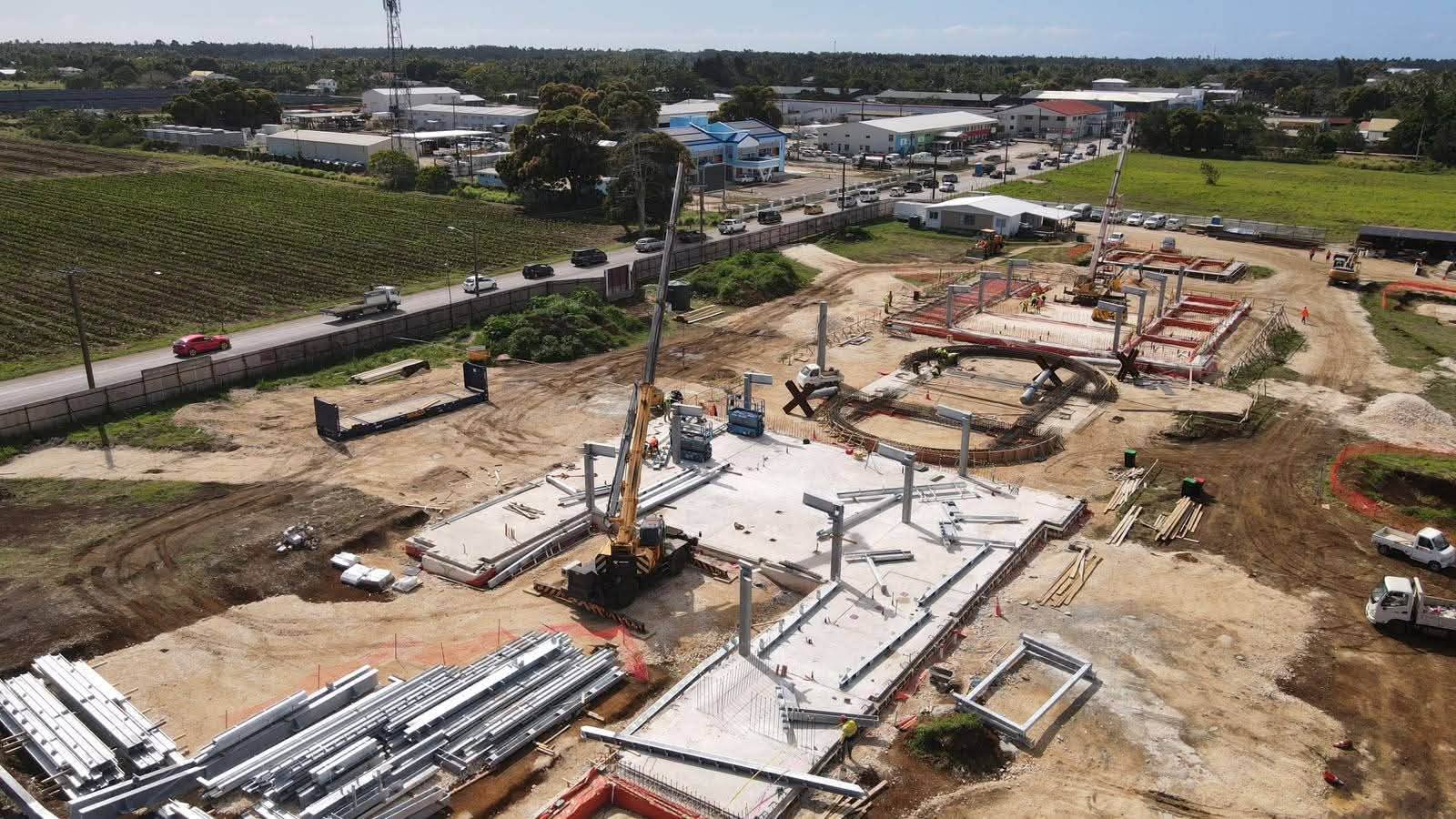
Fragments of pottery identified as Lapita have been discovered during construction of Tonga’s new Parliament complex, bringing the Kingdom’s ancient settlement history into the middle of one of its most significant modern infrastructure projects.
The discovery was reported by the Government after the Parliament Building Project Steering Committee met to review construction progress and discuss the next steps.
A fragment of Lapita pottery discovered at the new parliament building grounds. Image: PMO
The meeting was attended by PM Fakafanua, Speaker Lord Vaea, parliamentary staff, and the New Zealand and Australian High Commissioners.
The Government has not yet released details about how many fragments were found, their precise location or whether they have undergone specialist archaeological assessment.
Lapita pottery is closely associated with some of the earliest settlements in Tonga and across the Pacific.
Archaeological evidence places Lapita communities in Tonga roughly 2,800 years ago, making discoveries of associated material potentially important to understanding the movement and settlement of early Pacific peoples.
The discovery comes as construction advances at the Talangaholo Royal Estate at Matatoa, where the new Fale Alea complex is being built.
The site was selected at an elevated location partly to reduce exposure to cyclones and other climate-related risks.
The new Parliament is replacing the previous complex destroyed by Cyclone Gita in 2018.
New Zealand and Australia are supporting the reconstruction, with the NZD $32 million project designed to provide a modern, climate-resilient parliamentary precinct with facilities including public and media spaces.
The Government said the project should reflect Tonga’s values, heritage and aspirations while supporting the effective functioning of its democratic institutions.
For now, the archaeological significance of the pottery fragments will depend on further examination and documentation as construction continues.