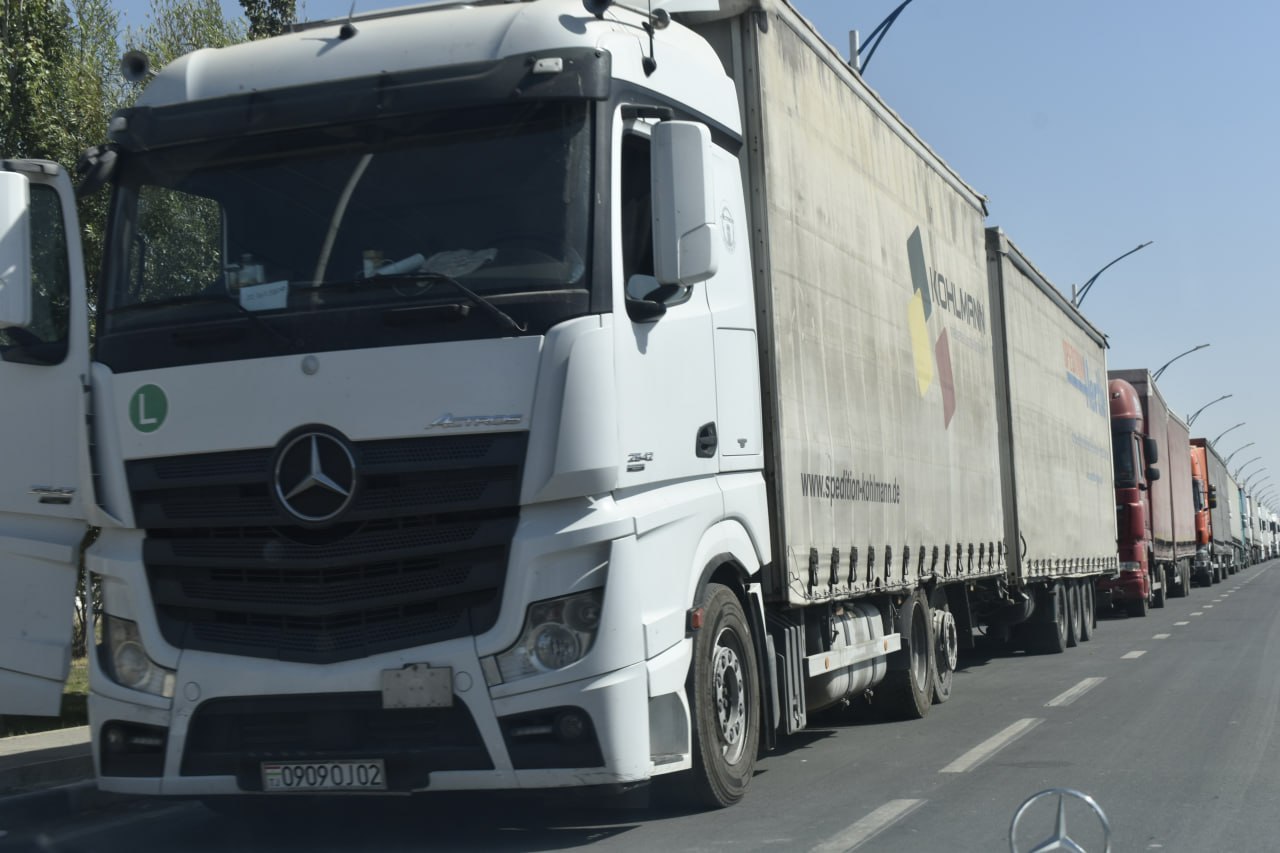
Transit shipments to Tajikistan through Iran have nearly come to a halt, forcing businesses to switch to longer and more expensive routes, Customs Service chief Khurshed Karimzoda told reporters in Dushanbe on July 21.
He said regional and global political and security developments were disrupting foreign trade across Central Asia.
“The political and security situation in the region and the world is having a serious impact not only on Tajikistan, but on all Central Asian countries,” Karimzoda said. “Financial, economic and political crises, as well as other factors, are disrupting the stable flow of foreign trade.”
According to him, changes in cargo flows affect trade volumes with individual countries and reduce customs revenue. Even short-term declines in shipments have an impact on the agency’s work.
Transit through Bandar Abbas almost disappears
Iran had long served as one of the main transit corridors for goods entering Tajikistan from third countries.
“We imported goods from many countries through Iran’s Bandar Abbas port,” Karimzoda said. “Now, the transit of those goods through Iran has practically disappeared.”
However, direct trade between Tajikistan and Iran has largely continued.
In the first half of 2026, the value of Tajik imports from Iran increased by $29.9 million.
“Trade turnover with Iran itself has not declined significantly,” Karimzoda said. “There has been a decrease in terms of weight, but not yet in terms of value. However, transit through Iran has almost disappeared.”
Shipments through Afghanistan also decline
Another important route ran through Afghanistan, carrying goods shipped through Pakistani ports.
“A large volume of transit cargo reached us through Afghanistan, particularly goods from Iran, India, Pakistan and other countries using Pakistani ports,” Karimzoda said. “In the first half of the year, transit through Afghanistan declined significantly.”
Customs Service data show that imports from Pakistan fell by $10.3 million during the period.
Carriers have redirected cargo to alternative routes, but reorganizing supply chains has taken time.
Goods are now being transported through the Caucasus, Azerbaijan, Turkey and Turkmenistan, and in some cases through Iran’s Chabahar port. Businesses choose routes based mainly on cost.
“Entrepreneurs determine which route is cheaper, primarily from a financial perspective,” Karimzoda said.
Alternative routes cost more and take longer
Cargo transported through Azerbaijan must also cross the Caspian Sea.
“When cargo goes through Azerbaijan, vehicles and other means of transport must be ferried toward Kazakhstan,” Karimzoda said. “This naturally involves additional costs.”
He added that transport delays were not limited to road infrastructure.
“Logistics is not only about roads. Railways also have limited capacity,” he said. “When shipment volumes increase, cargo remains longer in transit countries for various reasons.”
According to information provided by businesses, deliveries that previously took 10 to 15 days can now take as long as a month.
Industry also affected by logistics disruptions
Industry and New Technologies Minister Sherali Kabir previously said geopolitical risks had complicated both the import of raw materials and the export of products manufactured in Tajikistan.
“We are far from the seas, and our logistical capabilities are very limited,” Kabir said.
According to him, Karachi and Gwadar in Pakistan are among the closest seaports to Tajikistan, with deliveries previously taking around seven to 10 days.
Shipments through the Georgian ports of Poti and Batumi, or through Russia, take about 25 to 30 days. Deliveries through the Iranian ports of Bandar Abbas and Chabahar take at least two weeks.
The disruption has already affected several industrial sectors.
According to the Ministry of Industry, production in the leather industry fell by 65%. Pakistan had been one of the main buyers of Tajik leather raw materials, but exporters were unable to deliver their products on time.
Carpet and furniture manufacturers have also faced difficulties. Synthetic yarn used by the carpet industry was supplied from Iran and Turkiye, but transport disruptions have interrupted the regular flow of raw materials.