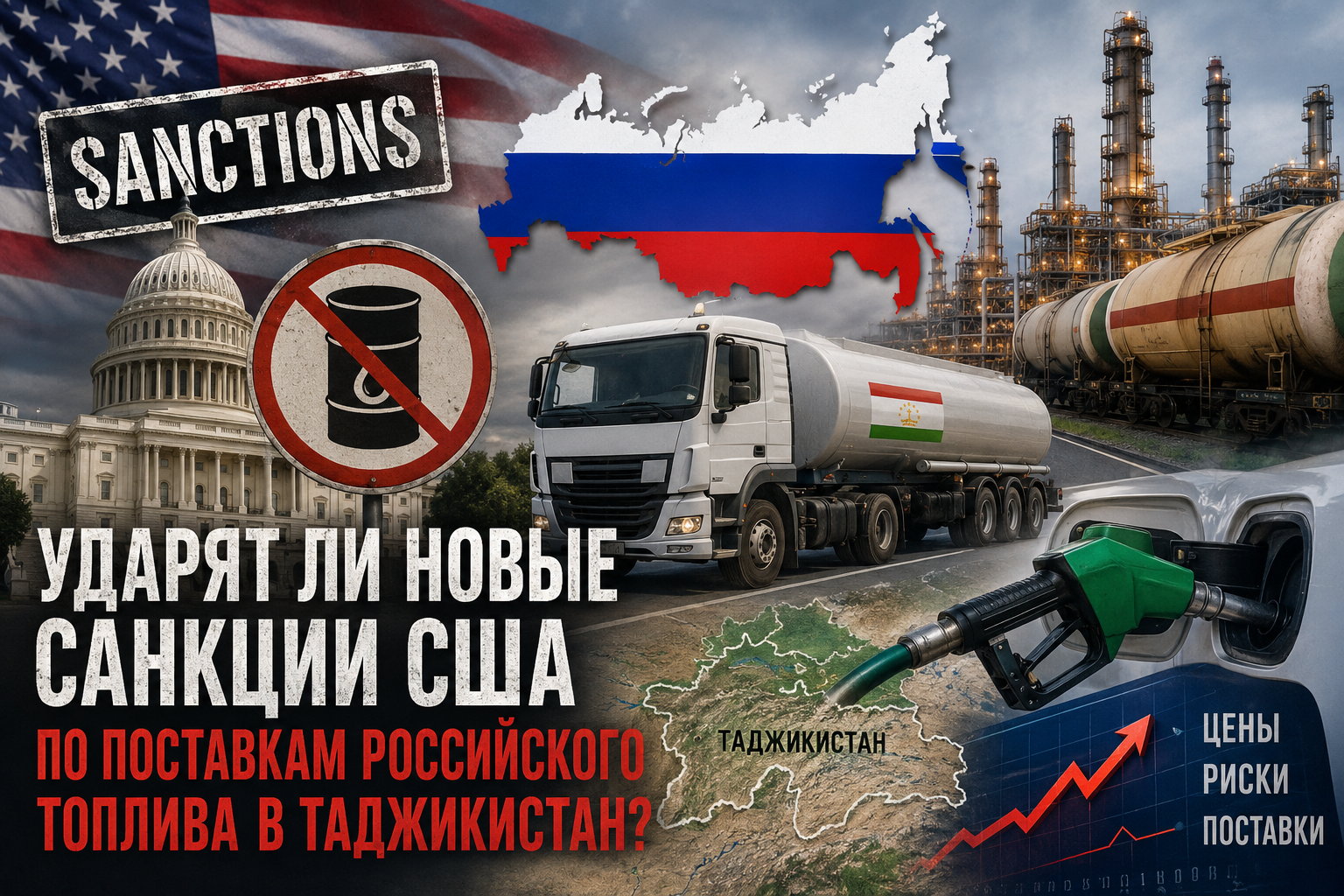
A revised U.S. sanctions bill targeting Russia and major buyers of Russian energy is unlikely to apply directly to Tajikistan. However, the country’s heavy dependence on Russian gasoline and diesel means it could still face indirect risks, including higher prices and possible supply disruptions.
U.S. senators unveiled the updated legislation on July 14. The bill would authorize the president to impose tariffs of up to 100% on imports from the world’s five largest buyers of Russian crude oil and natural gas. China and India are expected to be its main targets.
The initiative was developed by Republican Senator Lindsey Graham and Democratic Senator Richard Blumenthal. Lawmakers continued advancing it after Graham’s death on July 11, describing the measure as one of his main legislative priorities.
The revised bill had attracted more than 60 Senate co-sponsors by July 16, enough support to overcome a filibuster if it reaches a vote. It has not yet been passed by either chamber of Congress.
Proposed Tariff Cut from 500% to 100%
The original Sanctioning Russia Act of 2025 proposed mandatory tariffs of at least 500% on goods and services from countries continuing to purchase Russian oil, gas, uranium and other energy products.
Following negotiations with the White House, the measure was significantly narrowed.
The revised version would allow, but not require, the U.S. president to impose tariffs of up to 100% on the five largest buyers of Russian crude oil and the five largest importers of Russian natural gas.
It would also give the president authority to reduce or waive the measures when doing so is deemed to be in the U.S. national interest.
Exemptions are proposed for countries that account for less than 15% of Russian gas exports and are taking steps to reduce their dependence on Russian supplies.
Sanctions Would Also Target Russian Banks and Energy Projects
The legislation goes beyond tariffs on foreign buyers of Russian energy.
It also provides for sanctions against Russian financial institutions, senior officials, defense companies, major energy projects and vessels belonging to Russia’s so-called shadow fleet.
The energy projects mentioned in reports on the bill include Yamal LNG and Arctic LNG facilities. Its sponsors say the measures are intended to reduce the revenue available to Russia to finance its war against Ukraine.
Before becoming law, the bill must be approved by both the Senate and the House of Representatives and signed by the president. The date of a possible Senate vote has not yet been announced.
Tajikistan Is Unlikely to Be a Direct Target
Under the current wording, the tariff provisions are unlikely to apply directly to Tajikistan.
The country is not among the world’s five largest buyers of Russian crude oil or natural gas. It mainly imports refined petroleum products from Russia, including gasoline, diesel, aviation fuel, lubricants, bitumen and liquefied petroleum gas.
The revised tariff mechanism is focused primarily on the biggest purchasers of Russian crude oil and gas, rather than every country importing Russian petroleum products.
Tajikistan’s reliance on Russian fuel would therefore not automatically make it subject to the proposed tariffs.
This assessment could change if lawmakers expand the final version of the bill or give the U.S. president broader authority to target additional categories of Russian energy customers.
Trade between Tajikistan and the United States is also relatively limited. As a result, even the hypothetical imposition of U.S. tariffs on Tajik goods would probably not represent the main economic threat.
The more significant risk is that sanctions could indirectly affect the availability and cost of Russian fuel.
Russia Supplies More Than 90% of Tajikistan’s Gasoline and Diesel Imports
Figures from Tajikistan’s Ministry of Energy and Water Resources show how heavily the domestic market depends on Russian supplies.
In January–June 2026, the combined volume of imported and domestically produced petroleum products, liquefied gas and petroleum coke reached 927,500 tons.
Russia supplied 670,800 tons, or 72.3% of that total.
The dependence is even greater for gasoline and diesel, the two most widely used petroleum products in the country.
Tajikistan imported a combined 647,800 tons of gasoline and diesel during the first half of the year. Of this amount, 588,600 tons came from Russia, representing 91.5% of total imports.
What Are the Indirect Risks?
The bill does not currently threaten an immediate ban on Russian fuel deliveries to Tajikistan.
However, tighter restrictions on Russia’s banking, transport and energy sectors could complicate international payments, raise logistics and insurance costs, or force Russian companies to redirect supplies.
If major buyers reduce their purchases of Russian crude, Russia may seek alternative markets and offer discounts. This could potentially benefit some importers. At the same time, sanctions affecting Russian oil companies, refineries, banks or transport operators could increase the cost of supplying refined fuel to Central Asia.
The final effect would depend on how the law is written, whether President Donald Trump decides to use the proposed powers and which countries, companies and financial institutions are targeted.
For Tajikistan, the main vulnerability is therefore not the threat of direct U.S. tariffs, but its exceptionally high dependence on a single source for gasoline and diesel supplies.