The Ministry of Information, Communications and Technology (ICT) has recorded significant progress in the first quarter of the 2026/27 financial year, with major gains in infrastructure, e-services and digital skills training.
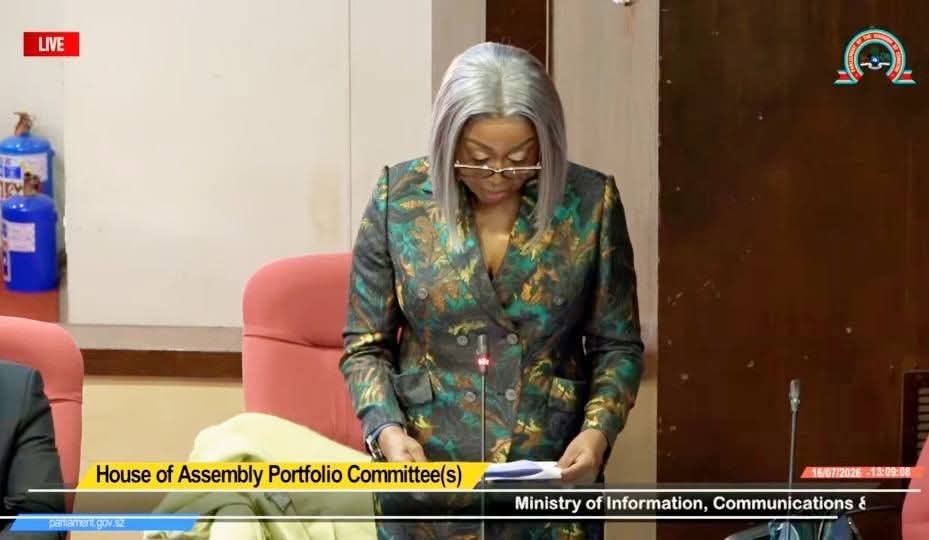
Minister for ICT, Senator Savannah Maziya, presented the Ministry’s First Quarter Performance Report to the House of Assembly Portfolio Committee on July 16, 2026. She said the results show the government is moving forward with its digital transformation agenda and bringing services closer to emaSwati.
One of the biggest achievements reported was the 96% completion of the EPTC Infrastructure Rebuild Project.
Advertisement
The project is expected to strengthen the country’s telecommunications backbone and improve service reliability.
The Ministry also expanded fibre deployment, with coverage now reaching 26,528 home passes.
This means more households and businesses can access high-speed internet directly.
In a move to improve connectivity with the outside world, cross-border internet capacity was upgraded from 1 Gbps to 10 Gbps.
The upgrade has increased the country’s total international capacity to 120 Gbps, which officials say will support faster internet, better video streaming and improved services for businesses that rely on global platforms.
The report highlighted progress in making government services available online. The Government in Your Hand (GIYH) mobile application was enhanced with six new payment services.
Minister Maziya said the additions make it easier for emaSwati to pay for government services through secure digital platforms, reducing the need to visit offices in person.
“Digital government is about convenience and access,” the Minister told the Committee.
She further mentioned that, as the ministry, they want citizens to be able to transact with the government from their phones, safely and quickly.
On digital inclusion, the ministry reported that 473 emaSwati were trained in basic computer and digital citizenship skills during the quarter.
The training targeted communities and aimed to help people use technology safely and effectively.
The ministry also provided devices and assistive technologies to vulnerable groups and learners with disabilities.
Officials said the support is part of efforts to ensure that no one is left behind as the country moves towards a digital economy.
Service delivery through the postal network also improved.
According to the ministry’s reports, all 34 Post Offices are now offering non-tax government revenue collection services in partnership with the Eswatini Revenue Service.
This allows citizens to pay certain government fees at their nearest post office.
E-commerce deliveries also grew sharply.
Minister Maziya said parcel deliveries through the PhatsisaTsine service increased by more than 100 per cent in the first quarter.
Cross-border deliveries rose by 30 per cent, reflecting growing demand for online shopping and regional trade.
Financially, the ministry recorded a strong start to the year. It achieved a 76 per cent budget absorption rate in the first quarter, which officials said reflects improved planning and implementation.
The report delivered by Minister Maziya states that revenue collection for Eswatini Broadcasting and Information Services also increased significantly.
The entity collected E1.43 million, up from E180 904 during the same period last year.
Committee members welcomed the progress and asked questions on the rollout of fibre to rural areas, the sustainability of e-services and measures to protect citizens online.
Minister Maziya said the ministry will continue to prioritise infrastructure expansion, digital skills and cybersecurity.
She noted that partnerships with the private sector and development partners will be key to sustaining the momentum.
The ministry also plans to scale up digital literacy programmes and to work with schools to integrate technology into learning.
The Portfolio Committee said it will monitor implementation in the next quarter and will expect updates on how rural communities are benefiting from the new infrastructure and services.