Why is the genocide of the Greeks during the late Ottoman period referred to by different names? The term “Pontian Genocide” has been the most commonly used and is associated with the experience of Greeks in Pontus. Other terms have included “Genocide of the Greeks of Asia Minor” and “Genocide of the Greeks of Eastern Thrace”.
In recent years, however, debate has emerged around the terminology used to describe these events. The broader term “Greek Genocide” has gained increasing acceptance among historians and advocates for recognition. For many descendants, the terminology reflects an understanding that this is a shared Greek concern.
The name given to this history is significant. It shapes what is taught in schools, which victims are remembered and what advocates ask governments to formally recognise. Historically, under the Ottoman Empire, Greeks belonged to the ethnoreligious community known as Rûm (Romioi). Rooted in the Byzantine tradition, the term referred to the Empire’s Orthodox Christian population. While many people identified strongly with their town, village or district, being members of the Orthodox community provided a common identity, and it was on this religious basis that they were largely self-governed under the millet system.
However, like other Christian communities, such as Armenians and Assyrians, they occupied a lower legal status within the Ottoman Empire. Ultimately, they became targets of genocidal violence based on their Greek Orthodox identity. Yet the way this history would be remembered took different forms and followed different paths in Greece and across the diaspora.
Trauma and historical fragmentation
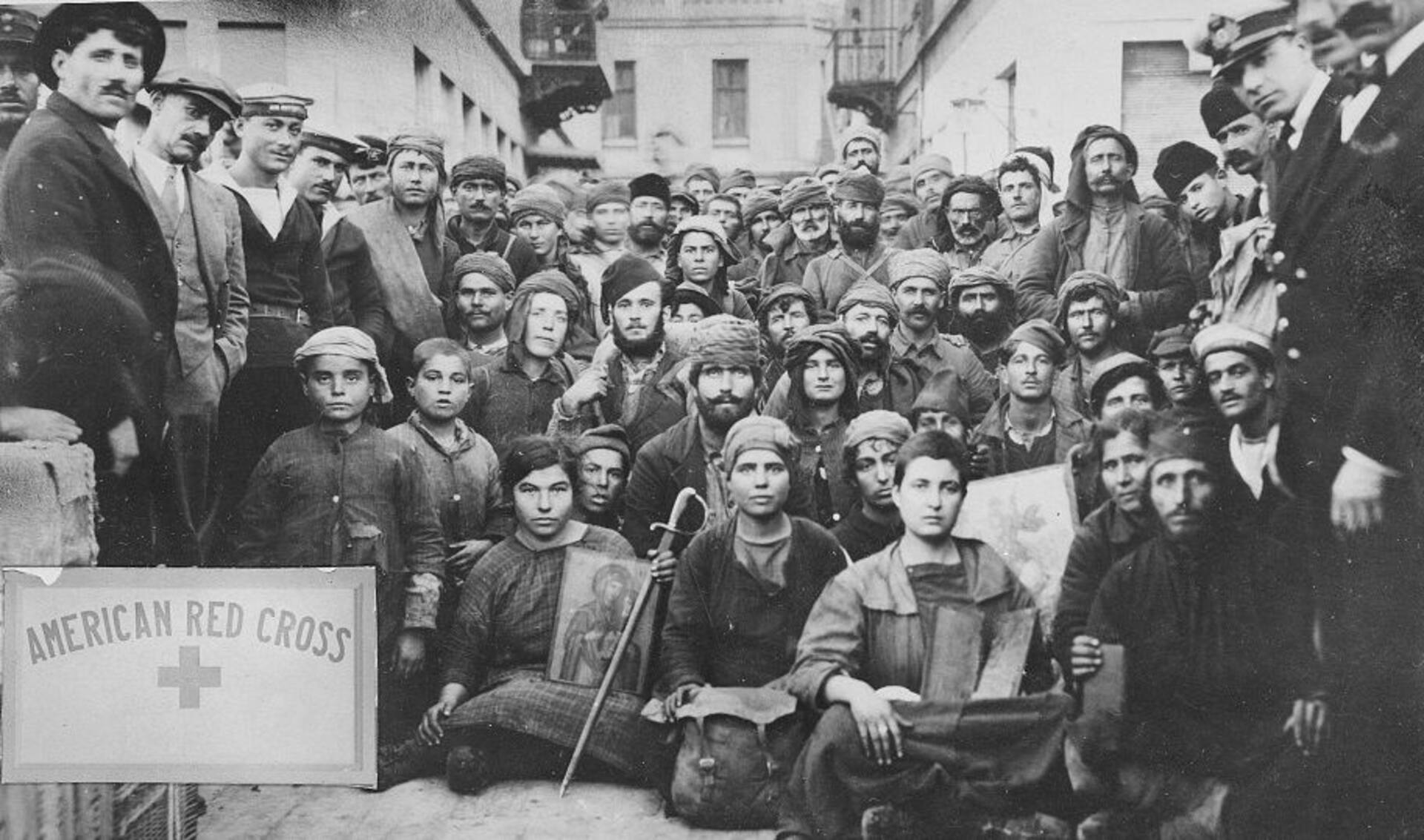
Scholarly estimates of the number of Greek victims during the wider late Ottoman genocidal process between 1914 and 1923 vary, with some figures exceeding 750,000 victims. More broadly, estimates indicate that around 2.5-3 million Armenians, Greeks and Assyrians were victims during this wider period. The campaign involved deportation, forced labour, massacres, starvation, displacement and cultural destruction across Eastern Thrace, Asia Minor, Pontus and other regions inhabited by Christians, such as northwest Persia and the Levant (modern-day Lebanon and Syria).
Long before “genocide” entered scholarly and legal language or became associated with the Greek experience, survivors had already described their traumatic experiences as Catastrophe (Καταστροφή), Persecution (Διωγμός) and Uprooting (Ξεριζωμός).
Greek academic engagement with these issues emerged after the Holocaust and the adoption of the 1948 United Nations Genocide Convention. During the 1960s, Pontian Greek historians Polychronis Enepekides and Odysseus Lampsides were among the earliest to research the persecution of Greeks in Pontus. Since the 1980s, Pontian Greek communities in Greece and the diaspora have played a central role in sustaining commemoration, maintaining public awareness and advocating for official recognition.
The relative silence surrounding these histories in post-1922 Greece was shaped by multiple factors. The persecution of Greeks in the late Ottoman Empire became inextricably linked to the Asia Minor Catastrophe following the Greco-Turkish War (1919–1922). This silence was compounded by deep-seated political rifts rooted in the National Schism between Royalists and Venizelists, by a period of national self-criticism regarding the failed ambitions of the Megali Idea (the idea of a Greater Greece) and by debates around wartime violence and the military defeat of 1922.
Furthermore, the Treaty of Lausanne, which formalised the postwar settlement following the Greco-Turkish War and established the modern Greek-Turkish borders, together with the accompanying 1923 population exchange, brought further hardship. The loss of properties, financial instability and economic competition between refugees and local populations following resettlement fostered deep-seated social friction. These factors, combined with broader national divisions, rendered public discourse on these histories highly sensitive.
The Second World War, the Nazi occupation and the Greek Civil War introduced new layers of trauma and political division between 1940 and 1949. During this time, official discourse within Greece often remained hesitant because successive governments prioritised diplomatic relations with Turkey over the acknowledgement of past violence. Consequently, refugee communities, followed later by diaspora communities, carried much of the responsibility for preserving memory and pursuing recognition, contributing to the emergence of distinct regional commemorative traditions.
The Greek War of Independence of 1821 and the commemoration of 25 March functioned as central elements of Greece’s national narrative, representing liberation from Ottoman rule. The Asia Minor Catastrophe, by contrast, came to signify trauma, military defeat and political disaster, and it became surrounded by silence as a result.
Following the collapse of the military junta in 1974, questions of identity and history received renewed attention in Greece. Over time, elements of Asia Minor and Eastern Thracian heritage became more visible within mainstream Greek cultural life. At the same time, memories of persecution and displacement often remained largely within families and local community organisations, kept fragmented rather than integrated into a unified national history.
Broader public discussion emerged through the combined influence of the global rise of genocide studies, the culture of commemoration that developed during the 1980s and 1990s and the growing influence of Holocaust memory within Greece. By contrast, Armenian diaspora communities had already begun advocating collectively for international recognition as early as the 1960s.
Recognition and days of remembrance
Following displacement, separate regional identities developed through the organisations and advocacy of each community. In 1994, following campaigns led by Pontian Greek organisations and advocates, the Hellenic Parliament recognised 19 May as a National Day of Remembrance for the “Genocide of the Greeks of Pontus”. The commemoration marks the day Mustafa Kemal landed at Samsun, Pontus, in 1919, an event widely associated with the emergence of the Turkish nationalist movement. Historian Konstantinos Fotiadis and PASOK politician Michalis Charalambidis helped spearhead the movement that achieved recognition, contributing to a distinct Pontian narrative.
Asia Minor refugee groups subsequently lobbied for recognition. In 1998, the Hellenic Parliament recognised 14 September as a National Day of Remembrance for the “Genocide of the Greeks of Asia Minor”, the date symbolically linked to the Catastrophe of Smyrna in 1922. However, neither the 1994 nor the 1998 parliamentary resolution included Eastern Thracian Greeks, though Eastern Thrace was among the earliest regions affected by the genocidal violence beginning around 1914.
Descendants of Eastern Thracian Greeks attempted to expand the existing parliamentary recognition in 2006, though these efforts proved unsuccessful. At a Pan-Thracian conference held in Didymoteicho that same year, participants adopted 6 April, known as Black Easter, as a day of remembrance connected to the intensification of violence against Greeks in Eastern Thrace.
These developments reinforced distinct regional traditions of remembrance within Greek cultural memory. There is room for multiple commemorative dates and practices that preserve the distinct histories of different communities. At the same time, these histories have often been remembered separately rather than as part of a shared experience.
Pontian identity and the evolution of memory
For many descendants of survivors from Pontus, the term “Pontian Genocide” remains an important expression of family history, memory and identity. In the 1980s, Pontian communities were particularly successful in transforming inherited trauma into organised cultural revival and political action. Through community organisations, scholars, activists and advocacy networks, genocide remembrance became especially associated with Pontian communities and their identity.
Several historical factors contributed to the distinct development of Pontian memory and identity. Geographic isolation along the Black Sea, the preservation of the distinctive Pontic dialect and long-standing historical and cultural ties with Russia and the Caucasus helped sustain a strong sense of community. The absence of a Greek military presence in Pontus during the Greco-Turkish War also became a significant part of how many Pontians understood their historical experience and contributed to enduring perceptions of distinct victimhood.
Stories of Crypto-Christians, collective pilgrimages to Pontus and symbolic sites such as the Panagia Soumela monastery became powerful expressions of communal memory. The failure of efforts to secure autonomy, due in large part to geographic isolation and political insecurity, also contributed to a lasting sense of abandonment by Greece among many Pontians. Armed resistance movements that emerged in the absence of state protection likewise became an important part of communal memory and identity.
Like other Greek refugees, Pontian Greeks and their descendants experienced discrimination because of their dialect, customs and cultural practices. These experiences often reinforced communal solidarity and a sense of difference from the dominant culture in Greece.
The migration of Pontian Greeks from the Soviet Union to Greece added further layers of displacement and memory. Many arrived carrying memories of genocide and the traumatic experiences of Stalin-era persecution. They subsequently faced renewed uprooting following the collapse of the Soviet Union and further discrimination in Greece. Together, these experiences deepened Pontian memory and identity.
Genocide, war and historical interpretation
In Greece, public and scholarly discussion has often framed this period primarily through the Greco-Turkish War (1919-1922), rather than the wider genocidal process directed against Armenians, Greeks and Assyrians between 1914 and 1923. Questions of terminology emerged, particularly regarding whether the experiences of Greeks outside Pontus should be understood as genocide. These debates often reflected earlier frameworks within genocide studies as well as broader ideological preconceptions about the period, frameworks which have since evolved, particularly regarding questions of intent.
With the growth of research and the development of genocide studies, increasing scholarly attention has been directed toward the wider genocidal process. Many historians argue that the Young Turk regime from 1914-1918 and the Turkish nationalist movement from 1919-1922 came to view Christian populations, particularly Armenians, Greeks and Assyrians, as unassimilable internal enemies and obstacles to preserving the Empire and, later, constructing a homogeneous Turkish nation-state.
These developments unfolded during a period of profound upheaval, marked by imperial collapse, territorial losses, military defeat, internal political conflict, the rise of competing nationalist movements and the increasing geopolitical influence of the Great Powers.
The experiences of Greek communities varied across regions according to local conditions, wartime developments and broader political circumstances. Some historians have treated Pontus as a distinct case because of its geographic isolation from the main theatre of the Greco-Turkish War and the absence of a Greek military campaign in the region. However, many Greek communities in inland and southwestern Asia Minor likewise experienced violence, deportation and displacement without the presence of the Greek army.
Greeks faced persecution even before the Greco-Turkish War and before Greece formally entered the First World War in July 1917, a timeline that complicates interpretations which treat the violence as a by-product of wartime conflict alone. Regional differences in timing, severity and local conditions can be examined without losing sight of this wider genocidal process. The entanglement of genocidal violence with military conflict, irregular armed groups and retaliatory violence has at times encouraged interpretations that minimise or obscure the broader pattern of violence. Yet the existence of wartime violence does not in itself preclude the destruction of a people, in whole or in part.
Toward a shared historical framework
While regional terms continue to reflect distinct historical experiences, identities and commemorative traditions, advocates of a unified framework of remembrance argue that the absence of a shared term can leave some experiences overlooked and forgotten; it can also obscure understanding of the genocide as a single, connected process across all regions in which Greeks were persecuted.
The Armenian community offers a valuable comparison. Armenians came from diverse regional, denominational and political backgrounds, including Western and Eastern Armenian communities. Despite these differences, Armenians largely converged around a single name and a unified framework of remembrance and advocacy, one through which the wider world came to recognise their history.
Many members of the Pontian community and Pontian organisations in the diaspora have increasingly supported the use of the term “Greek Genocide” to bring together the experiences of different affected regions within a shared historical framework. This reflects a growing acknowledgement that multiple memories can coexist within a shared historical narrative.
The term “Greek Genocide” therefore does not replace regional memories or identities. Rather, it situates them within a wider collective historical experience connecting Greeks from Pontus, Asia Minor, Eastern Thrace and other regions.
A shared historical narrative strengthens remembrance, public awareness and ongoing efforts toward recognition, offering a more complete understanding of the past. It affirms that this history of genocide, trauma, displacement and survival belongs to all affected Greek communities.
Dr Themistocles Kritikakos is a Greek Australian historian and writer. He holds a PhD in History from the University of Melbourne. He is the author of Armenian, Greek, and Assyrian Genocide Recognition in Twenty-First Century Australia: Memory, Identity, and Cooperation (Palgrave Macmillan, 2026).