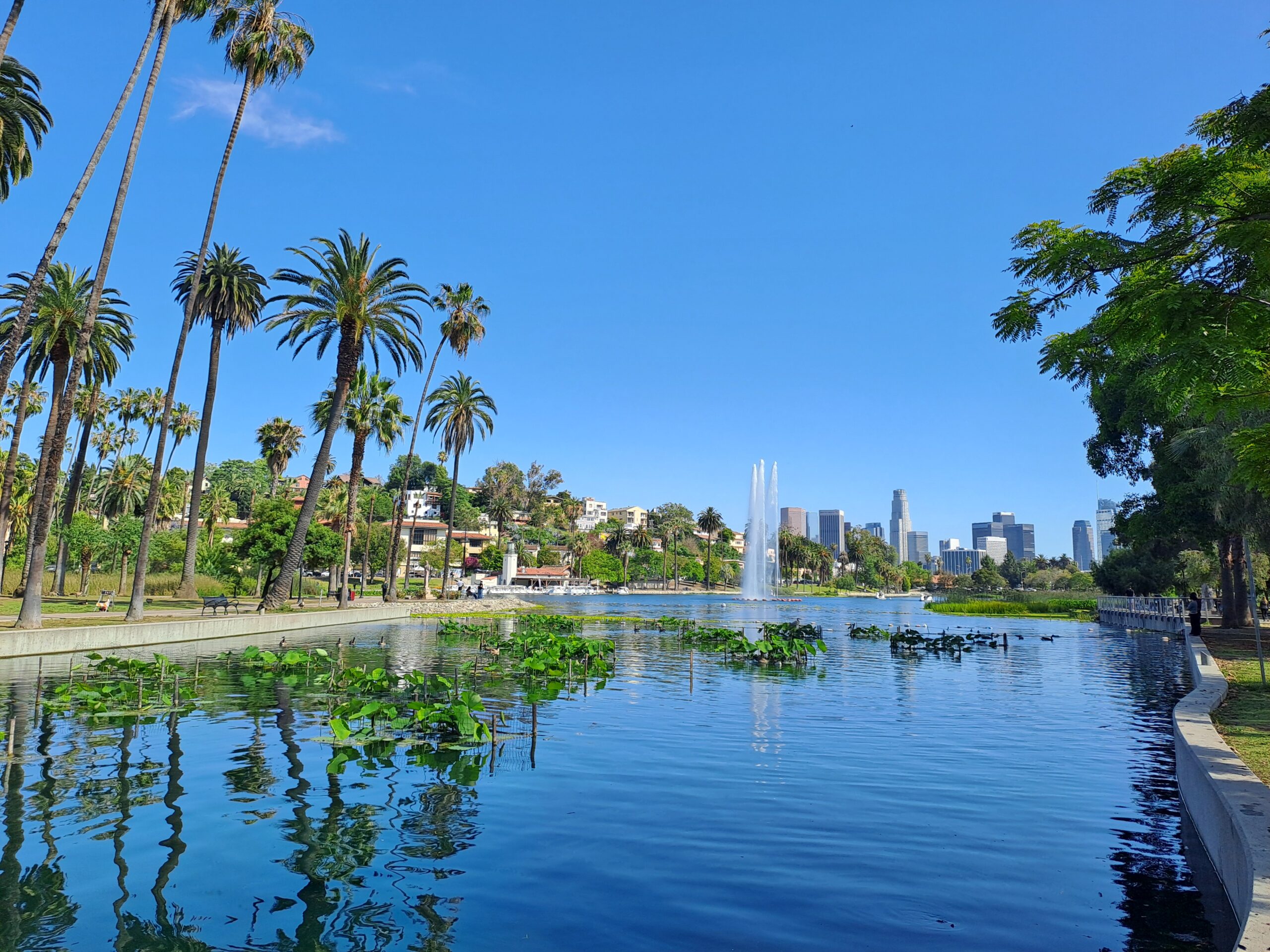
Every morning in cafés across Los Angeles, joggers, workers and passersby receive their cold brews and hot americanos in disposable cups, even when sipping them in-house. Sustainability is not a priority for many small businesses in the region, and this doesn’t bode well for really big businesses, such as the upcoming 2028 Summer Olympic and Paralympic Games in the city, which will have to figure out how to deliver a clean event in this setting.
As an estimated 15 million sport fans land in Los Angeles for the Olympics in two years, more waste is only one of many sustainability tasks that the city and organisers will need to pay close attention to, and try to mitigate. Local officials and the next Olympics organising committee, the private group LA28, both pledged to step up climate action ahead of the Games by expanding public transport in the car-centric city and “radically reusing” resources by relying only on existing or temporary venues.
The region is dramatically feeling the consequences of climate change: summers are already around 1.5°C hotter than when the city first hosted the Olympics in 1932, almost 100 years ago, and the rate of warming is accelerating. The worst wildfires in LA history in January 2025 ravaged entire neighbourhoods and left tens of thousands displaced.
In principle, each Olympics is meant to outdo the last, sustainability included. LA draws on a strong example from the previous Summer Olympics in Paris 2024, where organisers and the city poured investments into cycle lanes, cleaned up the river Seine and pedestrianised adjacent roads – changes that still benefit the city’s residents today.
Yet people closely involved in LA’s preparations to bring about an event powered by clean electricity, lower transport emissions and a legacy of cooler, greener and more walkable spaces cannot speak publicly about their work.