Monika Amunyela
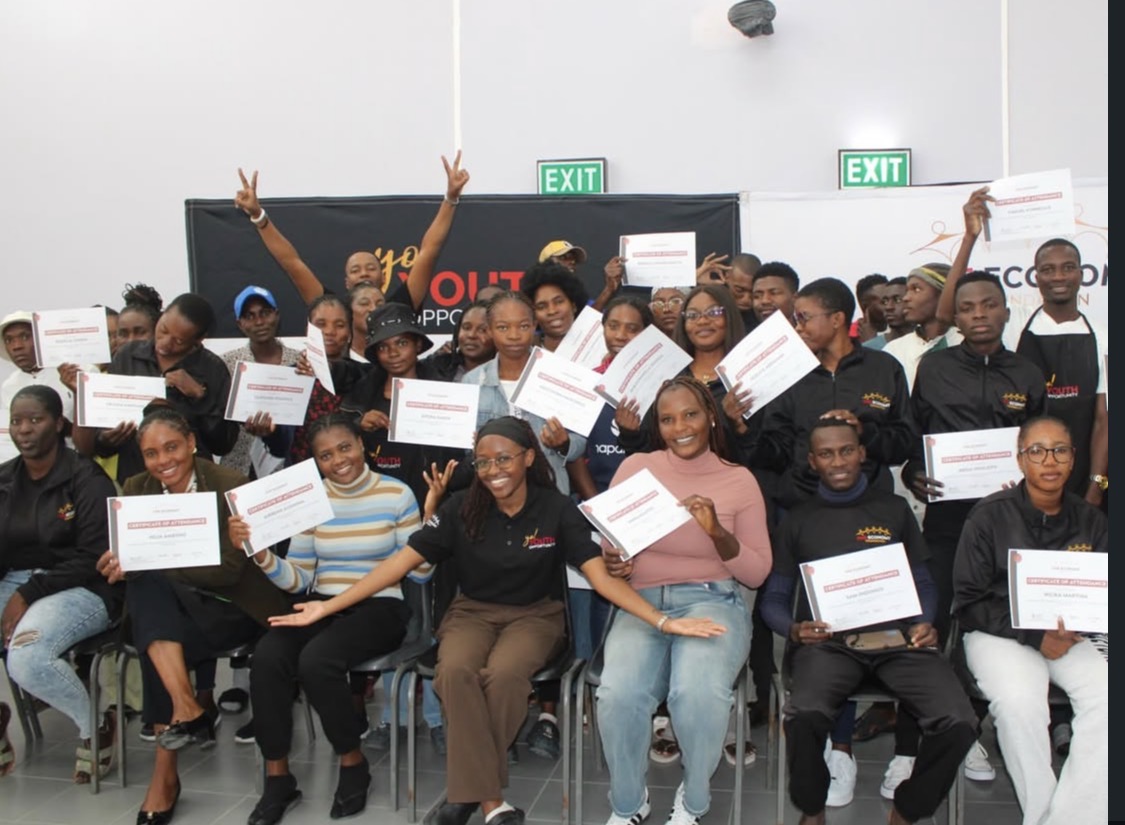
The One Economy Foundation recently concluded a four-day entrepreneurship training programme in Oshakati, where 49 participants from the Omusati and Ohangwena regions received practical skills, business knowledge and starter kits to kick-start their entrepreneurial journeys.
The training was delivered through the i BreakFree Project’s economic strengthening interventions, with One Economy Foundation serving as a Sub-Recipient under the Ministry of Health and Social Services and supported by funding from the Global Fund.
Lelly Amunyela, senior programme coordinator, said the training was developed in response to the realities encountered through the i BreakFree Project’s work in northern Namibia.
“We see every day that economic vulnerability and unemployment are directly linked to challenges such as school drop-out, gender-based violence and increased HIV risk among young people. Rather than preparing young people for formal jobs that may not exist, we wanted to equip them to create their own opportunities,” she said.
The programme focused on practical trades with low start-up requirements that generate income quickly. Participants were trained in local baking of fat cakes and traditional bread, eco-friendly detergent production, soap and perfume making, as well as shoe laundry and sneaker care.
They also received training in business management areas such as pricing for profit, record keeping, separating personal and business finances, customer service, reinvesting profits and building resilience when facing business challenges.
Amunyela stated that providing starter kits was a critical part of ensuring that participants could immediately apply what they had learned.
“True empowerment requires more than knowledge. It requires the means to act on it,” adding that one can leave a training session inspired and skilled, but without the necessary equipment, those skills sit idle.
The programme also includes follow-up monitoring to track progress, with targets of 70% of participants trading within one month and 60% continuing their businesses after three months.
Alice Kafula, who was a participant in the training, said she looks at fat cakes as a business and not just as cooking.
“Before the training, I knew how to make them, but now I understand costing, portion control and profit margins,” she said.
Kafula plans to start her business from home, supplying fat cakes to schools, taxi ranks and local shops.
She added that the starter kit helps her begin without the challenge of high capital.
“My goal is to employ one or two young people from the community once demand picks up, so we are not just selling food. We are creating jobs too,” she said.