India offers Tajikistan affordable medicines, food, technology, services, and investments, while Tajikistan is interested in attracting Indian business to projects in industry, energy, digitalization, logistics, and other promising areas of cooperation.
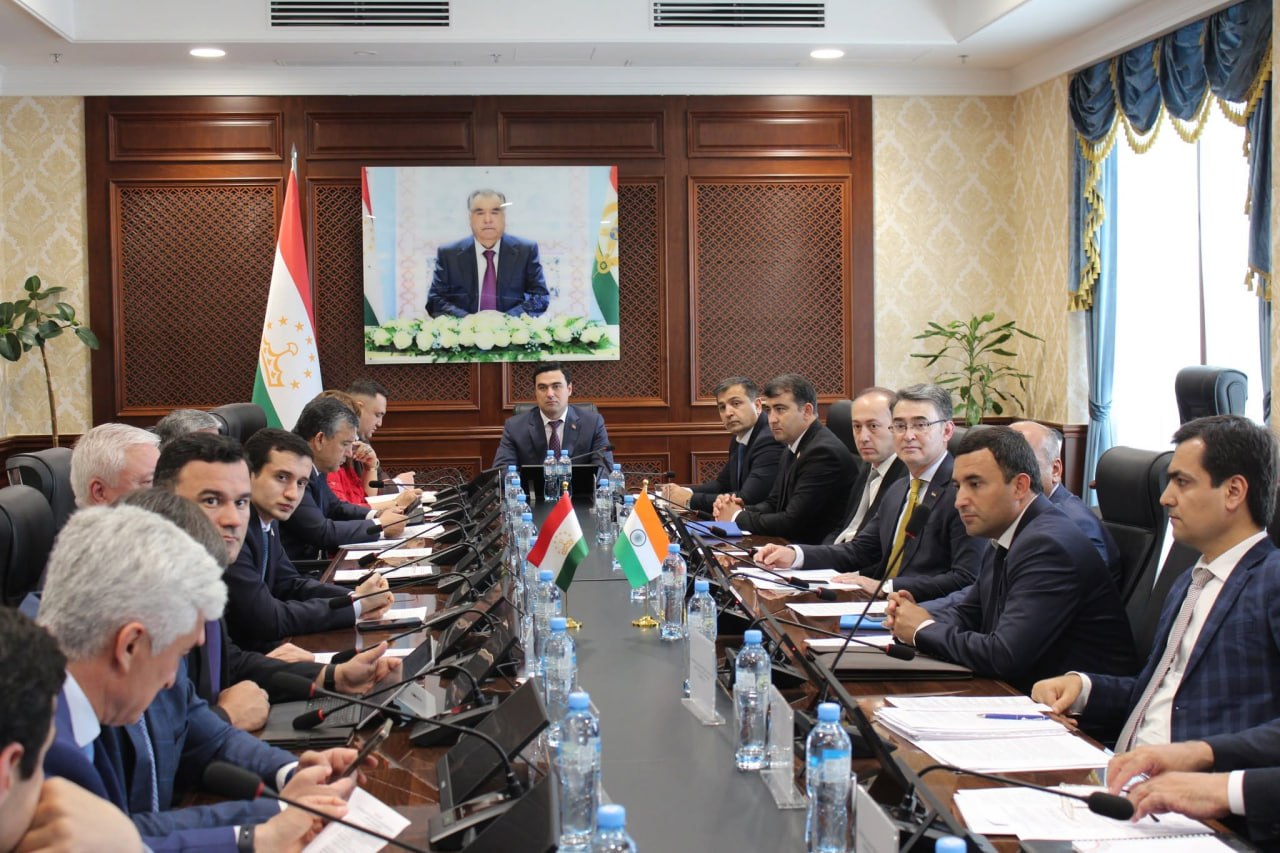
On June 10, the 12th meeting of the Joint Intergovernmental Commission of Tajikistan and India on trade-economic, scientific, and technical cooperation was held in a video conference format. Representatives of relevant ministries, departments, and organizations of the two countries participated in it.
The Tajik side was represented by Deputy Minister of Economic Development and Trade Nuriddinzoda Akhliddin Nuriddin. The Indian side was represented by the leadership and representatives of the Ministry of Commerce and Industry of India, including the Secretary of Commerce of the Government of India Rajesh Agrawal and Joint Secretary of the Department of Commerce Mohit Yadav.
The parties noted that the joint intergovernmental commission remains an important mechanism for promoting trade-economic, scientific, and technical cooperation.
The Secretary of Commerce of the Government of India Rajesh Agrawal emphasized that India and Tajikistan need to focus on expanding trade, investments, market access, regulatory interaction, and direct contacts between business circles.
The dynamics of bilateral trade were considered separately.
According to Indian data, India’s exports to Tajikistan in the 2025–2026 fiscal year are estimated at $58.12 million, which is 27.23% more compared to the previous year.
The main part of the supplies consisted of pharmaceuticals and biological products. Also among the exported goods were pulses, industrial equipment for the dairy and related industries, medical and scientific instruments, tea, Ayurvedic and herbal products, as well as refrigeration equipment.
Pharmaceuticals and healthcare were identified as key areas of cooperation. India expressed its readiness to work with Tajikistan on expanding the procurement of quality and affordable Indian medicines.
The Indian side emphasized that its pharmaceutical products combine quality, reliability, and competitive pricing, and wider use of such drugs can improve the Tajik population’s access to affordable medications.
In this regard, the parties agreed to develop closer dialogue between regulators, accelerate registration procedures, strengthen contacts between competent authorities, and stimulate direct interaction between companies of the two countries.
Cooperation in agriculture and food security was also named as a promising direction. India expressed its readiness to expand supplies of rice, sugar, processed products, meat products, pulses, agricultural resources, food processing technologies, and agrotechnologies.
Trade in services occupied a significant place on the agenda. According to the Indian side, India’s export of services to Tajikistan in 2024 amounted to $123.89 million, while Tajikistan’s export of services to India reached $37.56 million.
The parties intend to explore opportunities for expanding cooperation in IT, digital services, healthcare, education, tourism, professional services, startups, innovations, and skill development.
The Tajik side, in turn, emphasized the potential of joint projects. Among the priority areas were named industrial cooperation, renewable energy, digitalization of the economy, transport, logistics, tourism, banking and insurance sectors, as well as strengthening business ties.
Additionally, the parties discussed interaction in energy, hydropower, mining, critical minerals, science and technology, textile and leather industries, light industry, and finance. Such a wide range of directions shows that cooperation is considered not only as trade in goods but also as a basis for long-term joint projects.
Special attention was paid to market access issues and regulatory barriers that may hinder bilateral trade. It was decided to strengthen coordination between competent authorities, trade structures, and business associations to quickly resolve exporters’ and importers’ issues, simplify trade procedures, and create more favorable conditions for new business initiatives.
The meeting concluded with the signing of the protocol of the 12th session of the Joint Intergovernmental Commission. Tajikistan and India confirmed their intention to strengthen industrial, trade, economic, scientific, and technical cooperation, as well as to develop partnerships in areas that can bring practical benefits to both countries.