The State Duma of the Russian Federation has passed a law in the second and third readings that significantly increases the amount of state fees for a number of migration services.
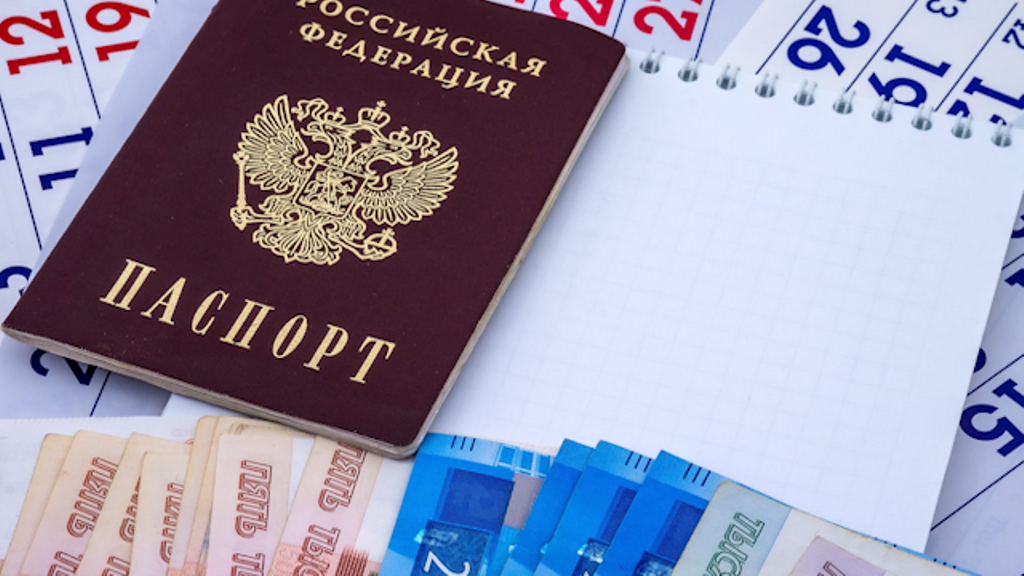
According to the document, the fee for obtaining Russian citizenship, as well as for renouncing it, will increase almost 12 times — from 4,200 to 50,000 rubles.
The cost of obtaining a residence permit will increase fivefold — from 6,000 to 30,000 rubles.
The fee for issuing a temporary residence permit will rise from 1,900 to 15,000 rubles, which is almost eight times.
In addition, the fee for employing foreign citizens will increase to 15,000 rubles per worker.
The initiator of the changes was the Ministry of Finance of the Russian Federation.
The Chairman of the State Duma, Vyacheslav Volodin, previously stated that the increase in fees should become one of the tools for regulating migration flows.
According to him, the authorities aim to attract “established” individuals to the country who have already achieved certain results in life.
Why is Russian citizenship no longer “in vogue”?
After the start of the Russian-Ukrainian military conflict, there was an unprecedented increase in the forced mobilization of natives from Central Asia, including through promises of citizenship. At the same time, the attitude of the Russian authorities towards new citizens of this country has sharply deteriorated.
Therefore, if previously migrants sought to obtain Russian citizenship to enjoy benefits and avoid the need to pay for patents and street checks by the Ministry of Internal Affairs, with the onset of the war, many natives of Central Asian countries, including Tajikistan, began to refuse Russian citizenship due to the risk of forced mobilization and possible death.
But the fear of war is not the only reason for refusing Russian citizenship. Some migrants abandoned plans to obtain citizenship and returned to their homeland due to the rude treatment by Russian law enforcement officials and the rise of nationalist and xenophobic sentiments among the local population.
According to the latest available statistics from the Russian Ministry of Internal Affairs on citizenship acquisition by country, in 2022, more than 173,000 citizens of Tajikistan obtained Russian citizenship. In 2024, a total of 209,000 people from various countries, including Tajikistan (the exact number from Tajikistan is unknown), became new citizens of Russia.
These figures indicate that the trend for Russian citizenship is fading, and today the Russian passport is not as attractive as it used to be.
The stories of migrants and statistics from Russian authorities confirm a sharp decline in the number of people wishing to obtain citizenship of this country – read more in our material.