
Mother’s Day is celebrated across many parts of the world, including Samoa and New Zealand, but its modern beginning was not about gifts, flowers or restaurant bookings.
It began with a daughter trying to honour her mother.
The modern Mother’s Day is traced to Anna Jarvis in the United States. Her mother, Ann Reeves Jarvis, had worked with women in her community in West Virginia, helping families with health, care and community work.
When her mother died in 1905, Anna Jarvis wanted a day set aside to recognise mothers and the work they carry inside families. In 1908, the first formal Mother’s Day service was held at her mother’s church in Grafton, West Virginia.
The idea spread quickly. In 1914, United States President Woodrow Wilson made Mother’s Day a national holiday, held on the second Sunday in May.
From there, the day travelled to other countries. New Zealand now celebrates Mother’s Day on the second Sunday in May, the same as the United States, Australia, China, Japan and many other countries. It is widely observed in New Zealand, but it is not a public holiday.
Samoa gives the day a different place in public life. Under Samoa’s Public Holidays Act 2008, Mother’s Day is observed on the Monday after the second Sunday in May. In 2026, the public holiday falls on Monday, 11 May.
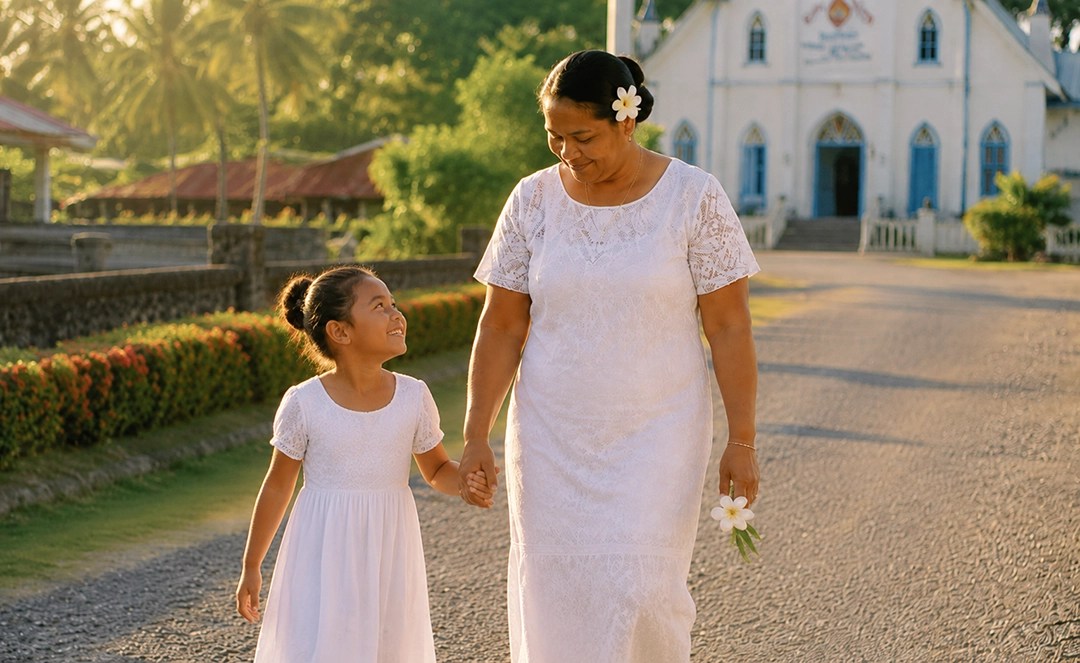
In Samoa, Mother’s Day is closely tied to church, family, food and respect. Families gather. Children honour their mothers. Churches hold services. Mothers are recognised not only for what they do at home, but also for their place in the village, church and extended family.
In many Samoan families, a mother carries much of the pressure of the home quietly. She feeds the family, worries about the children, keeps peace between relatives, helps with church obligations and still finds a way to keep going when she is tired.
For some families, Mother’s Day is a happy day. For others, it is painful. Some people no longer have their mothers. Some mothers have lost children. Some were raised by grandmothers, aunties, older sisters or other women who stepped in and became mothers in every way that mattered.
Anna Jarvis later became angry at how commercial Mother’s Day became. She believed the day should be personal. She wanted people to visit their mothers, write to them, speak to them and honour them properly. She did not want it to become mainly about businesses selling cards, flowers and gifts.
Today, the commercial side is hard to miss. Florists, restaurants, shops and advertisers all prepare for Mother’s Day. There is nothing wrong with buying flowers or taking a mother out for a meal. But the beginning of the day was much simpler.
It was about remembering a mother.
Mother’s Day does not need to be expensive to be meaningful. A visit, a phone call, a meal, a prayer, a letter or a simple thank you can carry more weight than a gift bought in a hurry.
Before Mother’s Day became a busy day for shops, it was a daughter’s tribute to her mother.


