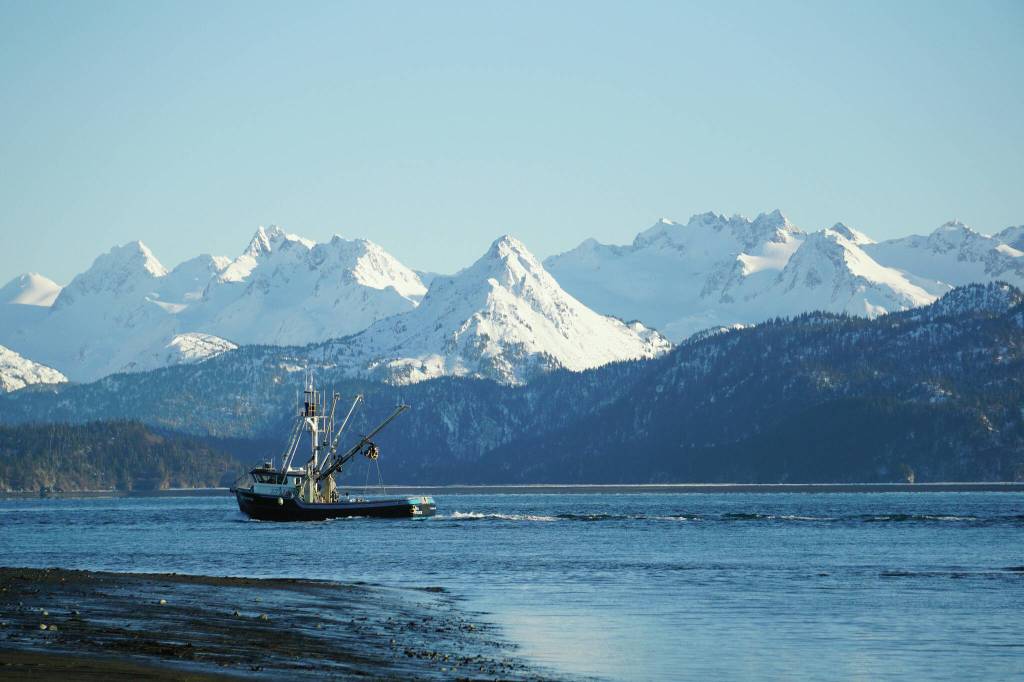
Southeast Alaska trollers to collect ocean data in new fish study
Published 9:30 am Sunday, October 11, 2026
By Jeffrey Kennett Juneau Empire Staff
The next clue to where salmon are gathering in Southeast Alaska could come from the fishing boats already searching for them.
Twenty commercial troll vessels will be recruited for a nearly $600,000 research project that combines fishermen’s daily catch records with underwater temperature and depth measurements, offering a closer look at how ocean conditions influence where fish are caught. Recruitment is currently underway for the 2028 and 2029 troll seasons, as the project seeks to discover why salmon congregate in one area while nearby waters produce fewer fish.
Jack Carroll, director of operations at Ocean Data Network, one of the project’s partners, said temperature beneath the surface may offer part of the explanation. “Temperature at depth certainly plays a role in where fish are aggregating,” Carroll said in the statement.
The Sitka-based Alaska Sustainable Fisheries Trust announced the initiative Oct. 1 after receiving a $293,600 grant from the National Fish and Wildlife Foundation. With an additional $300,000 in matching funds, the project carries a total value of $593,600.
Participating fishermen will use electronic logbooks and oceanographic sensors to document their catches and the surrounding conditions. Satellite connections will then allow that information to reach researchers during the fishing season, potentially providing a more immediate picture of activity across Southeast waters. By comparing catch records with underwater measurements, researchers hope to identify patterns that fishermen could eventually use when deciding where to operate.
“This project will give us the hard data to actually find those correlations between catch and oceanographic conditions,” Carroll said.
For participating captains, the technology will also provide a daily record of fishing activity and a way to compare catches against environmental changes over time. According to the foundation’s grant description, the research will collect information on Chinook salmon, halibut, lingcod and rockfish, potentially providing insight into multiple species encountered by Southeast’s commercial troll fleet.
Between 1971 and 1991, Southeast fishermen participated in a voluntary paper-logbook program, documenting catches and sharing observations with scientists and fisheries managers. Longtime Alaska fisherman Jim Moore participated in the original effort and later advocated moving the records into an electronic format. The Alaska Trollers Association began testing that idea in 2023, recruiting 10 fishermen for an electronic-logbook pilot intended to improve the collection of information from the fleet.
Now, the trust hopes to bring those records together with detailed measurements of the marine environment. “I am excited to see our project expand to scale and fully expect to see increased participation and support from our research partners,” Moore said.
To make the system practical aboard working fishing boats, the trust will partner with Real Time Data, a company developing electronic reporting technology for commercial fisheries. Its Deckhand application will follow fishermen to record catches and observations digitally rather than maintain separate paper records. Vessels will also receive Starlink satellite connectivity to transmit information regularly while at sea, reducing the delay between collection and delivery to researchers.
Lange Solberg, president of Real Time Data North America and a commercial fisherman, said the approach is intended to fit into normal fishing operations. “We look forward to working with fishermen to make at-sea data collection a smooth part of their daily fishing operations,” Solberg said.
Ocean Data Network will handle additional data collection support and organize the information into formats that researchers and fisheries managers can use. The organization has also worked to expand ocean observations collected by fishing vessels to take advantage of boats already operating in coastal waters.
For fishery managers, the additional measurements could eventually contribute to stock assessments and help explain changes in fishing conditions. The project is intended to support more timely decisions, although its value will depend on the quality of the observations and the relationships researchers can establish between catches and environmental conditions.
As part of a broader federal effort to modernize fisheries reporting, the National Fish and Wildlife Foundation and NOAA announced 13 grants totaling $3.4 million through the 2026 Electronic Monitoring and Reporting Program — supporting projects designed to improve how fishing information is gathered and used.
In the Southeast, organizers are looking for fishermen already paying attention to changes in water conditions and interested in contributing those observations to a large scientific record.
Interested troll fishermen can contact policy coordinator Lauren Howard at policy@alfafish.org or 907-738-7796, or outreach coordinator Emily Scott at outreach@alfafish.org or 907-747-3400.
If successful, the project could give Southeast captains a new way to understand what is happening beneath their vessels while contributing information that helps researchers follow changes in the region’s fisheries.