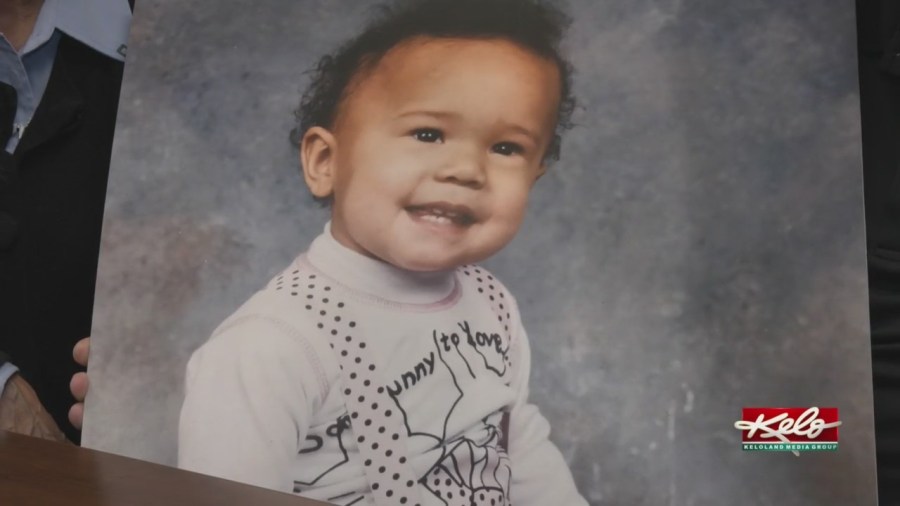
SIOUX FALLS, S.D. (KELO) — In September of 1992, Kamisha Nyvold was killed in her own home. She wasn’t even two years old. The FBI and Sisseton-Wahpeton tribal investigators were unable to make an arrest until 2024.
“They said that some new information came up, and then they were going to reopen the investigation, which they did. And then they did a full investigation,” said Christine Irwin, Kamisha’s mom.
Thune on shutdown: Could end soon
When it came to charging the suspect, the years between the crime and arrest presented an issue.
“He was kind of bound based on statute of limitations,” said Roger Irwin, Kamisha’s dad. “He wasn’t able to charge any other crimes like kidnapping or child molesting or sexual abuse or any of the other things that might have been chargeable.”
Their only option was first-degree murder.
“And under that charge, you have to prove premeditation, right,” said Christine. “Which in a cold case becomes very difficult. I mean, it’s difficult to begin with, even if it’s not a cold case.”
For crimes like second-degree murder and manslaughter, there is a five-year statute of limitations on federal land. But the suspect was willing to waive that statute of limitations for manslaughter.
“We had to decide what we wanted to do,” said Christine. “And I agreed that I would allow him to plead to the manslaughter and waive his statute of limitations if he admitted to what he did and told us what he did.”
Kamisha’s killer was sentenced to 10 years in federal prison, the maximum sentence for manslaughter. After the sentencing, the Irwins started asking questions about the statute of limitations.
“This isn’t just an Indian issue,” said Christine.
“Yeah, it’s not a race issue. It’s a federal land issue,” said Roger.
It only applies to federal land, including tribal land and national parks- no other parts of a state.
“How can that be?” said Christine. “I mean, it shouldn’t be. And he said, well, you would have to do some type of legislative fix.”
That’s when they reached out to Senator Mike Rounds asking him to sponsor the bill. It’s called Kamisha’s Law.
“It’s simply a way of identifying and, number one, trying to help the family as a part of a healing process and part of closure, but also because when we found out that this particular anomaly in the law occurred, it just seemed to be just that it be corrected,” said U.S. Senator Mike Rounds.
The bill now needs a co-sponsor. It can be a senator from any U.S. state.
“We’ll take our time. We’ll try to get the other appropriate members on this who will also want to become co-sponsors, but we’ll move it forward fairly quickly,” said Rounds.
The Irwins say that some people argue in favor of a statute of limitations to protect the innocent.
“That argument is not, number one, not always true. And the reason I know this is because I was wrongly accused in the beginning, and we went like this for 30 years. I was the suspect,” said Christine.
Which makes it that much more important to change the legislation and bring more families justice in the future.
The Irwins also started a scholarship in honor of Kamisha. They are raising money and are close to the minimum amount needed to officially launch the scholarship.