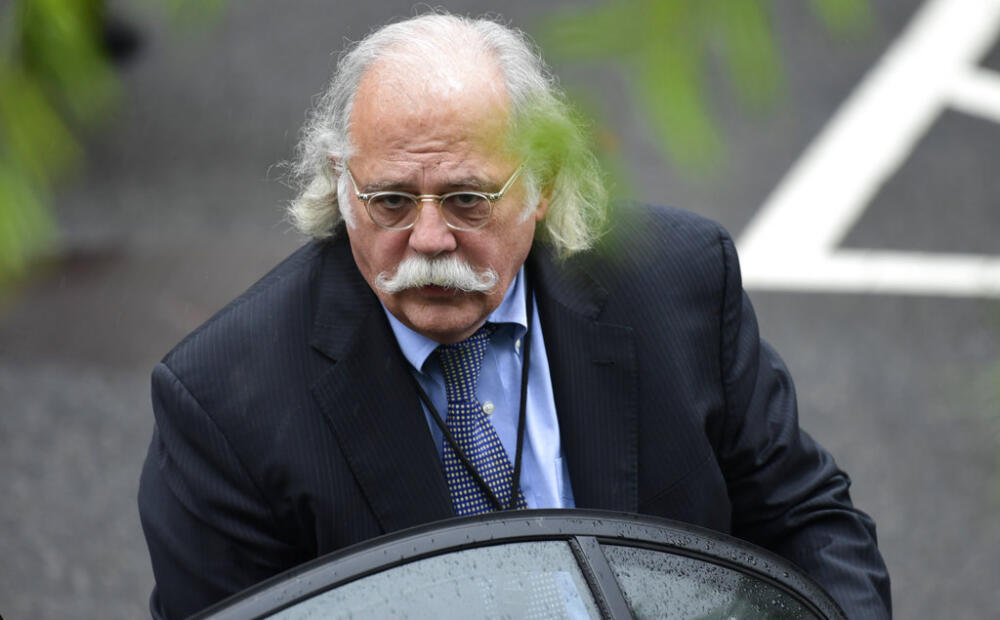
Ross McElwee didn’t invent the first-person documentary, but he made the format his own. Indeed, it’s fair to say that every vlogger and TikToker spilling their personal peccadillos into a front-facing camera today owes a debt to the 79-year-old, North Carolina-born filmmaker, whether they’ve heard of him or not. (Probably not.) McElwee studied at MIT under cinema verité pioneer Richard Leacock, but didn’t find his footing as a filmmaker until he stopped trying to get out of his own way. Whether we’re talking about the Civil War, foreign adoption, the Berlin Wall or Big Tobacco, the lofty subjects of McElwee’s movies are inevitably eclipsed by the mundanity of daily life — the director’s daily life, in particular — locating offhandedly profound observations in the familiar relationship foibles and restless self-examinations of the lanky Southern gentleman behind the camera.
McElwee’s screamingly funny 1985 masterpiece “Sherman’s March” was the breakthrough, a would-be historical documentary hijacked by the floundering love life of its director. The movie is back in theaters this week in a new 4K restoration timed to the release of McElwee’s latest film, “Remake.” Ostensibly the story of what happened when director Steve Carr of “Daddy Day Care” and “Paul Blart: Mall Cop” fame tried to make a fictionalized Hollywood version of “Sherman’s March,” the new picture is like most of McElwee’s movies in that it quickly becomes about something else entirely. The Coolidge Corner Theatre is opening both films this Friday, so you could see them as a double feature if you want. But that might not be the wisest way to experience these two extraordinary works.
Ross McElwee in his 1985 documentary “Sherman’s March.” (Courtesy Music Box Films)
“Sherman’s March” was originally intended to explore the contemporary sociological reverberations of Gen. William Tecumseh Sherman’s incineration of the South during the Civil War. And it still does, sort of. But McElwee’s girlfriend dumped him early in the production, and the project was overwhelmed by the director’s depressed musings on his sudden singlehood. The 157-minute epic finds McElwee retracing Sherman’s march to the sea, while friends and family members keep trying to fix him up with an increasingly quirky cavalcade of Southern belles. He also looks up old girlfriends, trying to hash out why they didn’t wind up living happily ever after.
Some of these women come off as eccentric, others downright insane. Yet McElwee remains enraptured by all of them, politely lingering in their orbits and putting off his project for as long as they’ll allow. Watching the film again last week, I realized its structure owes a lot more to “The Odyssey” than I’d remembered. (The director even has an idyll on an untamed coastal island with a linguistics student Calypso, but he has to sleep in a buggy treehouse once her boyfriend gets home.) McElwee may be somewhat to blame for the subsequent camera-hogging antics of documentarians like Michael Moore and Morgan Spurlock, but he lacks their snarky, malignant narcissism. His approach is generous and genuinely interested, even when touring a prospective partner’s doomsday bunker.
Charleen Swansea in filmmaker Ross McElwee’s 1985 documentary “Sherman’s March.” (Courtesy Music Box Films)Charleen Swansea in filmmaker Ross McElwee’s 2026 documentary “Remake.” (Courtesy Music Box Films)
McElwee being an unmarried man in his mid-30s is a matter of grave concern to his friends and family. His sister insists that the unkempt academic could make himself more presentable before going into details of her own recent “fanny tuck.” But the film is stolen outright by the director’s dear friend and old high school poetry teacher Charleen Swansea, a larger-than-life spitfire with an expansive vocabulary and no filter whatsoever. Charleen would go on to be a featured player in most of McElwee’s movies, boisterously providing verbal kicks in the pants to the sheepish, deadpan filmmaker. His bemused understatement and her livewire delivery are a match made in movie heaven. While setting him up on a blind date in “Sherman’s March,” Charleen tries to slap the omnipresent camera out of his hand. “This isn’t art,” she screams. “It’s life!”
Of course, McElwee’s life is his art, which is something he reckons with throughout the quietly devastating “Remake.” Predictably, the Hollywood version of “Sherman’s March” doesn’t get very far into development, but it does offer the director an excuse to catch up with some of the folks from the original film. These visits are sometimes wistful but mostly quite sad, and absolutely crushing in the case of Charleen, who can no longer remember making movies with her friend Ross. “Things just disappear,” she explains, articulate as ever but only slightly comprehending in an Alzheimer’s haze. The movie, and McElwee’s entire career, it seems, are his attempts to preserve such fragile, disappearing memories, especially those of his son Adrian, who died of a fentanyl overdose the day before Christmas in 2016.
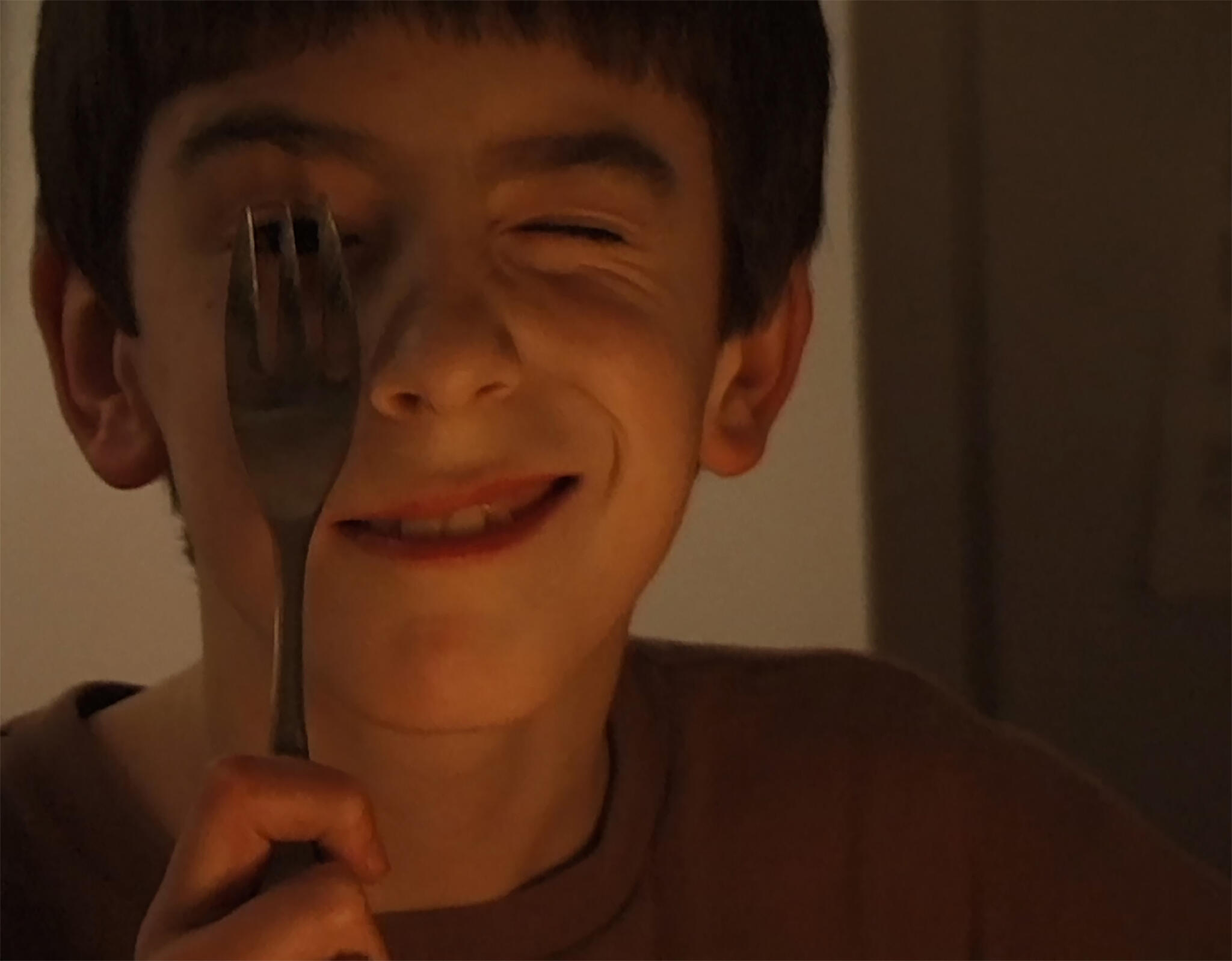
Adrian McElwee in “Remake.” (Courtesy Music Box Films)Adrian McElwee in “Remake.” (Courtesy Music Box Films)
Adrian’s death at the age of 27 haunts the picture, with McElwee obsessively poring over old footage of his troubled son, sometimes directly addressing the boy in his voice-over narration. He recounts their fraught relationship amid a period that also found the director dealing with divorce and a brain tumor. We see the young man struggling with addiction and bipolar disorder, interrupted by heartbreaking flashbacks to happier times. McElwee explains that the tragedy made his life feel like a movie with the reels out of order, and “Remake” is his way of sorting through all these impressions and emotions, trying to make them make sense. We’re watching a master storyteller attempt to impose a narrative on a life that stubbornly refuses to comply.
It’s an agonizingly raw experience. “Remake” was the Documentary Centerpiece screening of this year’s Independent Film Festival Boston, and McElwee’s emotional Q&A was perhaps the worst imaginable lead-in to the Awards Night Karaoke Party. (It even topped the time they showed “The Nightingale” right before the bowling bash.) The director is a much-loved local fixture who taught film at Harvard from 1986 until he retired two years ago, and the more of McElwee’s movies you’ve seen, the more this one is going to feel like a gut-punch. “Remake” hurts, yet there’s wisdom in it, a peace that feels hard-won. You can make your life into a movie, but you can’t make it have a happy ending. Things just disappear.
“Sherman’s March” and “Remake” open at the Coolidge Corner Theatre on Friday, July 31. Director Ross McElwee will be in attendance for a screening of “Sherman’s March” on Thursday, July 30.