ALBUQUERQUE, N.M. – The U.S. Supreme Court ruled geofence location searches must require a specific warrant, after the FBI gathered data from 3,100 devices at a mosque during a funeral.
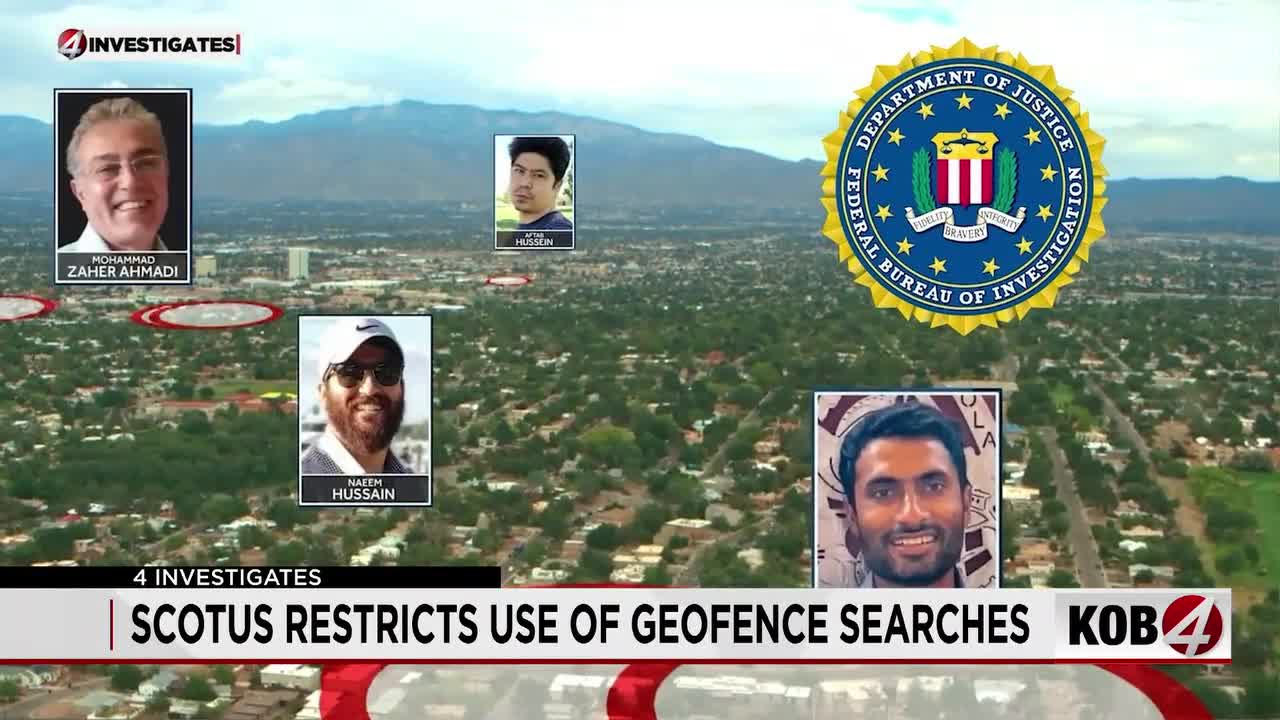
4 Investigates first examined the geofence issue in Albuquerque after an unsealed search warrant showed how the federal government tried to the Muslim murder investigation.
In that case, four Muslim men were killed in ambush attacks. Three of them died in just 10 days.
The FBI tried to access cell phone location data from phones at the mosque during the funeral because agents thought the killer may have been there.
That raised questions about the Fourth Amendment, which protects Americans from unreasonable government searches.
“This is really amazing news to me, because you brought this to light…” Abbas Akhil, former President of the Islamic Center of New Mexico said. “I’m appalled… [It’s] an egregious example of overreach and our rights to privacy.”
On Monday, the high court ruled 6-3 on the issue. Justice Elena Kagan wrote, “The Fourth Amendment must, as ever, protect against unjustified government intrusion on the privacy of the individual.”
Two years ago, University of New Mexico constitutional law professor Joshua Kastenberg said the issue needed a ruling from the nation’s highest court.
“I think New Mexicans, generally, should be happy with this decision. And the reason I say that is because much of our privacy laws are a generation behind where we live today,” Kastenberg said. “I look at this supreme court decision as a barrier, a safety zone against an overly intrusive government that often contracts with overly intrusive electronic organizations.”
Kastenberg said geofence searches likely will not disappear entirely because he expects them in national security cases, which follow different rules.
But in criminal civilian investigations, Kastenberg said wide, non-specific geofence searches are now largely unconstitutional.
- For Related Stories: 4 Investigates Ryan Laughlin