(function(w,q))(window,”_mgq”);
Russia cannot simply buy its way out of the air-defense shortage leaving occupied Crimea and southern Ukraine open to Ukrainian strikes, because the bottleneck is microchips, not money. That is the assessment of a Ukrainian commander whose unit hunts Russian air-defense systems for a living.
A money problem Russia could eventually solve; a chip problem, under sanctions, it cannot—which is why the air-defense gap over occupied Crimea and the south stays open as Ukraine keeps striking. Charger, who serves with the 413th Unmanned Systems Regiment “Raid,” gave the assessment to Euromaidan Press for an analysis, “Russian forces depend on Crimea. Ukraine is turning it into an island,” that lays out how the campaign is isolating the peninsula.
Explore further
Russian forces depend on Crimea. Ukraine is turning it into an island.
“Because it’s a scarce resource, it’s very expensive, and even if they just throw a sack of dollars at the manufacturer, air defense won’t just materialize because there’s no microchip,” Charger said. “There is no device where you feed it money and it gives you a microchip that controls an anti-aircraft missile.”
The shortage is sharpened by competing demands. As Ukraine’s long-range strikes on Russian territory grow, Moscow has moved air-defense systems to shield cities such as Moscow and St. Petersburg, leaving fewer in the combat zone, according to the Institute for the Study of War. Any system pulled back to defend a city is one fewer covering the front and the occupied rear.
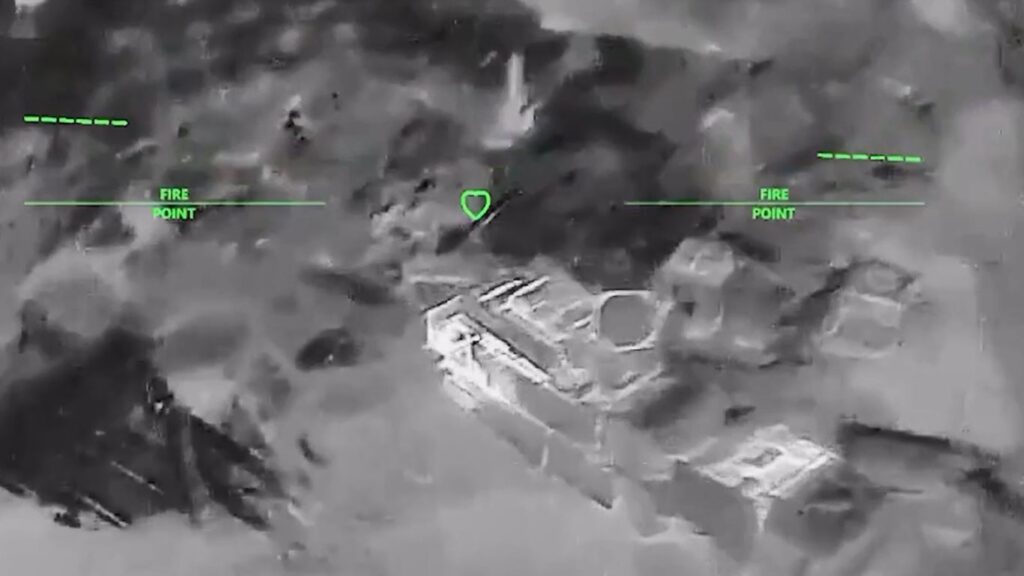
The result, Charger said, is a thinning, patchy shield. “They’re now forced to deploy air defense systems less frequently. They’re losing the concept of layered air defense… so, they’re left with blind spots,” he said. “Now, thanks to our previous work, we’re reaching through these blind spots and striking soft, unprotected targets.”
Ukraine’s Defense Ministry has a name for that campaign—a $113 mn “logistics lockdown,” announced in May to systematically cut the supply routes into occupied Crimea with medium-range drones. Defense Minister Mykhailo Fedorov has said the program routes funding straight to units that can quickly buy and field those drones, and that the more Russian logistics Ukraine destroys, the fewer assaults Russia can mount.
On the peninsula, occupation authorities have reportedly begun raising their own mobile air-defense groups, because the Russian Defense Ministry’s response has been so lacking.
Russia has two ways to stop those drones—shoot them down or jam them. The chip shortage is hollowing out the first; Ukraine’s AI-guided drones are built to beat the second.
The Defense Ministry says artificial intelligence now flies its long-range “middle strike” drones through the final approach. They navigate by matching terrain to stored satellite imagery rather than GPS, so jamming no longer blinds them, and route through the same blind spots the air-defense shortage is opening.
Explore further
How Ukraine uses AI to guide long-range drone strikes through electronic warfare and deep into Russian-controlled rear areas
(function(w,q))(window,”_mgq”);