AKIPRESS.COM – Uzbekistan plans to implement six waste-to-energy projects involving Chinese companies between 2026 and 2027. The total cost of these projects is $933 million. This was announced during a presentation to President Shavkat Mirziyoyev on September 10, Gazeta.uz reported.
$286.8 million had already been invested in the projects as of September 1. Procurement of domestic goods and services has reached $76.6 million, and approximately 2,000 local workers are employed in construction activities.
The projects will be implemented in Kashkadarya, Samarkand, Tashkent, Andijan, Fergana, and Namangan regions. The plants in Kashkadarya and Samarkand regions are scheduled to launch in 2026, with the others set for 2027.
Once fully operational, the plants will be capable of processing 3.6 million tons of municipal solid waste annually and generating 1.6 billion kWh of electricity.
This initiative is expected to reduce the burden on landfills and expand opportunities for a phased transition to a “zero-waste” model.
Director of the Waste Management and Circular Economy Development Agency Sharifbek Khasanov noted in an interview with the “Uzbekistan 24” TV channel that the President had approved the construction of six plants last year.
“Two plants will be launched before the end of this year and will begin generating electricity needed by our population. The presentation focused on the construction of five additional plants of this type across five of our regions and attracting new investment into the economy. Five plants, costing $625 million, will be launched at the end of 2027, enabling us to generate an additional 635 million kWh of electricity,” he said.
Five investment projects have been presented by companies from Singapore, South Korea, and China, with a combined value of $625 million. They are slated for implementation in Karakalpakstan and Jizzakh, Surkhandarya, Bukhara, and Khorezm regions.
Once launched, these projects will enable the annual processing of an additional 1.9 million tons of municipal solid waste and the generation of 635 million kWh of electricity. Furthermore, it is planned to create 500 new jobs, save 158 million cubic meters of natural gas annually, and reduce greenhouse gas emissions by 316,000 tons.
“One might assume that waste-to-energy plants could harm people through incineration, but these facilities will operate as environmentally clean plants. Once construction is complete, we plan to invite the public to visit these eco-industrial zones,” Sharifbek Khasanov noted.
According to him, other opportunities for economic growth are also being considered.
“Incineration at the plant produces ash. Our investors plan to process this ash to create added value – processing it within Uzbekistan and exporting it to their home countries. This will also establish an additional export base for us,” Sharifbek Khasanov said.
These measures will also help meet the goal of reducing the number of landfills by 50%.
“Through these eco-industrial zones, we are covering waste reception and incineration across all our regions. This will reduce the volume of waste sent to landfills by 40%. We will send the remaining waste for recycling, and by expanding recycling capabilities, we aim to eventually eliminate the need to send waste to landfills altogether,” Sharifbek Khasanov noted.
He added that future plans include directives to transform these landfill sites into gardens and parks.
In October 2024, while discussing projects to process household waste into electricity and other products, President Shavkat Mirziyoyev described this sector as a “pivotal issue”. In March 2025, he signed a decree on implementing projects to generate electricity through the incineration of solid municipal waste.
One such project is being implemented in Samarkand in partnership with the Chinese company Shanghai SUS Environment. The SUS Environment Samarkand plant is under construction at the central landfill site in Navruz mahalla. 15 hectares of the landfill’s total 100-hectare area have been allocated for the project. The foundation stone for the facility was laid on July 18, 2025, and construction is currently ongoing.
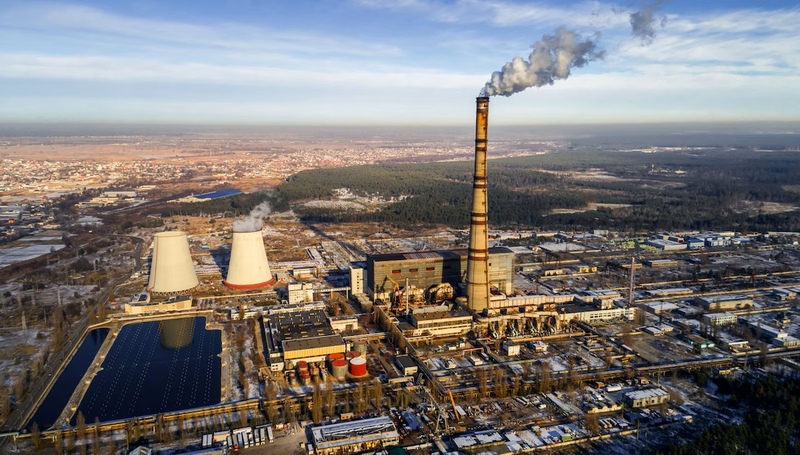
Waste-to-energy plants operate using technology that thermally processes industrial and solid municipal waste in boilers or furnaces. The heat generated during combustion is used to produce thermal energy and electricity.