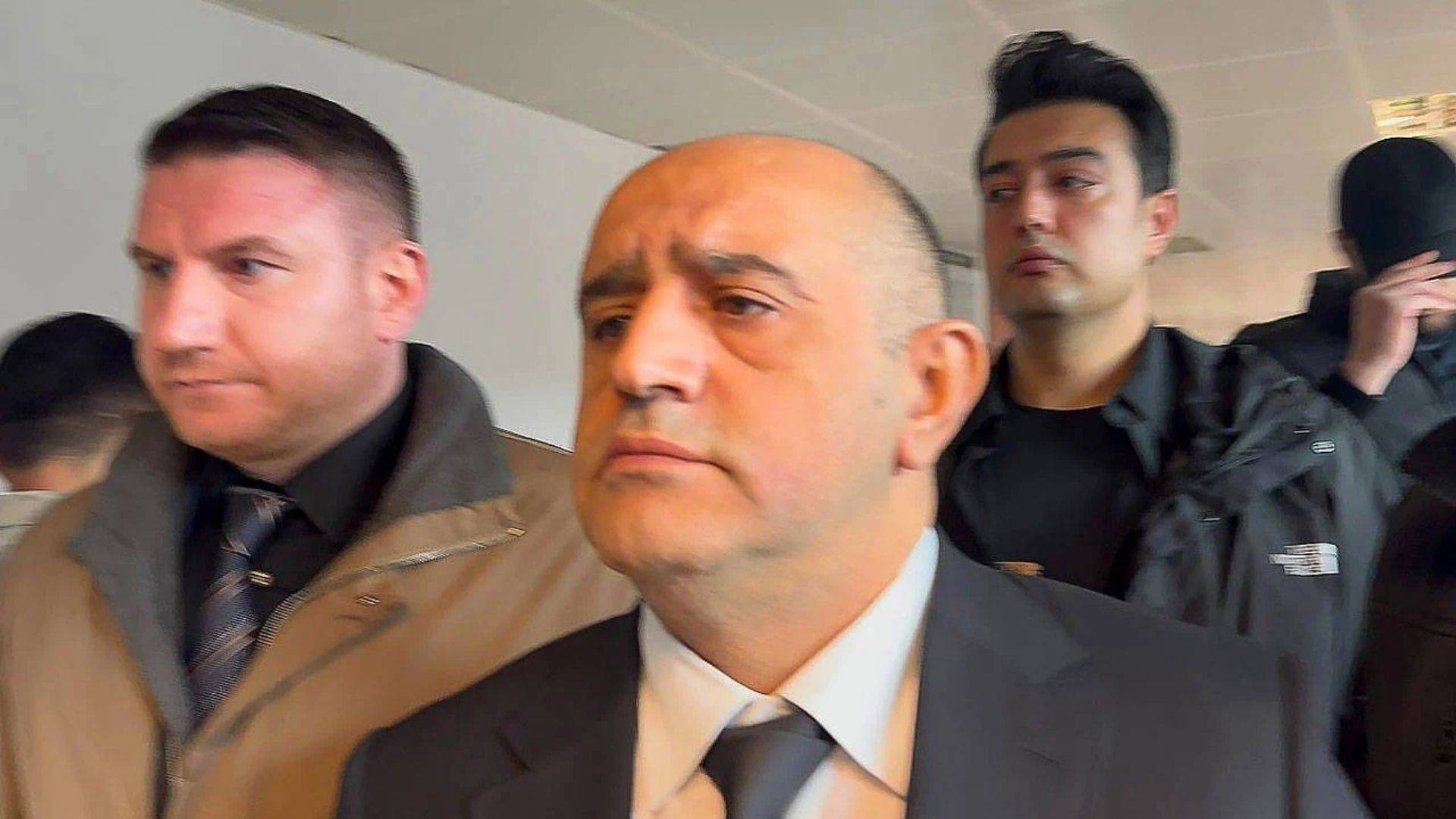
An İstanbul court on Monday rejected the central accusation in one of Turkey’s largest municipal corruption trials, acquitting all 200 defendants of forming or belonging to a criminal organization while convicting some of them on separate bribery and other charges.
The decision was a significant setback for prosecutors, who had portrayed businessman Aziz İhsan Aktaş as the leader of a network that obtained public contracts through bribery, forged documents and rigged tenders at municipalities run by the main opposition Republican People’s Party (CHP).
The İstanbul 1st High Criminal Court ruled that prosecutors had failed to prove the existence of the alleged organization, the BirGün daily reported.
The ruling cleared Aktaş and fellow cooperating defendant Baki Nugay of establishing a criminal organization. It also acquitted defendants accused of belonging to the alleged group, including Rıza Akpolat, the jailed mayor of İstanbul’s Beşiktaş district.
The court nevertheless found that some individual corruption offenses had occurred and handed down prison sentences for bribery and other charges. The mixed verdict drew a sharp distinction between the prosecution’s sweeping narrative of a coordinated criminal network and separate acts involving particular defendants.
Aktaş and Nugay were also acquitted of private-document forgery and interference with the performance of a public contract.
Akpolat was acquitted on 18 counts, including organization membership, private-document forgery and bid-rigging. He had spent about 19 months in pretrial detention by the time the verdict was announced.
Utku Caner Çaykara, the mayor of İstanbul’s Avcılar district, was acquitted of all charges against him.
The court acquitted Ahmet Özer, the suspended mayor of İstanbul’s Esenyurt district, of private-document forgery but gave him a suspended sentence of eight months for misconduct in office.
The lengthy ruling also covered CHP mayors Zeydan Karalar of Adana, Kadir Aydar of Ceyhan, Oya Tekin of Seyhan and Abdurrahman Tutdere of Adıyaman, all of whom had faced bribery charges.
From alleged ringleader to cooperating defendant
The case attracted particular attention because Aktaş, originally arrested as its alleged ringleader, was released after providing information that helped prosecutors bring cases against opposition mayors and municipal officials.
He cooperated under provisions in Turkish law known as “effective remorse,” which allow reduced punishment or other favorable treatment for suspects who provide useful information, identify other alleged participants or help investigators obtain evidence.
Despite the name, the provision does not necessarily require an expression of regret. In practice, it can function as an incentive for a suspect to cooperate with prosecutors in exchange for leniency.
Aktaş’s statements led to warrants for 47 people, including five district mayors. His house arrest was later lifted.
Defense lawyers claimed that suspects facing detention, restrictions on their assets and the loss of their positions had been pressured to implicate others in exchange for release or favorable treatment.
The court’s decision to acquit all defendants of organization-related charges undercut the legal theory that had tied together allegations involving different municipalities, officials and contracts.
It did not, however, amount to a blanket acquittal. The court considered the bribery, procurement, forgery and misconduct allegations separately and issued convictions in connection with some of them.
A vast case concluded in seven months
The case involved seven current or former CHP mayors and nearly 200 other defendants, including municipal officials and businesspeople.
When the court accepted the 578-page indictment in November 2025, roughly 40 defendants were in pretrial detention. Prosecutors initially sought sentences of up to 704 years for Aktaş and 415 years for Akpolat.
Those demands were later reduced. In their final opinion, prosecutors requested between 103 and 280 years for Aktaş and between 86 and 234 years for Akpolat.
Only five defendants remained in pretrial detention at the start of Monday’s final hearing.
The court held 60 hearings over seven months, an unusually compressed schedule for a case involving hundreds of defendants and allegations spanning multiple municipalities.
The defendants denied wrongdoing throughout the trial. Their lawyers said prosecutors had failed to produce sufficient concrete evidence and relied too heavily on statements from cooperating defendants, secret witnesses and people recounting information they had heard from others.
Some witnesses acknowledged during the proceedings that portions of their testimony were not based on events they had personally witnessed.
In her final statement Tekin said her 15 months in pretrial detention had amounted to punishment without a conviction.
Akpolat also denied the accusations, telling the court that the case lacked concrete evidence and depended largely on statements from people who stood to benefit from cooperating with prosecutors.
Part of a broader campaign
The investigation began with Akpolat’s detention in January 2025 and expanded to opposition officials in İstanbul, Adana and Adıyaman.
Beşiktaş Mayor Rıza Akpolat
It unfolded amid a far broader campaign of criminal investigations into the CHP, which intensified after the party defeated President Recep Tayyip Erdoğan’s ruling Justice and Development Party (AKP) in many of Turkey’s largest cities in the March 2024 local elections.
The crackdown accelerated after the March 2025 arrest of İstanbul Mayor Ekrem İmamoğlu, Erdoğan’s most prominent political rival and the CHP’s presidential candidate for the next election.
In a report published in October 2025, the CHP described the prosecutions as a “judicial coup” intended to reverse opposition victories at the ballot box.
The party has also questioned why CHP-run municipalities faced large-scale criminal investigations over contracts awarded to companies linked to Aktaş while AKP-run municipalities and state institutions that dealt with the same businesses did not face comparable operations.
The government denies using the courts to target its opponents and says Turkey’s judiciary acts independently.