The Kremlin on Monday pointed to Turkey’s decades-long wait for European Union membership as a warning to Armenia after Prime Minister Nikol Pashinyan said Yerevan would soon begin preparations for an accession bid.
Armenia is formally allied with Moscow but has been building closer ties with the EU amid frustration over Russia’s perceived failure to protect it during conflicts with neighboring Azerbaijan, Turkey’s close ally.
“Armenia must first submit an official application for EU membership,” Pashinyan told parliament.
“We may begin this process in the near future, especially given the urgent requests from our EAEU partners,” he said, referring to the Moscow-led Eurasian Economic Union.
Once the application is submitted, Armenia would hold a referendum on membership, Pashinyan added.
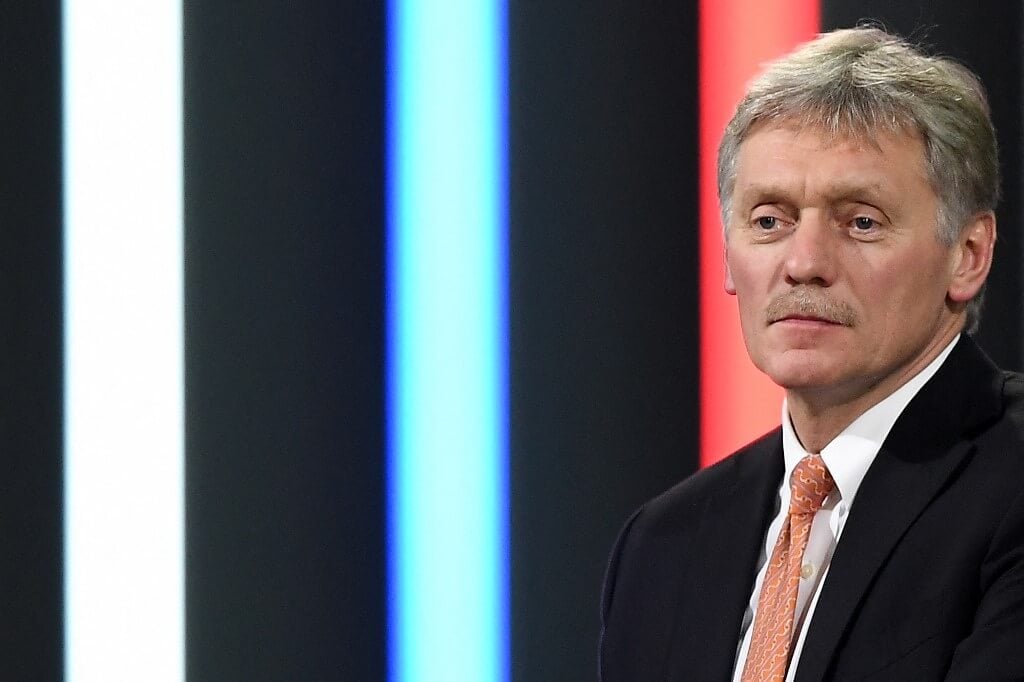
Asked about the former Soviet republic’s EU ambitions on Monday, Kremlin spokesman Dmitry Peskov said the trade, food-safety and customs rules of the EU and the EAEU were incompatible.
“I always recommend here that we keep in mind the experience of Turkey and a number of other countries, whose applications were submitted decades and decades ago, yet they’re still in the same situation today,” Peskov said.
Turkey applied to join what was then the European Economic Community in 1987, was granted candidate status in 1999 and began accession negotiations in 2005.
The talks have been at a standstill since 2018, when the EU said Turkey was moving further away from the bloc, particularly in the areas of democracy, the rule of law and fundamental rights. Of the 35 negotiating chapters, 16 have been opened and only one provisionally closed.
Despite the frozen accession process, Turkey remains formally a candidate and maintains close economic ties with the bloc through a customs union that has been in force since 1996. The EU is Turkey’s largest trading partner.
Russia has repeatedly called for Armenia to hold a referendum on its European ambitions and warned that membership in both the EU and the EAEU would be impossible.
Moscow, which maintains a military base in Armenia, still wields substantial influence over the small South Caucasus country.
Pashinyan, who came to power following mass protests in 2018, secured another term in June after hosting EU leaders and Ukrainian President Volodymyr Zelensky at a summit.
Moscow has stepped up pressure on Yerevan over its rapprochement with Brussels by imposing import restrictions. In June Russian President Vladimir Putin warned Armenia that the “Ukrainian scenario” had begun with Kyiv’s EU ambitions.
Armenia’s European push also comes as it pursues normalization with Turkey following decades of hostility.
The neighbors have no formal diplomatic relations, and their land border has remained closed since 1993, when Ankara sealed it in solidarity with Azerbaijan during its conflict with Armenia over Nagorno-Karabakh.
A process of normalization launched in 2021 has led to the resumption of direct flights, simplified visa procedures and the removal in May of a restriction on direct trade. The two countries have also agreed in principle to open their border to third-country nationals and diplomatic passport holders, although the measure has yet to be fully implemented.
Turkey’s support for Azerbaijan and the dispute over the mass killings of Armenians in the Ottoman Empire remain major sources of tension. Armenia and many historians describe the killings as genocide, a characterization rejected by Turkey.
Agence France-Presse, with reporting from Turkish Minute