The Prime Minister Lord Fakafanua has added his voice to growing Pacific concerns over China’s launch of a long-range ballistic missile into international waters, describing regional unity and the vision of an “Ocean of Peace” as central to Pacific security.
Lord Fakafanua confirmed Tonga would join a joint statement by Pacific leaders expressing concern over the missile test, which has been criticised by several countries as a destabilising and provocative act.
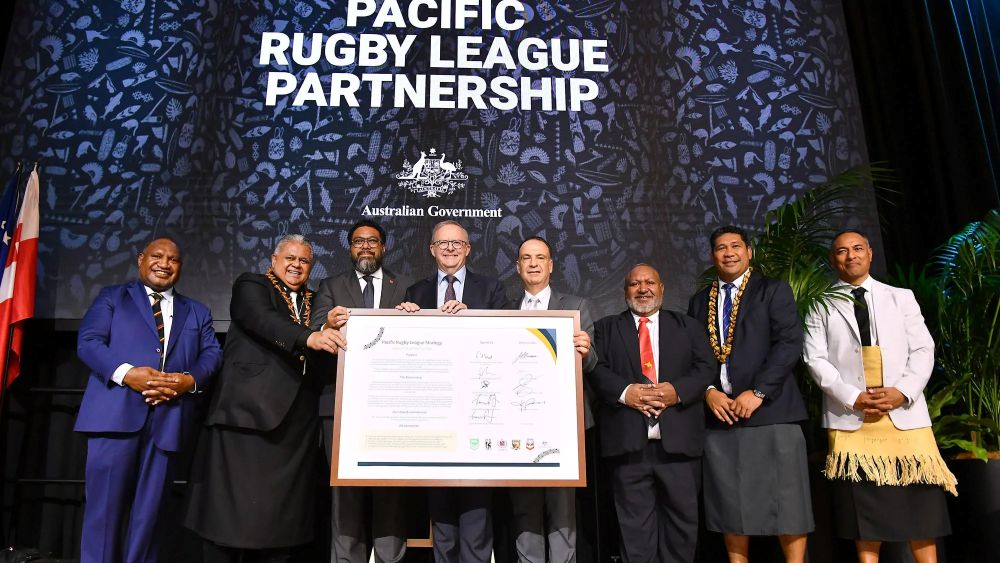
The comments came during a meeting with Australian Prime Minister Anthony Albanese in Brisbane, where Pacific leaders discussed shared security challenges.
“Tonga subscribes to the Pacific leaders’ proposal for an ocean of peace. This is very important for us, and we will be joining a joint statement that’s currently being discussed by the forum leaders,” Lord Fakafanua said.
China has described the launch as a routine part of its annual military training programme. However, the missile test has drawn criticism from Australia, New Zealand, Japan, Taiwan, Tuvalu, Solomon Islands, Papua New Guinea, Samoa, Fiji, Tonga and the United States.
The missile reportedly landed near Tuvalu, prompting Prime Minister Feleti Teo to express “grave and serious concern” and call for respect for the Pacific’s collective commitment to peace and security.
The missile test has prompted unusually strong reactions from Pacific leaders. Australian Prime Minister Anthony Albanese described the launch as “provocative” and “destabilising”, while Solomon Islands Prime Minister Matthew Wale said it was “not the act of a friend” and urged all countries to refrain from testing missiles in the Pacific.
Papua New Guinea Prime Minister James Marape also called for respect for the region’s desire to remain free from nuclear testing and military intimidation.
During talks in Brisbane, Lord Fakafānua also highlighted the importance of strengthening Tonga’s relationship with Australia amid “security concerns that are common across the Pacific”.
The issue comes as regional leaders continue to debate the impact of rising strategic competition in the Pacific. Australia and Papua New Guinea also issued a joint statement rejecting actions that undermine peace, security and stability in the region.
Lord Fakafanua’s remarks reinforce Tonga’s long-standing support for the 1985 Treaty of Rarotonga, which established the South Pacific Nuclear Free Zone, and reflect broader Pacific concerns about escalating strategic competition between major powers.
The latest missile test has intensified debate over regional security ahead of forthcoming Pacific Islands Forum discussions, where leaders are expected to renew calls for transparency, dialogue and respect for Pacific sovereignty as geopolitical rivalry continues to grow.