The human cost of Venezuela’s devastating twin earthquakes is coming into sharper focus, with survivors describing grief, loss and uncertainty as recovery efforts continue weeks after the disaster struck the country’s Caribbean coast.
An Al Jazeera feature published this week highlights the experiences of residents in the hardest-hit communities, where families continue searching for loved ones, salvaging belongings and adapting to life among damaged buildings.
An aerial drone shows the collapsed skeleton of a high-rise apartment in La Guaira, Venezuela, on July 4 [Ricardo Arduengo/Reuters]
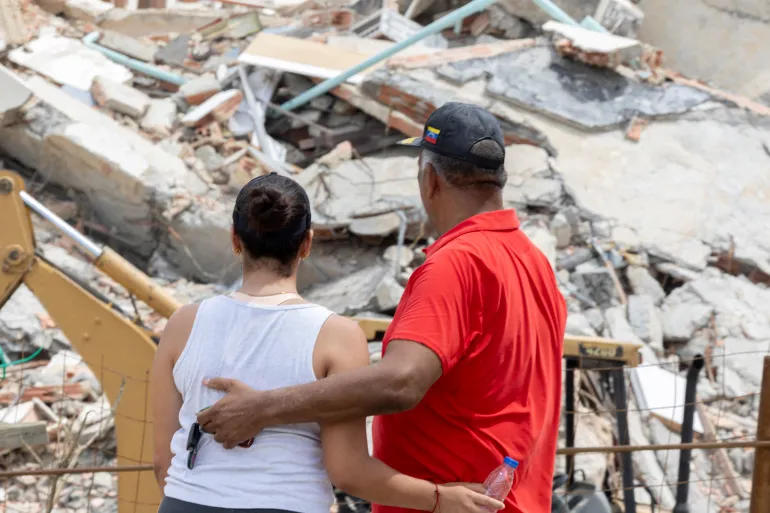
Survivors spoke of neighbourhoods reduced to rubble, with one resident describing the landscape as “decay” after entire communities were transformed by the disaster.
The powerful magnitude 7.2 and 7.5 earthquakes struck Venezuela on 24 June, causing widespread destruction in coastal areas including La Guaira.
The latest official figures put the death toll above 4,300, with more than 16,700 people injured and thousands left homeless as authorities move from rescue operations to long-term recovery.
Aid agencies warn that humanitarian needs remain significant. Overcrowded shelters, limited access to clean water and disrupted healthcare services have increased concerns about disease outbreaks, while the United Nations has appealed for hundreds of millions of dollars to support more than one million people affected by the disaster.
Journalists covering the aftermath have focused not only on the scale of physical destruction but also on the emotional toll facing survivors.
Many families remain displaced and uncertain about when they will be able to return home, while communities continue mourning those who died.
As reconstruction begins, the disaster stands as one of the deadliest natural catastrophes in Venezuela’s recent history, highlighting the long-term challenges of rebuilding homes, restoring essential services and supporting affected communities.