As part of the Conference of the Parties to the UN Convention to Combat Desertification (COP-17) in Ulaanbaatar, Tajikistan’s practices were presented as examples of sustainable land management. Among them are the creation of stone terraces on mountain slopes, methods for soil and moisture conservation, as well as the use of sunken greenhouses.
Stone terraces: protecting slopes from erosion
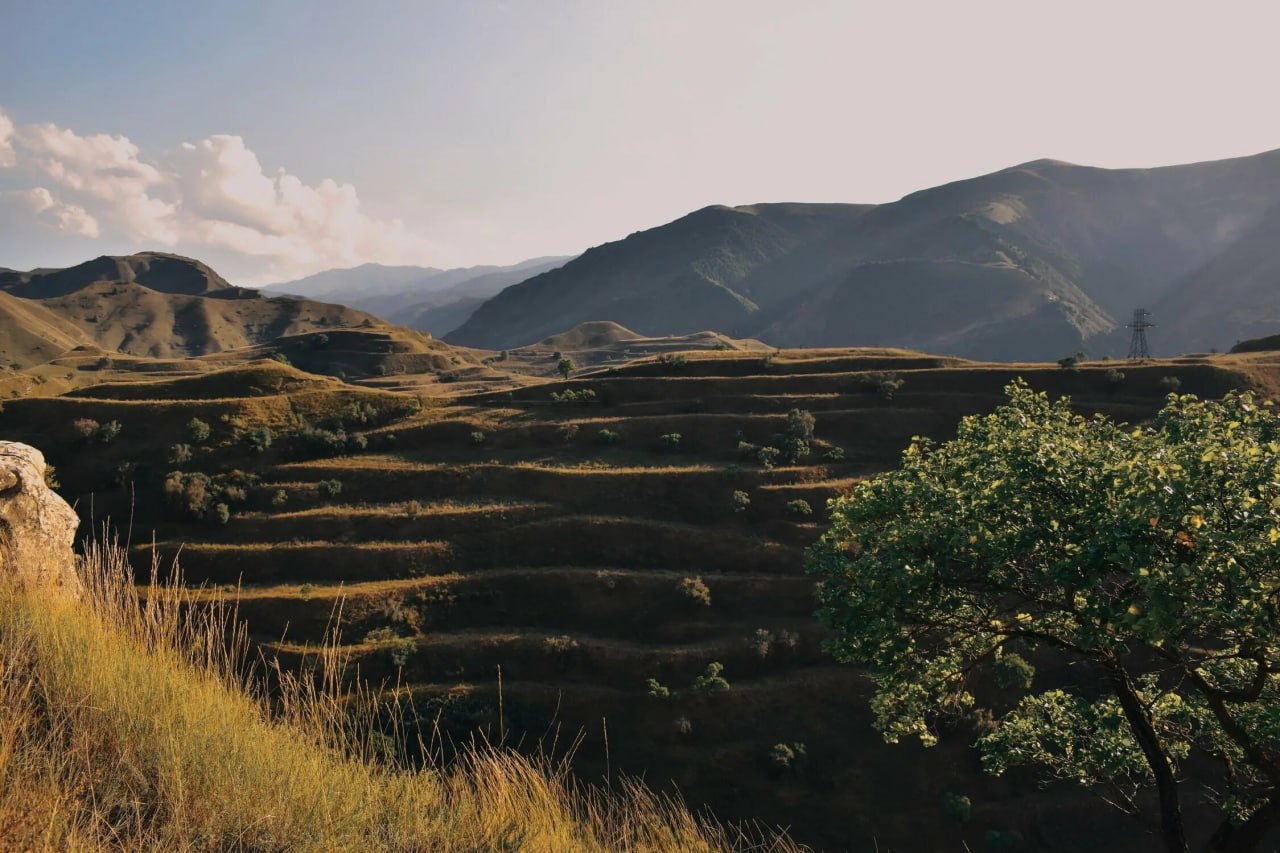
One of the most well-known practices has been terracing of mountain slopes.
On steep rocky areas, special stone terraces are created. They help retain soil, slow down water movement along slopes, preserve moisture, and reduce the risk of destructive mudslide processes.
Such structures make it possible to use previously unsuitable land for agriculture and grow fruit and fodder crops on them. For mountainous Tajikistan, this is particularly important since arable land is limited.
Sunken greenhouses: heat preservation and food security
Among Tajikistan’s practices, the report separately highlights sunken greenhouses.
Such greenhouses are partially located below ground level, which helps retain heat. Stones inside the structure are used as natural heat accumulators.
This technology makes it possible to grow vegetables and other crops even during the cold season and helps rural families provide themselves with food year-round. The distinctive feature of this practice is that it was developed with the participation of women from rural areas.
Leadership in the international WOCAT database
Tajikistan also stands out for the number of registered practices in the international WOCAT database (World Overview of Conservation Approaches and Technologies), which collects solutions for sustainable land management.
According to the report, the country has documented 124 technologies and 57 approaches related to land conservation. This is one of the highest indicators in Central Asia.
The database includes various solutions that are applied in mountainous regions: soil and water conservation methods, restoration of degraded areas, approaches to sustainable use of agricultural land.
Forest and vegetation restoration
Another direction in combating land degradation is the restoration of forests and vegetation.
According to the report’s data, the forest area in Central Asia has increased by 6.4% in recent years. Among the region’s countries, Uzbekistan and Tajikistan are named as leaders: in Tajikistan, the growth of forest territories is estimated at 23%.
Forest plantations help strengthen soil, reduce erosion risk, retain moisture, and increase ecosystem resilience to climate change.
Transition from addressing consequences to land restoration
The authors of the regional report note that Central Asian countries are gradually transitioning from responding to the consequences of degradation to systematic land restoration.
All five states in the region have adopted voluntary targets to achieve land degradation neutrality (LDN) under UN Sustainable Development Goal 15.3.
For Tajikistan, where much of the territory consists of mountainous regions, land conservation becomes not only an environmental task but also a matter of food security and sustainable development of rural areas.