Tajikistan and the Initiative for Climate Action Transparency (ICAT) have agreed to develop a joint project ahead of the 31st Conference of the Parties to the United Nations Framework Convention on Climate Change (COP31), scheduled to take place in Antalya, Turkiye, in November 2026.
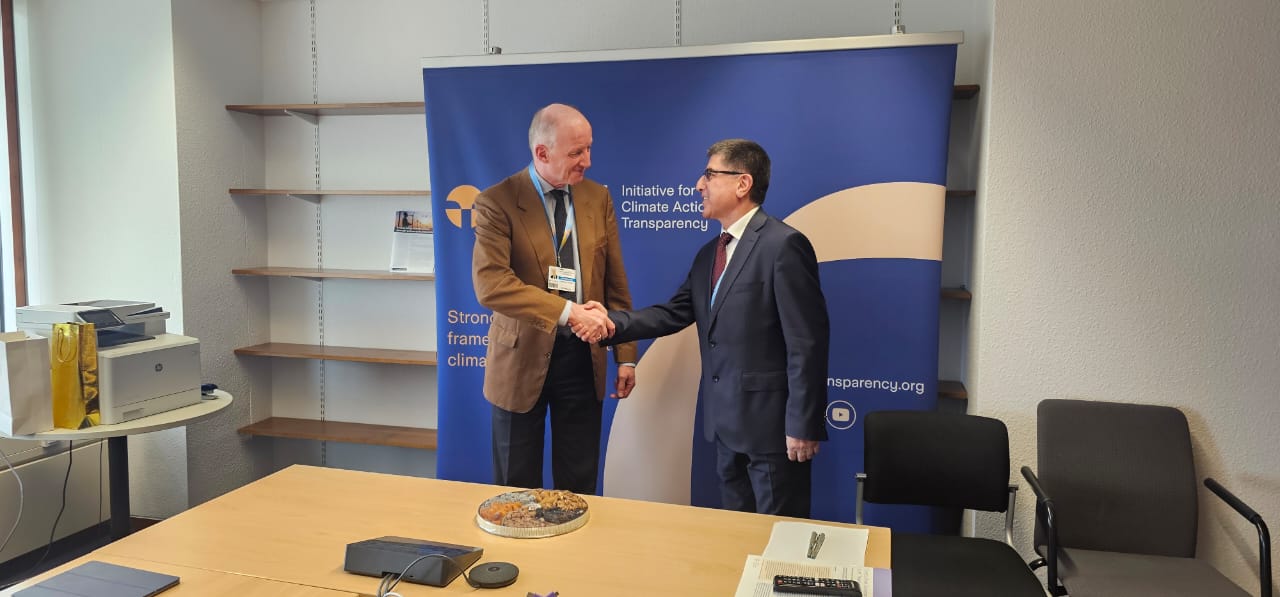
The agreement was reached during a meeting held in Bonn on the sidelines of the 64th session of the Subsidiary Bodies of the UN Framework Convention on Climate Change (UNFCCC), where representatives discussed ways to strengthen Tajikistan’s climate monitoring, reporting, and transparency systems in line with the country’s commitments under the Paris Agreement.
The meeting brought together Abdullo Qurbonzoda, Director of the Agency for Hydrometeorology (Hydromet) under Tajikistan’s Committee for Environmental Protection, and ICAT representatives, including ICAT Director, Dr. Henning Wuester.
According to the Agency for Hydrometeorology, the discussions focused on enhancing transparency in climate policy, improving systems for monitoring, reporting, and verification (MRV) of climate data, and strengthening the preparation of national reports required under the Paris Agreement.
Particular attention was given to building Tajikistan’s capacity to assess climate actions, improve the quality of climate reporting, and apply modern tools for tracking progress toward the country’s nationally determined contributions (NDCs).
Qurbonzoda emphasized the importance of international cooperation in advancing climate transparency and expressed interest in expanding collaboration with ICAT to strengthen national climate monitoring and reporting mechanisms.
For its part, ICAT reaffirmed its readiness to continue providing expert and technical support to countries implementing the Enhanced Transparency Framework established under the Paris Agreement.
As a result of the meeting, the parties agreed to prepare a joint initiative for presentation ahead of COP31.
The 64th session of the UNFCCC Subsidiary Bodies is being held in Bonn from June 8 to 18, 2026. The meeting serves as a key preparatory stage for COP31, bringing together countries to discuss greenhouse gas emission reductions, climate adaptation, climate finance, technology transfer, capacity building, and a just energy transition.