The number of crimes committed by foreign nationals in Russia fell by 40% in the first half of 2026, compared with the same period last year, according to Russia’s Interior Ministry.
The figure was announced by Andrei Kikot, First Deputy Minister of Internal Affairs and head of the ministry’s Service for Citizenship and Registration of Foreign Nationals, at a meeting with Russian President Vladimir Putin. The Kremlin published the remarks on its website.
“While last year we saw a slight increase in the number of crimes committed by foreigners, with that figure reaching 41,000, this year we are seeing a sharp decline: in the first half of the year, 14,500 crimes were registered, which is a decrease of 40 percent,” Kikot said.
He attributed the decline partly to the expanded powers of the migration service. By presidential order, the agency was given additional responsibilities for crime prevention, as well as powers to conduct operational investigative activities and inquiries under relevant legislation.
According to Kikot, the service is focusing primarily on organized crime, criminal schemes and channels of illegal migration rather than minor and less serious offenses.
The agency has also stepped up efforts to identify underground printing operations producing forged documents used to register and legalize labor migrants. As a result, the number of organized criminal groups identified increased by 30%, he said.
Moscow and St. Petersburg account for nearly half of crimes
Kikot said Moscow, the Moscow Region and St. Petersburg account for just under half of all crimes committed by foreign nationals. He attributed this partly to the large number of foreigners living in and arriving in these regions.
The remaining regions of Russia account for an average of 2–3% of such crimes each, he said.
More inspections and deportations
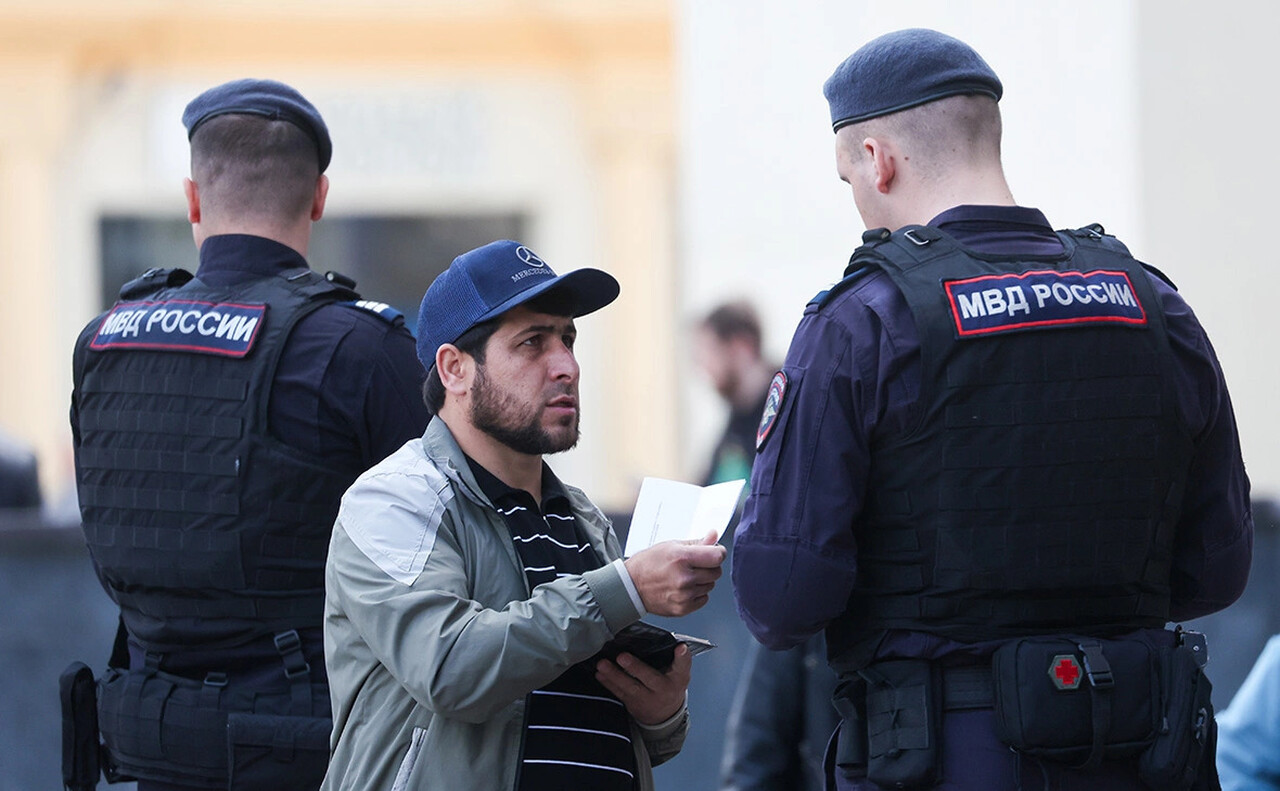
The Interior Ministry has also increased migration-control measures.
According to Kikot, the number of raids increased by 155,000, while the number of legal entities inspected rose by 43%. As a result, about 100,000 foreign nationals were expelled from Russia, including 75,000 who were forcibly deported.
Putin said the rate of administrative expulsions increased 2.6 times, while forced expulsions rose by 85%. Kikot confirmed these figures.
As part of preventive measures, migration service units banned 197,000 foreigners who had violated Russian law from entering the country.
Authorities also tightened checks on documents submitted by foreigners applying for legal status. As a result, the number of forged documents and documents containing knowingly false information detected by officials increased tenfold.
Authorities have also stepped up efforts to identify fictitious marriages and family relationships. The detection rate for such cases increased by 20%, while cases involving knowingly false information rose tenfold.
Following inspections, 20,000 temporary and permanent residence permits were revoked, Kikot said.
New migration-control checkpoints
Kikot said the changes were also linked to a broader approach to migration control. Previously, such work was carried out mainly by territorial police units, including patrol and road-policing services, as well as the Russian National Guard.
Transport police units have now been incorporated into the system.
By presidential order, migration-control checkpoints are being established at and near transport hubs where border-crossing points are located. Twenty-three such checkpoints have been opened so far.
A pilot project was launched at Sheremetyevo Airport, which the Interior Ministry said demonstrated the effectiveness of the new system.
“Together with our colleagues from the FSB, the Border Service, and the Ministry of Transport, we have developed a new algorithm that has not been used before, which allows us to block and prevent illegal migrants from passing through border crossing points at the time of their arrival, while those who are leaving our country and are violators — we close their return entry,” Kikot said.
He linked the new measures to an 8% decline in the number of foreigners present in Russia.
At the same time, Kikot said, the number of labor migrants legally residing in the country is increasing.
AI-based migration monitoring system planned
Kikot also announced plans to establish an analytical center that will use new technologies, including artificial intelligence, to consolidate and analyze migration-related information from different sources.
The system is expected to use data from border crossings and migration-control operations, surveillance cameras with facial-recognition capabilities, as well as information from employers and government agencies.
The center is planned to become operational in 2027 and will be used to identify and counter illegal migration, according to Kikot.
Russia’s Interior Ministry data
According to Interior Ministry data cited by Fergana news agency, about 9 million foreign nationals enter Russia each year for various purposes.
At any given time, between 6 million and 6.5 million foreigners are present in the country. Around 3 million are labor migrants, while another 1.7 million are their family members. About 1 million fall into other categories, including tourists, students and people visiting for private purposes.
The authorities have placed 800,000 foreign nationals who violated Russian law on a registry of monitored individuals. Search measures are being carried out in relation to them.