Migration-related revenues to Russia’s federal and regional budgets reached 321 billion rubles (about $4 billion) over the past 18 months, up 30% from the previous period, according to Russia’s Interior Ministry.
First Deputy Interior Minister Andrei Kikot, who heads the ministry’s Service for Citizenship and Registration of Foreign Nationals, presented the figures during a meeting with Russian President Vladimir Putin, according to the Kremlin.
“Somewhere around 60 billion goes to the federal budget, and over 250 or 260 billion goes to regional budgets. But, as I understand it, primarily from patents?” Putin asked.
Kikot confirmed that the bulk of the revenue comes from payments related to labor migrants’ patents.
According to Kikot, around 9 million foreign nationals enter Russia each year for various purposes. At any given time, 6–6.5 million foreigners are in the country, including about 3 million labor migrants, 1.7 million family members and around 1 million people in other categories, such as tourists, students and private visitors.
He also reported that the share of legal labor migration has increased from 45% to 50%, calling the trend “a good indicator.”
Kikot said that in the first half of 2026, the number of registered crimes committed by foreign nationals in Russia fell by 40%.
New rules for migrants’ families
Kikot also discussed measures being introduced under Russia’s State Migration Policy Concept, adopted last year.
One of its goals is to reduce the number of non-working family members of labor migrants living in Russia. According to Kikot, their number has already declined by 20% from the previously reported 1.7 million.
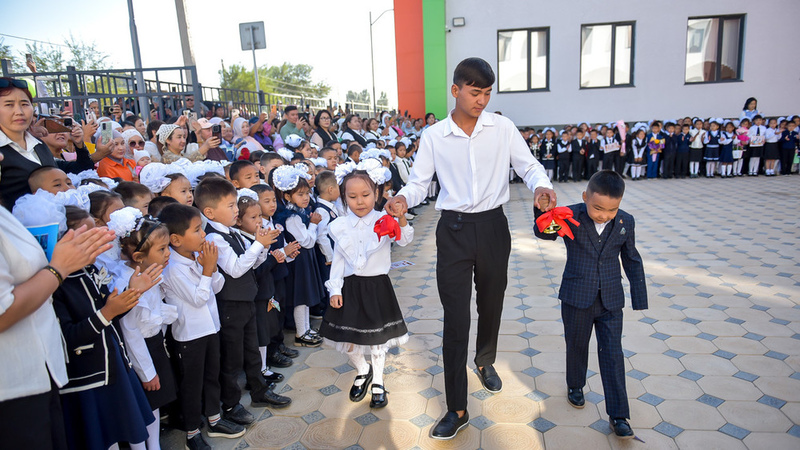
He attributed the decline partly to new requirements for children of foreign nationals seeking to attend Russian schools, including a Russian-language proficiency test.
A federal law initiated by the migration service will also take effect on January 1, 2027. It provides for employed foreign nationals to pay additional taxes for each non-working family member residing with them in Russia.
Russia considers organized recruitment of foreign workers
Another migration-service initiative is a bill that would introduce a system of organized recruitment of foreign workers. The proposal is currently being reviewed by the Russian government.
Under the existing system, foreign nationals can travel to Russia independently and seek employment after arrival. Under the proposed model, an employer would apply to the migration service, which would select workers through a designated operator, arrange their entry and documentation, and then assign them to the employer.
The draft would require medium-sized and large companies using the system to provide recruited workers with specialized accommodation and transportation to and from their workplaces.
The proposed model is designed around a closed “home–work–home” system. Once an employment contract expires, the worker would be returned to their home country in an organized manner.
Meanwhile, according to some estimates, labor migrants make a significant contribution to Russia’s economy and public finances, accounting for an estimated 7% to 8% of annual GDP and generating hundreds of billions of rubles in taxes and other fees.