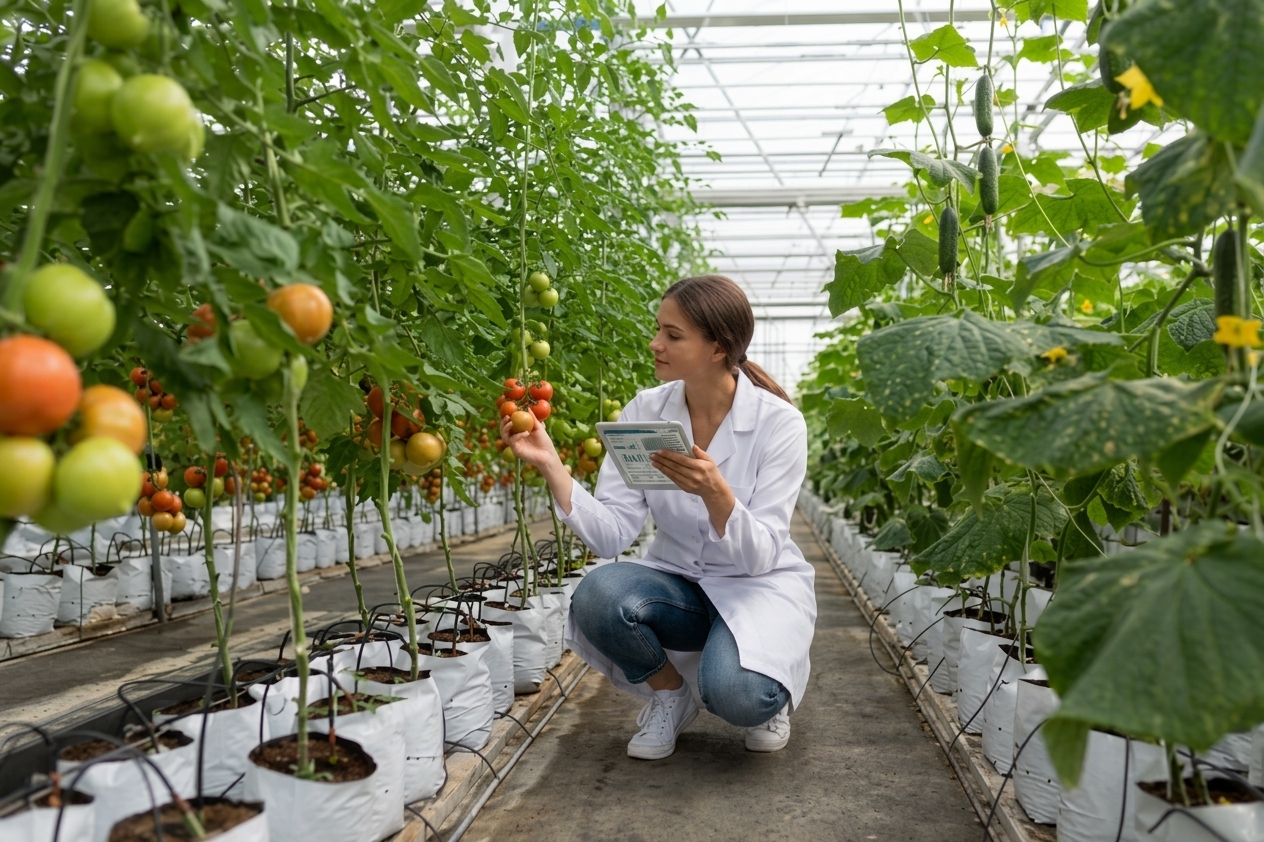
Tajik specialist Parviz Rahimzoda has developed a mobile application ZARZO for accounting, analysis, and management of agricultural projects. It allows a farmer or entrepreneur to enter data about an agricultural crop, region, land area, cultivation method, soil condition, water availability, greenhouse type, irrigation system, planting dates, and expected product sales price before production begins.
According to NIAT “Khovar”, based on this data, the application calculates capital and production costs, estimated harvest volume, income, profit, return on investment, payback period, and risk level.
Users can also compare two planting options and see the difference in expenses, yield, profit, and possible risks.
“
“We want farmers to be able to assess the opportunities and risks of their project before investing money. The application does not promise guaranteed profit or harvest, but shows the expected result based on the entered data. The final decision is always made by the farmer, entrepreneur, or investor themselves,” said Parviz Rahimzoda, founder and project manager.
According to him, ZARZO connects to data from the Agency for Hydrometeorology and provides a probabilistic weather forecast for the next 7–10 days. If frost, sharp temperature drops, heavy rain, snow, wind, or hail are expected, the farmer should receive an early warning.
The calculations use data entered by the user, technological maps, agrotechnical standards, climate information, market prices, commercial offers from suppliers, and experience from operating farms. At the same time, the farmer can independently replace approximate indicators with actual expenses, prices, and yield data from their own farm.
The application is already available for iPhone users. According to the developer, in the near future it will also be available to owners of smartphones on other platforms.
What is planned to be added?
One of the future components of the platform should be the intelligent assistant ZARZO AI. It is expected to take into account the type of agricultural crop, region, weather conditions, and plant development stage, and based on these provide initial recommendations on watering, fertilizing, and agrotechnical work.
In the future, users will be able to upload photos of plants so that the system can analyze possible signs of disease, pest damage, or nutrient deficiency.
The developers emphasize that artificial intelligence recommendations will be advisory in nature only and will not replace field diagnostics, laboratory tests, and agronomist conclusions. Before widespread implementation, the corresponding algorithms are planned to be tested for accuracy and safety.
Currently, the application works in the Tajik language. In the future, developers plan to add Russian, Uzbek, and English languages, video instructions, voice mode for questions and answers, and the ability to partially use the service without internet access.
The project team notes that the application development is still ongoing, so during the testing phase users may encounter errors and shortcomings.
Farmers will be able to search for investors and buyers
In the future, ZARZO is planned to be developed not only as a calculator for agricultural projects, but also as a platform for attracting investments and finding buyers.
For simple calculations, official documents will not be required. However, if a user wants to present a project to an investor, obtain financing, find a buyer, or receive verified project status, they will need to confirm their identity, land use rights, water availability, provide financial calculations, and necessary permits.
The developers provide an example: a farmer from Gissar plans to plant early potatoes on five hectares. He enters data into the application about the land, water, seeds, equipment, labor, planting dates, and expected sales price.
According to ZARZO’s conditional calculation, such a project would require 520 thousand somoni. If the farmer has 200 thousand of his own funds, he can try to attract the remaining 320 thousand from an investor. With an expected harvest of 125 tons and an average price of 6 somoni per kilogram, potential revenue could amount to 750 thousand somoni.
After providing documents, the project can be placed in the investment section of the platform. An investor will be able to see financial indicators, risk level, possible scenarios for price and yield changes, agronomist conclusions, and a work schedule.
Financing is expected to be conducted in stages. The farmer and investor will need to determine the conditions for return of funds or profit distribution through a separate agreement. The application itself will not guarantee either harvest or profit.
Another provided scenario is placing a request by a foreign buyer.
For example, a company from Kazakhstan can announce the need to purchase 1,000 tons of onions, specifying quality requirements, packaging, delivery dates, price, and the size of possible advance payment.
An agricultural producer in Tajikistan will be able to create a project for such an order, and the application will match their production capabilities with the buyer’s requirements and calculate costs for seeds, irrigation, fertilizers, labor, harvesting, storage, packaging, and transportation. According to the developers’ plan, this should allow the farmer to understand before planting whether there is a potential market for their products, and allow the buyer to monitor order fulfillment.
In the future, developers want to transform ZARZO into a unified digital platform where a farmer can calculate a project, draw up a production plan, receive recommendations, monitor product cultivation, search for buyers, and attract financing.