Tajikistan’s banking sector has traditionally relied on core banking systems for its main operations, while consolidated analytics, management calculations and reporting were often prepared manually by analysts using Excel spreadsheets.
The model remained workable while data volumes were limited and the pace of decision-making was relatively predictable. But the rapid growth of digital channels, demand for personalized services and increasingly detailed regulatory requirements have made manual data processing both inefficient and risky.
Eskhata Bank says it has begun addressing these challenges by developing a corporate data warehouse — a centralized platform that brings together information from its core banking system, customer relationship management system, payment processing platform and mobile application.
More than 100 employees already use the platform, while different business units are requesting the integration of additional data sources.
Reporting without overloading the core banking system
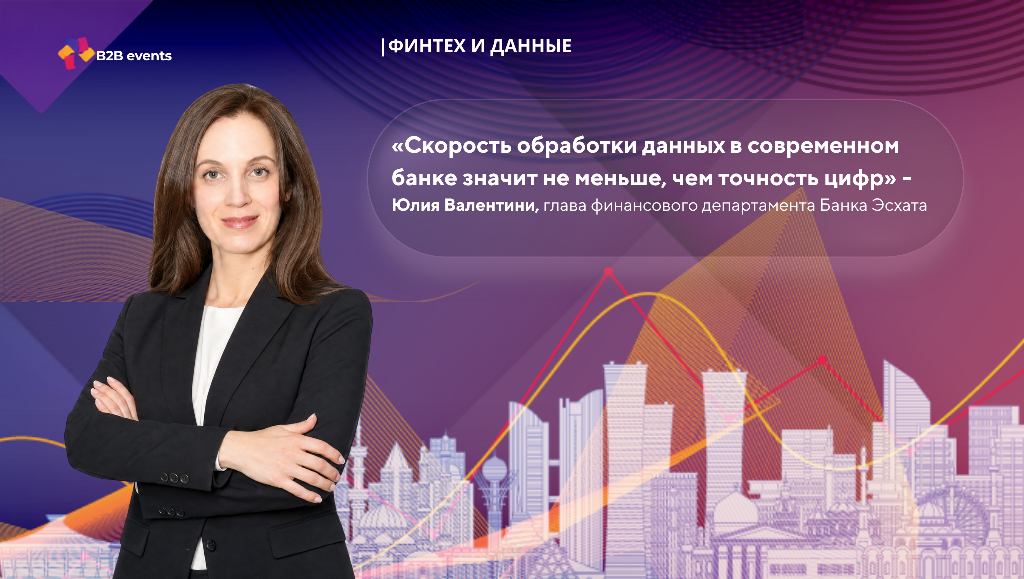
Yulia Valentini, head of Eskhata Bank’s Finance Department and a member of its management board, said the data warehouse had helped the bank bring the speed of its internal processes into line with the demands of a rapidly changing market.
One of the first practical applications was regulatory reporting.
The National Bank of Tajikistan is requesting increasingly detailed reports based on large volumes of information. Eskhata Bank can now generate these reports in a separate analytical environment without placing an additional load on its core banking system.
The new architecture is based on Arenadata DB, a massively parallel processing system designed for high-performance data analytics.
Data loading and validation are managed through Deco Systems’ Data Warehouse Management platform, while visualization is carried out using the open-source Apache Superset platform. This allows employees in business units to analyze information independently without having to submit a separate request to the IT department each time.
Project manager Usmonjon Ashourov described the data warehouse as an investment in the bank’s long-term competitiveness.
“Together with the technology provider, we established our own data office, and all the necessary expertise has now been transferred to the bank’s internal team,” Ashourov said.
“Our next steps will include developing predictive analytics, introducing machine-learning models for forecasting and expanding self-service data visualisation tools.”
Under Ashourov’s leadership, a cross-functional team worked with Deco Systems to address infrastructure issues, establish data-quality controls and deploy a fault-tolerant platform.
New opportunities created by consolidated data
The bank says bringing information together in a single system has opened up analytical opportunities that were previously unavailable.
In late June, an Eskhata Bank representative spoke at the Eurasian Financial Management Forum in Almaty, which brought together more than 150 executives from financial institutions in Central Asia, the Caucasus and Europe.
Valentini presented the bank’s approach to transfer pricing — calculating the internal cost of funding while taking into account the characteristics of emerging markets.
According to Eskhata Bank, the calculations became possible because the data warehouse provided a unified source of information. The presentation prompted more questions from participants than any other session at the forum, the bank said.
“It is critically important for us to manage resources flexibly in a rapidly developing market,” Valentini said.
“We are introducing a system that allows us to calculate the real internal cost of funding more accurately, taking into account local economic factors.”
She said the system’s automatic liquidity-pricing tools adjust the cost of internal financial flows to reflect the bank’s current position.
“This helps us maintain financial stability, respond quickly to economic changes and offer customers up-to-date rates on loans and deposits,” Valentini said.
According to her, consolidated data allows the bank to identify the parameters required to calculate the internal funding cost of each transaction. Collecting the same information manually from multiple systems would have been extremely difficult.
What does the transformation mean for customers?
For customers, the bank says the main benefit should be faster and more accurately targeted decisions.
“For a bank operating in a dynamic region such as Central Asia, decision-making speed is a competitive advantage,” Valentini said.
“When we have a consolidated view of all channels, we can better understand customers’ actual needs and offer them products that are more relevant.”
The bank’s next objective is to develop a broader data-governance culture, including common standards for data quality, access and accountability across all departments.
Founded in 1993, Eskhata Bank is one of Tajikistan’s largest commercial banks. According to the bank, it ranks among the country’s three leading banks and was named Tajikistan’s safest bank by Global Finance in 2025.