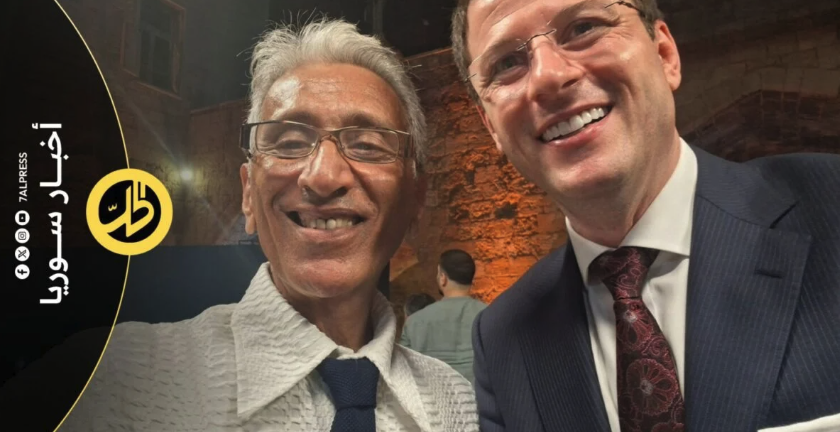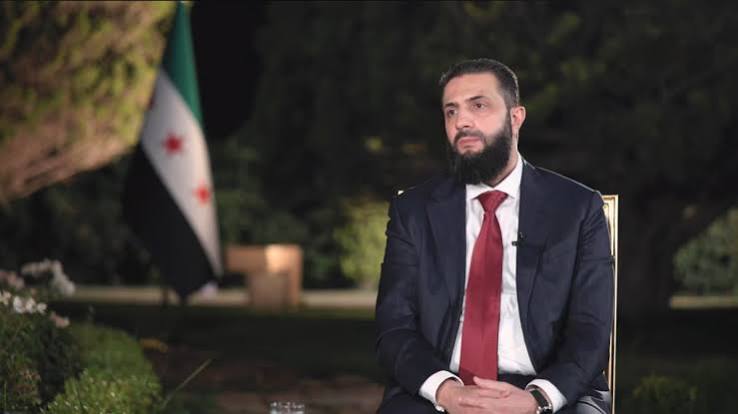
The recent televised interview between Syria’s Transitional President and journalist Tony Khalifa raised far more questions than it resolved. Instead of projecting strategic clarity, the appearance exposed the persistent uncertainty gripping political administrations in both Damascus and Beirut as they navigate critical and highly sensitive portfolios.
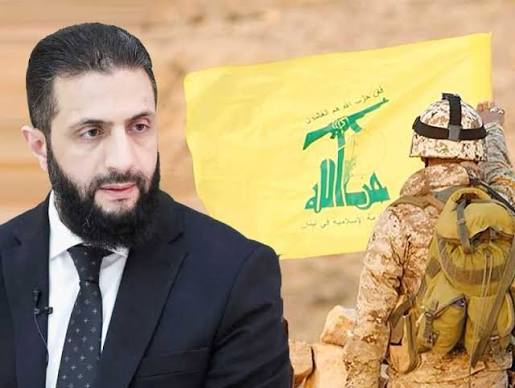
Throughout the interview, the Transitional President appeared visibly unsettled. His extended monologue drifted without substantive political weight, offering little beyond a single implicit message: this was not an announcement of Syria’s readiness to open dialogue with Hezbollah, but a deliberate signal that such communication channels are already active.
Strategic Timing and Political Calculation
The most consequential element of the interview was not its content but its timing. The recording was aired abruptly, without prior notice, on the very day Israel agreed to halt military operations in Lebanon without committing to a full withdrawal. Although the exact date of the recording remains unclear, the decision to broadcast it at that moment was unmistakably political.
The timing suggests an attempt by the current administration to manoeuvre through intense U.S. diplomatic pressure during a temporary lull on the Lebanese front. By choosing this window, Damascus sought to frame its messaging in a way that would not be interpreted in Washington—particularly by President Donald Trump—as a direct challenge to American policy.
Compounding this was the Transitional President’s strained and overly creative interpretation of Trump’s remarks, which further undermined the credibility of the appearance.
The Paradox of Dialogue at Home and Abroad
Domestically, the interview is likely to generate additional political friction. The president expressed a clear desire for Syria to intervene “peacefully” in Lebanon by mediating among its political factions. Yet this rhetoric exposes a sharp paradox: the administration is eager to reconcile competing Lebanese actors while avoiding genuine dialogue with its own internal opposition.
By speaking as though Syria were a stable, cohesive state, the president sidestepped the reality of a country still fractured by deep internal divisions, systemic crises of public trust, and mutual anxieties among its demographic components—conditions exacerbated by the authorities themselves. This detachment from domestic realities gave the address the tone of an external observer rather than a responsible head of state.
Geopolitical Realities and the Weight of History
The administration’s handling of the crisis continues to reveal its vulnerability to both domestic and international pressures. Should Washington decide to push Syria toward a specific role in Lebanon, implementation will not hinge on the personal approval of Ahmad al-Sharaa.
The primary geopolitical obstacle to any American plan is neither Damascus nor Ankara, but Israel. Tel Aviv is unlikely to permit a renewed Syrian role in Lebanon without ironclad guarantees that such an arrangement aligns with its long-term security and strategic calculations.
This dynamic echoes the precedent of 1976, when Syria’s initial military entry into Lebanon occurred only after reaching an explicit understanding with Israeli Prime Minister Yitzhak Rabin regarding the limits and parameters of the intervention. The early stages of that intervention culminated in the siege and massacre at the Tel al-Zaatar refugee camp—a stark reminder of the brutal geopolitical transactions that have historically shaped cross-border involvement in the region.
This article was translated and edited by The Syrian Observer. The Syrian Observer has not verified the content of this story. Responsibility for the information and views set out in this article lies entirely with the author.