Syria’s political transition has reached a significant institutional milestone with the establishment of a People’s Assembly and a Supreme Constitutional Court, senior United Nations officials told the Security Council, while warning that insecurity, Israeli military operations, and severe humanitarian funding shortages could jeopardize the country’s fragile progress.
“The past month has demonstrated both the opportunities and the fragility of Syria’s transition,” Claudio Cordone, the UN Deputy Special Envoy for Syria, said in a briefing to the fifteen-member Council via video link from Damascus.
The fall of Bashar al-Assad’s government in December 2024 ended more than five decades of family rule and over thirteen years of conflict. Since then, Syria’s new authorities, led by President Ahmed al-Sharaa, have expanded diplomatic engagement and announced reforms that include commitments to accountability for crimes committed during the war.
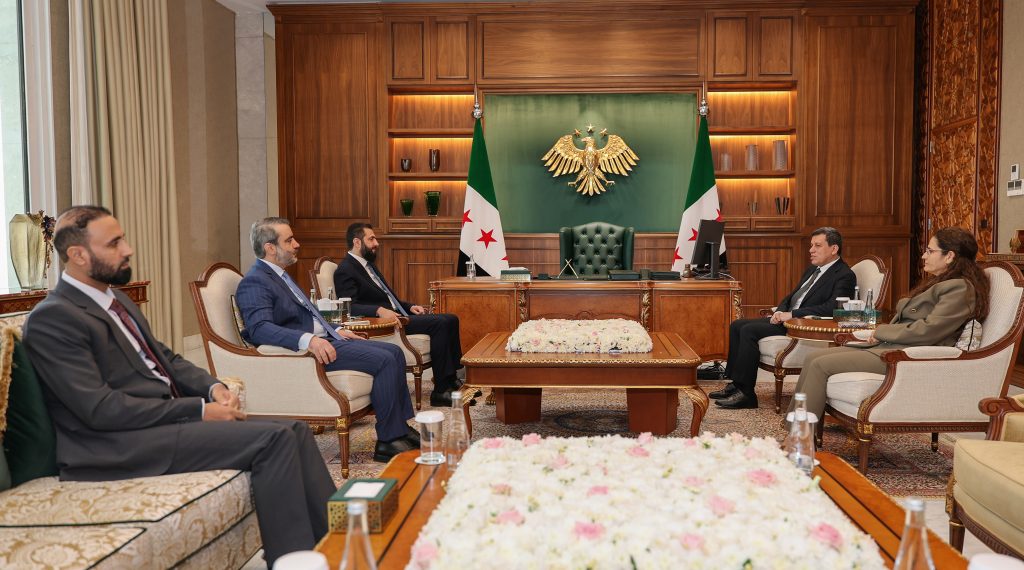
Cordone noted that the newly formed seven-member Supreme Constitutional Court includes two women. The People’s Assembly, which recently held its inaugural session, comprises 206 members drawn from a wide range of professional, political, tribal, and social backgrounds. Women, however, hold only twenty-two seats.
Cordone said questions of inclusion, participation, and representation would remain central to Syria’s stability. He stressed that the legislative and judicial bodies must establish genuine independence from the executive authorities.
“The success of this transition will not be judged solely by the institutions that are created, but by how they function,” he said.
Call for Comprehensive Transitional Justice
Cordone welcomed the start of judicial proceedings but cautioned that criminal accountability alone would not be sufficient. He called for a comprehensive transitional justice framework that is Syrian-led and Syrian-owned, including reparations and formal recognition of survivors’ experiences.
He reported progress in the military, judicial, and administrative integration of north-eastern Syria, but warned that the political impasse in the southern province of Sweida remained unresolved.
Cordone condemned recent terrorist attacks and Israeli military activity inside Syria, saying incursions and restrictions on civilians were heightening regional tensions and undermining confidence in the transition.
Humanitarian Crisis Remains Severe
Edem Wosornu, Director of the Crisis Response Division at the UN Office for the Coordination of Humanitarian Affairs, said Syria stood at a pivotal moment despite improvements since the fall of the previous government.
Since December 2024, approximately 1.7 million refugees and 1.9 million internally displaced people have returned to their communities. Nevertheless, 5.5 million people remain displaced inside Syria, while more than six million Syrian refugees continue to live abroad.
An estimated 15.6 million people—nearly two thirds of the population—still require humanitarian assistance. In southern Syria, around eighty per cent of the population needs aid.
Wosornu said the UN humanitarian appeal was less than one third funded halfway through the year. Funding shortages have forced the World Food Programme to halve the number of people receiving emergency food assistance, from 1.3 million to 650,000 since May.
She urged international donors to provide sustained and predictable funding and to invest in livelihoods, housing, mine clearance, and local infrastructure.
“Recovery is not measured by how many people return; it is measured by whether they can stay, rebuild, and thrive,” she said.
Council Members Demand Israeli Withdrawal
Several Security Council members called for Israel to withdraw from Syrian territory and end military operations that they said threatened Syria’s recovery.
Pakistan’s representative, Syed Tariq Fatemi, said the Syrian people now had an opportunity to turn the page after years of war. He warned that recent terrorist attacks had demonstrated the continuing fragility of the security situation.
He condemned what he described as Israel’s illegal occupation of Syrian territory and said Syria must not be drawn into a broader regional conflict.
Representatives of Bahrain, Türkiye, the United Kingdom, and the Arab Group also called for an Israeli withdrawal.
Türkiye’s delegate said Israeli attacks violated international law and the 1974 Agreement on Disengagement between Israel and Syria. The United Kingdom urged Israel to provide a clear timetable for leaving Syrian territory.
“There is a real risk that wider regional conflict could undermine the country’s long overdue recovery,” the British representative said.
China called for international cooperation against terrorism and stressed that Syria’s transition must remain Syrian-led and Syrian-owned.
Washington Signals Further Normalization
The United States representative said President Donald Trump had informed Congress of his intention to remove Syria from the US list of state sponsors of terrorism. She described the development as evidence of how far Syria had progressed within a relatively short period.
However, she warned that the Islamic State group continued to pose a serious threat and pledged that Washington would work with Syrian authorities to dismantle terrorist networks.
She also condemned an Iranian attack on southern Syria the previous week, which Tehran reportedly carried out under the pretext of targeting US forces.
Russia called for the complete removal of unilateral sanctions and rejected any attempt to turn Syria into an arena for geopolitical rivalry. The Russian representative also questioned European policies offering financial incentives for Syrian refugees to return when adequate housing, employment, healthcare, and education remained unavailable.
Missing Persons and Accountability
Several Council members emphasized the importance of transitional justice and accountability for crimes committed during the conflict.
Colombia called for credible and inclusive mechanisms to establish truth, deliver justice, provide reparations, and guarantee that past abuses would not recur.
Latvia and Greece highlighted the unresolved fate of tens of thousands of missing and forcibly disappeared Syrians.
Greece’s representative said determining the fate of the missing remained a humanitarian obligation, while Latvia encouraged continued cooperation between Syrian authorities and international bodies investigating disappearances and war crimes.
Economic Recovery Seen as Essential
Council members said political stability would remain elusive without tangible economic improvement.
Somalia, speaking on behalf of itself, the Democratic Republic of the Congo, and Liberia, said sustainable peace could not be achieved without economic progress that benefited all Syrians.
France described economic recovery as an urgent priority and said French companies had recently visited Damascus to explore investment opportunities.
Denmark said rebuilding Syria after nearly fourteen years of war would be an immense undertaking and announced increased support for protection and early-recovery programs.
Syria Says State Institutions Are Taking Shape
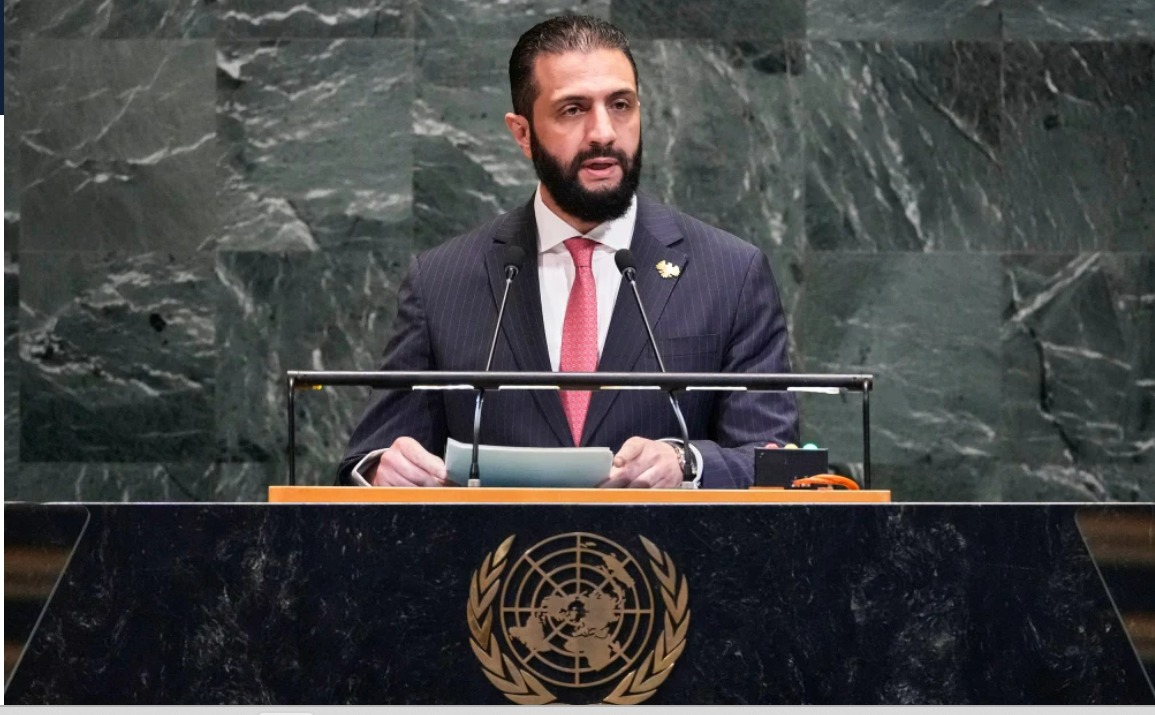
Syria’s representative told the Council that the principal foundations for rebuilding state institutions during the transitional period had now been established.
He said the new People’s Assembly included women, former detainees, defectors from the previous government, refugees, people with disabilities, and representatives of different communities.
He reaffirmed Syria’s commitment to transitional justice, accountability, and the safe return of displaced people.
“The preservation of the dignity of Sweida’s people, in all their different components, is a national duty on which there can be no compromise,” he said.
The Syrian delegate also presented his country as a potential regional hub for energy, transport, and economic cooperation.
“Syria was once a battlefield, but today it is once again becoming a bridge connecting the different continents of the world,” he said.
He added that Syria would not allow its territory to become a route for illegal weapons, citing the interception of a shipment allegedly intended for Lebanon.
“Syria sends rescue teams, while Israel sends occupying forces,” he concluded.
The Council’s discussions reflected broad agreement that Syria’s political transition has advanced, while underscoring that its ultimate success will depend on inclusive institutions, security, economic recovery, humanitarian support, and protection from wider regional conflict.