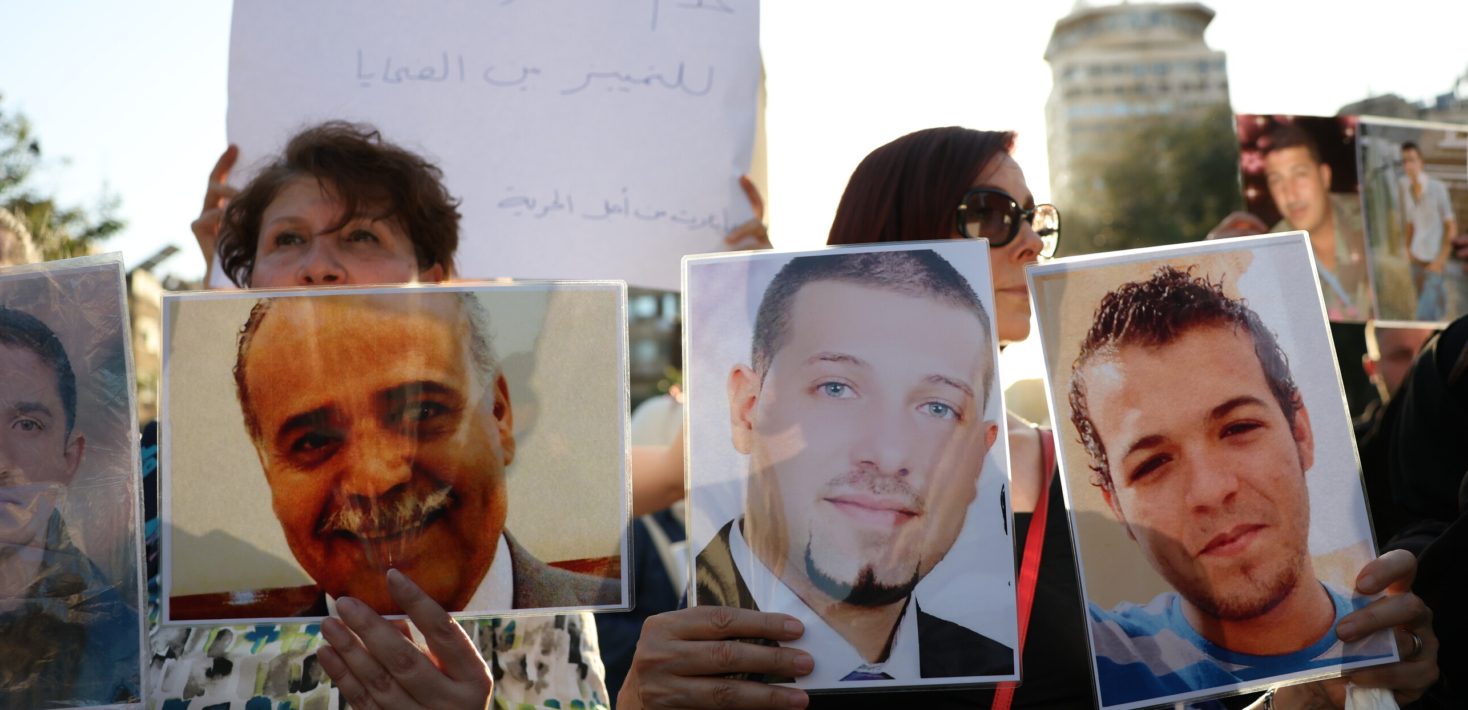
Syria is entering one of the most delicate moments of its post-Assad transition. The demand for justice, long suppressed by fear, exile, prison, and mass violence, has returned to the public sphere with a force that is both inevitable and dangerous. It is inevitable because no society can pass through years of killing, torture, enforced disappearance, displacement, and humiliation without asking who was responsible. It is dangerous because, in the absence of credible institutions, the search for justice can easily slip into vengeance.
This is the central dilemma facing Syria today. The country does not suffer from an excess of anger, but from the absence of a trusted path through which that anger can be converted into law, accountability, truth, and repair. When victims and their families see suspected perpetrators moving freely, protected by social networks, wealth, or political ambiguity, restraint begins to appear less like wisdom and more like abandonment. At that point, the danger is no longer theoretical. Justice delayed begins to generate its own forms of disorder.
This is where the debate over transitional justice moves from principle to urgency. The issue is no longer whether Syrians have the right to demand accountability; that right is beyond dispute. The question is whether the emerging state can organize this demand before it is seized by the street, by wounded communities, or by those who confuse punishment with justice. In this sense, the warnings raised by Syrian writers and rights advocates are not abstract reflections on law. They are interventions in a moment when the moral authority of victims, the legitimacy of the state, and the future of civil peace are all being tested at once.
Activists and analysts both agree on this point.
Issal Laham, a political analyst, believes the immediate threat lies in the blurring of the line between justice and revenge. His concern is rooted in the street: protests, charged slogans, local mobilizations, and the growing temptation among some to take matters into their own hands. For Laham, the gravest danger is not only that isolated acts of retaliation may occur, but that Syria may enter a wider social logic in which individuals and groups appoint themselves as judges and executioners. Such a path would not restore rights. It would reproduce injustice in another form and expose civil peace to a new and potentially uncontrollable cycle of violence.
His warning is especially important because he does not deny the legitimacy of anger. The rage felt by victims and survivors is understandable after years of brutality and impunity. But understandable anger does not become lawful merely because it is morally explicable. Once it moves outside the law, especially when accompanied by sectarian or divisive rhetoric, it ceases to serve justice and begins to threaten society itself. In this sense, Laham’s argument is not a call for forgetting. It is a call to protect justice from being consumed by revenge.
Fadel Abdulghai, the head of the Syrian Network for Human Rights, says revenge is illegal and destructive, yet politically intelligible. This distinction is crucial. He does not excuse extrajudicial killing, nor does he soften its legal meaning. Killing outside the law remains unlawful regardless of the crimes attributed to the victim. But Abdulghai also refuses to treat revenge as a mere eruption of blind hatred or as a cultural pathology. In his view, revenge is a symptom of a deeper institutional failure. It appears when a society emerging from tyranny does not see its demand for justice translated into credible, visible, and timely mechanisms of accountability.
This is perhaps the most important analytical point in the debate. Syria’s problem is not only emotional; it is structural. Many communities believe they already know who participated in grave violations, who denounced neighbors, who tortured detainees, who benefited from confiscation, who served the machinery of repression, and who remained loyal to violence until the final hour. When such figures remain untouched by legal scrutiny, institutional weakness begins to look like political choice. What may initially be understood as administrative incapacity can, over time, be interpreted as tolerance, complicity, or selective justice.
That shift is extremely dangerous. A new authority may be given some patience while it rebuilds courts, prosecutors’ offices, detention oversight, witness protection systems, and investigative bodies. But patience is not unlimited. If the public concludes that the state is unwilling rather than merely unable to act, trust will erode quickly. Once that trust collapses, appeals to calm will sound hollow, and official statements about the rule of law will be measured against the visible freedom of those believed to have committed crimes.
This is why condemnation alone cannot defeat revenge. A state that denounces individual violence while failing to build public justice does not resolve the crisis; it postpones it. The vocabulary of restraint, civil peace, and rule of law becomes persuasive only when accompanied by action: investigations, vetting, asset scrutiny, criminal procedures, protection of witnesses, victim participation, and temporary restrictions on suspects who may pose a danger or obstruct justice. Without these tools, the state appears to demand patience from victims while offering them little more than promises.
Yet justice in Syria cannot be reduced to trials alone. The Syria TV discussion on transitional justice and reconciliation points to a broader and equally difficult question: can accountability by itself heal a fractured society? The answer is clearly no. Legal responsibility must remain individual, and no religious, sectarian, or social community should be collectively blamed for the crimes of a regime. At the same time, Syria cannot pretend that the Assad regime left no social legacy behind. It built networks of loyalty, fear, privilege, and dependency that linked state violence to institutions, interests, and social perceptions. To ignore this legacy would be to leave it untreated. To discuss it crudely would be to inflame it.
The challenge, therefore, is to speak honestly about the past without turning history into collective accusation. Syria needs a language that can distinguish between individual criminal responsibility and broader social wounds. It must reject the punishment of communities while still acknowledging that certain communities, institutions, and local structures were drawn into, benefited from, or were damaged by the regime’s architecture of power. Silence will not heal this question. Denial will deepen it. Only a careful public process, grounded in facts and protected from incitement, can prevent memory from becoming a battlefield.
Recognition and apology may have a role in this process, but they cannot replace justice. Symbolic gestures can help rebuild trust when they are sincere, specific, and connected to truth. They may allow public figures, social leaders, or institutions to acknowledge the suffering of victims without accepting collective criminal guilt. But recognition becomes dangerous when used as a substitute for accountability. Victims do not need ceremonies of reconciliation that leave perpetrators untouched. Nor does Syria need a premature language of forgiveness imposed before truth has been established and responsibility assigned.
A serious transitional justice process must therefore combine several tracks at once. It must investigate and prosecute those responsible for grave crimes. It must uncover the truth about detention centers, chains of command, massacres, enforced disappearances, torture, property seizure, and economic complicity. It must provide reparations and recognition to victims. It must vet institutions and prevent known violators from returning to positions of authority. It must reform the security and judicial sectors. And it must create safe spaces for public dialogue, so that Syrians can begin forming a shared national memory instead of living inside competing narratives of denial, grievance, and fear.
The state’s role is decisive. It must prevent revenge attacks, sectarian incitement, and unlawful mobilization, but it cannot do so through repression alone. It must also prove that the law applies equally and that accountability is neither selective nor indefinitely delayed. Civil peace cannot mean silence. Stability cannot mean impunity. Reconciliation cannot mean asking victims to coexist with their tormentors without truth, justice, or protection.
Syria’s most urgent task is not to choose between justice and stability. It is to understand that each depends on the other. Stability without justice will remain fragile, resentful, and vulnerable to explosion. Justice without law will become revenge and may destroy the very society it claims to defend. The success of the transition depends on holding these two truths together.
The country has already paid too high a price for violence to allow the demand for justice to become the beginning of another cycle of conflict. But it has also paid too high a price for Syrians to be asked once again to wait in silence. The only viable path is a credible, transparent, and inclusive process that takes victims seriously, restrains revenge firmly, and turns public anger into lawful accountability. Anything less will leave Syria suspended between an unburied past and an unstable future.