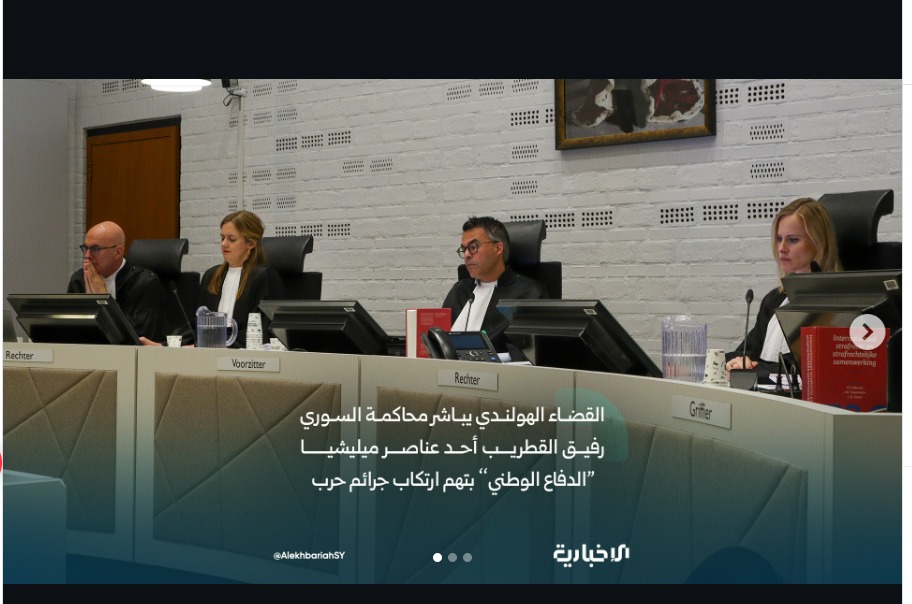
In a landmark decision for international justice, the District Court of The Hague on Monday, June 15, 2026, sentenced Rafik al-Qatrib — a former commander in the National Defense Forces (NDF) militia of the ousted Syrian regime — to 26 years in prison. He was convicted on 19 counts of crimes against humanity and war crimes committed in and around Salamiyah, in Hama Governorate, between 2013 and 2014.
The court found al-Qatrib responsible for the torture, rape, and sexual abuse of eight victims across three detention sites near Salamiyah. He was acquitted of charges related to a ninth victim due to insufficient evidence.
In its ruling, the bench underscored the case’s historic significance: it is the first time a Dutch court has explicitly recognized certain forms of severe sexual violence as distinct crimes against humanity. Judges said the gravity of the offenses and the profound suffering inflicted on the victims justified the severity of the 26-year sentence.
On the civil side, the court dismissed compensation claims filed by the victims, noting that this type of criminal proceeding does not grant jurisdiction to award monetary damages.
A Strong Signal Against Impunity
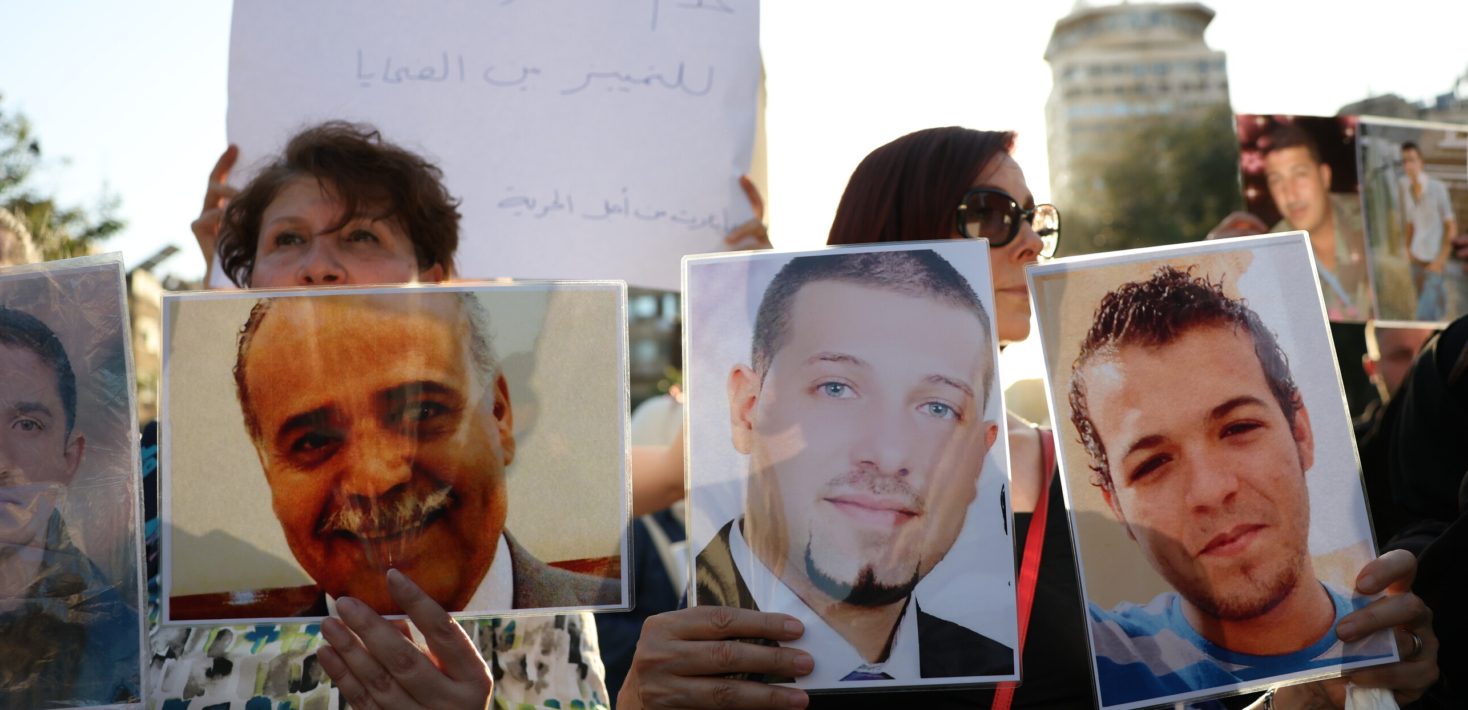
The sentencing drew a large turnout of Syrian expatriates, Dutch citizens, survivors of regime detention, and international human rights advocates.
Speaking to state news agency SANA after the hearing, court spokesperson Geert-Mark Smelt delivered a clear message to perpetrators of international crimes.
“Perpetrators of crimes against humanity cannot evade responsibility simply by fleeing to the Netherlands,” Smelt said. “The al-Qatrib case demonstrates this, following his conviction and 26-year sentence.”
For many Syrians in attendance, the ruling marked a moment of long-awaited vindication. Alaa al-Sheikh, a key witness who testified on behalf of a female survivor named Reem, said he felt a deep sense of relief. “I once told Reem that the day would come when the tyrant who tortured her would face justice. Today, we witnessed his trial and sentencing,” he said, adding that some had hoped for the maximum possible penalty.
Another attendee, Mohammad al-Hussein, urged other survivors to come forward. “We came today to support the victims and to encourage every former detainee to file cases against their torturers if they are living in the Netherlands. Justice is finally beginning to take shape.”
How the Case Reached Court
The prosecution had requested the maximum penalty during closing arguments in April 2026, citing the brutality of al-Qatrib’s crimes.
The investigation began in November 2021, when Dutch authorities received a tip about a Syrian national residing in the Netherlands suspected of wartime atrocities. The war crimes unit built its case around three core survivor testimonies, later corroborated by additional evidence.
The trial was made possible under the Netherlands’ Universal Jurisdiction framework, which allows domestic courts to prosecute foreign nationals for grave international crimes — including war crimes, genocide, and crimes against humanity — committed abroad, provided that either the perpetrator or the victims are present on Dutch territory.
This article was translated and edited by The Syrian Observer. The Syrian Observer has not verified the content of this story. Responsibility for the information and views set out in this article lies entirely with the author.